


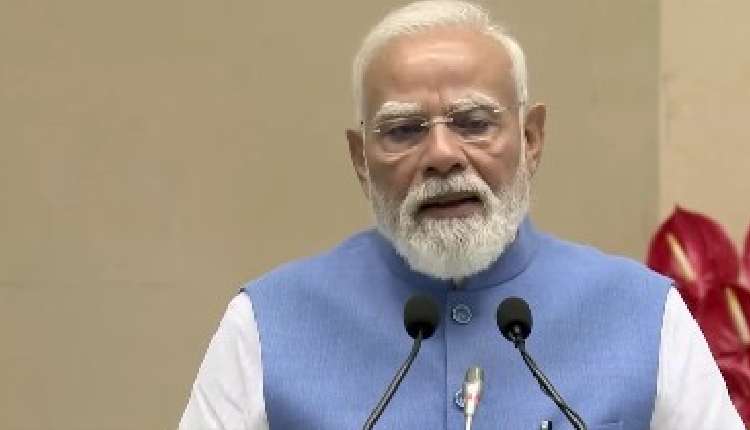
The e-Jagriti platform has digitalised the entire consumer complaint lifecycle and enhanced India’s digital consumer justice ecosystem, according to Prime Minister Narendra Modi, who praised the program’s revolutionary impact on Saturday. The Prime Minister shared an article by Pralhad Joshi, the Union Minister of Consumer Affairs, on social media and stated that the platform represents a major milestone in the ongoing digital transformation of consumer protection.
Extensive stakeholder engagements led to the development of e-Jagriti, which the Prime Minister claims meets the increasing demand for a cutting-edge, tech-driven consumer dispute resolution system. The government’s priority on consumer justice has been to make it faster, easier, and more accessible as digital transactions through e-commerce platforms, online marketplaces, and digital payment methods continue to rise.
With the launch of the AI-powered paperless platform on January 1, 2025, four legacy systems—OCMS, e-Daakhil, NCDRC CMS, and CONFONET—are brought together into one digital system. Customers can use the unified system from any location in India or across the world to submit complaints, track the status of their cases, and access online dispute resolution options.
E-Jagriti has achieved an outstanding 90.75 percent disposal rate since its introduction, with over 2.29 lakh consumer complaints registered and over 2.07 lakh cases effectively disposed of. Also, the platform has simplified the process of seeking consumer justice for Non-Resident Indians (NRIs) without requiring them to return to India.
Consumer commissions received over 1.65 lakh new complaints and resolved over 1.52 lakh cases, increasing the yearly disposal rate to 92.3%, demonstrating the sustained success of the government’s consumer justice measures in FY 2025-26. The disposal rate of 34,600 cases was maintained by consumer commissioners during the January-March 2026 quarter, amounting to 88.84%.
As a whole, e-Jagriti has been a success, and it shows that the government is serious about using AI, paperless governance, and digital public infrastructure to improve the quality of public services for the people of India in a way that is open, efficient, and focused on their needs.
Disclaimer: All news articles are sourced through valid sources, and Business Unlimited (BU) doesn’t have any exclusive rights on these pieces. If BU features any exclusive story or article, it will be marked as Exclusive Story.