

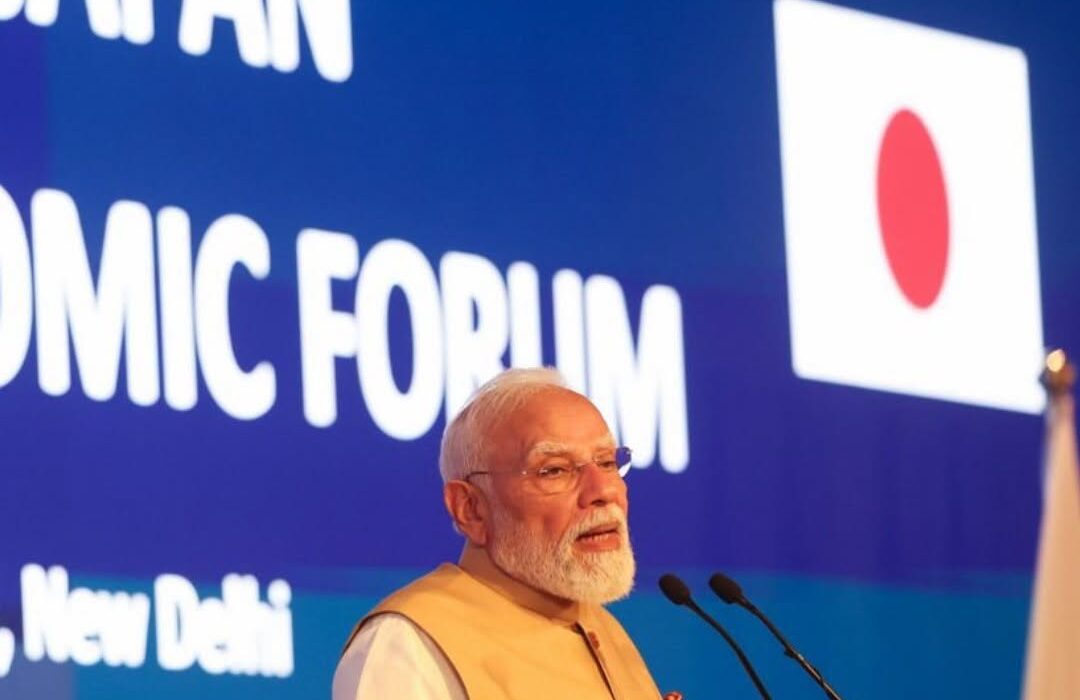
As part of his invitation to Japanese companies to join forces with India in its upcoming period of industrial transformation and economic growth, Prime Minister Narendra Modi stated on Thursday that India has changed its economic DNA in the last twelve years by adopting the Japanese concept of ‘Kaizen,’ which means continuous improvement.
Despite worldwide economic uncertainty, India’s prime minister noted at the India-Japan Joint Economic Forum in New Delhi that the country’s GDP grew 7.7 percent in the most recent fiscal year.
“In India, we have been working on changing our economic DNA for the past twelve years by following the principle of kaizen, which means continuous improvement,” Prime Minister Modi stated.
He went on to say that the government’s reform goal has always been to make things easier for businesses and investors alike by streamlining taxes, making it easier to do business, and making the government more open and honest.
As part of India’s continuous economic change, the prime minister announced new policies in areas such as digital administration, taxation, governance, and business rules, and the gradual opening of additional sectors to private participation.
He went on to say that there are huge prospects for Japanese companies seeking to grow their operations in India thanks to sector-specific incentive packages that the government is offering to encourage investments in vital industries.
We are allowing the private sector to enter every industry and incentivising many more. In his opinion, Japanese businesses can also gain from these openings.
India has been named the most promising destination for Japanese businesses for four consecutive years, according to Prime Minister Modi, who cited the Japan Bank for International Cooperation (JBIC) Annual Survey. This ranking reflects the increasing confidence of Japanese investors in India’s economic potential and policy stability.
Strong political confidence and common economic goals have propelled the India-Japan Special Strategic and Global Partnership into a new phase of collaboration, according to the Prime Minister.
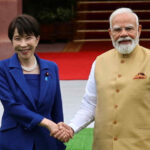
To make the bilateral partnership more future-proof, he announced that he and Japanese Prime Minister Sanae Takaichi had decided to significantly enhance cooperation in economic security, AI, military, healthcare, advanced technology, innovation, and resilient supply chains.
The prime minister claims that these areas of cooperation will lead to stronger industrial cooperation, new commercial prospects, and long-term economic growth for both nations, in addition to deepening strategic connections.
The prime minister of India, Narendra Modi, recently spoke on the strong cooperation between his country and Japan, saying that the two countries’ governments work closely together and that businesses benefit from the clear policies, mutual trust, and strategic synergy between them.
He called on business moguls in both nations to take advantage of new prospects and step up their efforts to improve bilateral commerce, investment, manufacturing, technology transfer, and innovation.
As part of their efforts to deepen cooperation in areas like as economics, strategy, technology, and regional affairs, the two nations are holding their 16th annual summit, where the address will be delivered.
Image: Money Control
Disclaimer: All news articles are sourced through valid sources, and Business Unlimited (BU) doesn’t have any exclusive rights on these pieces. If BU features any exclusive story or article, it will be marked as Exclusive Story.