


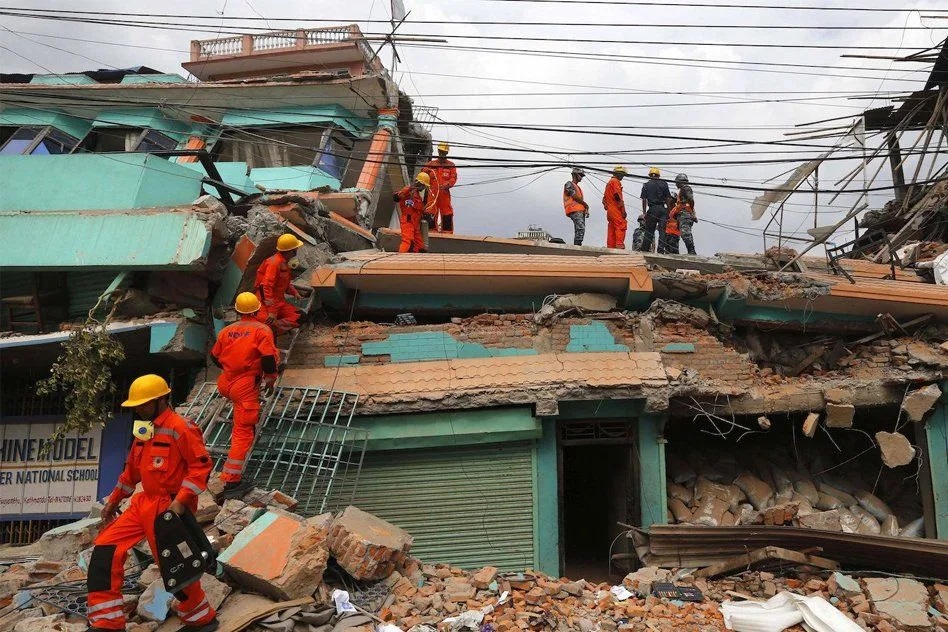
In order to better prepare for and mitigate the effects of disasters, India’s government has maintained the National Disaster Management Plan (NDMP). The plan, which was first released in 2016 and updated in 2019 after stakeholder consultations, aims to improve coordinated disaster management nationwide by integrating the duties of federal, state, and local governments as well as district administrations, ministries, and departments. Shri Nityanand Rai, minister of state in the ministry of home affairs, revealed the details in a written response to a Rajya Sabha question.
The 2005 Disaster Management Act and the 2009 National Policy on Disaster Management (NPDM) served as the basis for the redesign of the National Disaster Management Plan (NDMP). National disaster management strategies should continue to be in line with global priorities, and this document reflects India’s commitments under international frameworks such as the Sendai Framework for Disaster Risk Reduction (DRR), the SDGs, and the Paris Agreement on Climate Change.
The Prime Minister’s Ten Point Agenda for catastrophe Risk Reduction (DRR) lays out India’s current objectives for lowering catastrophe risks, and the National Disaster Management Plan (NDMP) has an emphasis on this agenda. Further, the framework promotes the integration of catastrophe risk reduction across industries, organisations, and governmental systems and embraces social inclusion as an overarching theme.
The India Disaster Resource Network (IDRN) is an electronic inventory that collects data on emergency equipment, trained personnel, and essential supplies from all over the country. It is designed to help with disaster preparedness efforts and can be accessed online. In times of crisis, the platform can be accessed through the web and used to manage resources more effectively.
The main goal of the India Disaster Resource Network (IDRN) is to assist decision-makers in rapidly determining the availability of preparedness resources, such as equipment and qualified personnel, in order to respond to emergencies. Because it maps the location and availability of essential resources across the country, the database also allows officials to evaluate preparation levels for different sorts of disasters.
In the event of a disaster, the Ministry of Home Affairs reports that the India Disaster Resource Network (IDRN) allows for the quick availability of resource information by various parties involved, including states and union territories, facilitating coordinated and prompt responses. The platform, which is part of the government’s initiative to make disaster-resilient resource management more accessible through technology, can be found at https://idrn.nidm.gov.in. The most important thing to remember is that India’s disaster preparedness framework is based on the policies and operations outlined in the National Disaster Management Plan (NDMP) and the India Disaster Resource Network (IDRN).
Image: Himalayan Express
Disclaimer: All news articles are sourced through valid sources, and Business Unlimited (BU) doesn’t have any exclusive rights on these pieces. If BU features any exclusive story or article, it will be marked as Exclusive Story.