


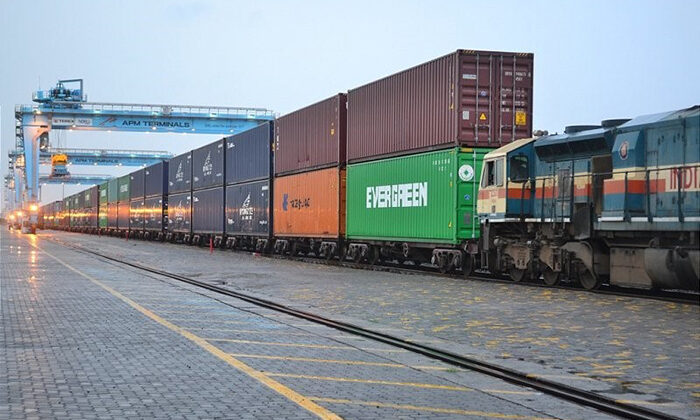
A joint research by ASSOCHAM and the Automotive and Equipment Skill Council (AESCLA) states that Indian Railways aims to have a freight capacity of 3,000 million tonnes by 2030, positioning it to play a crucial role in supporting the country’s economic growth.
There is a lot of space for growth in the rail sector, which presently handles around 30% of freight movement. Continuous efforts, such nearly-full electrification and Dedicated Freight Corridors (DFCs), are improving operational efficiency and sustainability, according to the research.
The paper suggests that in order to boost rail’s modal share, we should speed up the building of freight routes, expand private sector involvement, and improve first- and last-mile connectivity. It also highlights the importance of lowering logistics costs, which are now estimated at 7.97% of GDP, in order to make India more competitive on the global stage.
According to Railway Board Executive Director (Traffic Commercial) Surendra Kumar Ahirwar, Indian Railways is quickly modernising to be ready for the future. Improved safety regulations, new technologies, AI usage, and a move toward integrated end-to-end logistics solutions were some of the main causes he cited. Reducing container production costs to boost efficiency was another point he mentioned.
The rapid expansion of Indian Railways’ infrastructure over the last decade is evident in the roughly 31,000 km of track that has been built.
According to Sanjay Bajpai, an advisor to the Railways Council at ASSOCHAM, the industry is changing from a primary carrier to an important facilitator of logistical effectiveness, industrial competitiveness, and GDP expansion. Contemporary terminals, enhanced port connectivity, and smooth multimodal integration were his main points.
By investing in its infrastructure, reforming its policies, and launching digitalisation efforts, Indian Railways is well-positioned for continued expansion, as its freight loading already exceeds 1.6 billion tonnes per annum.