


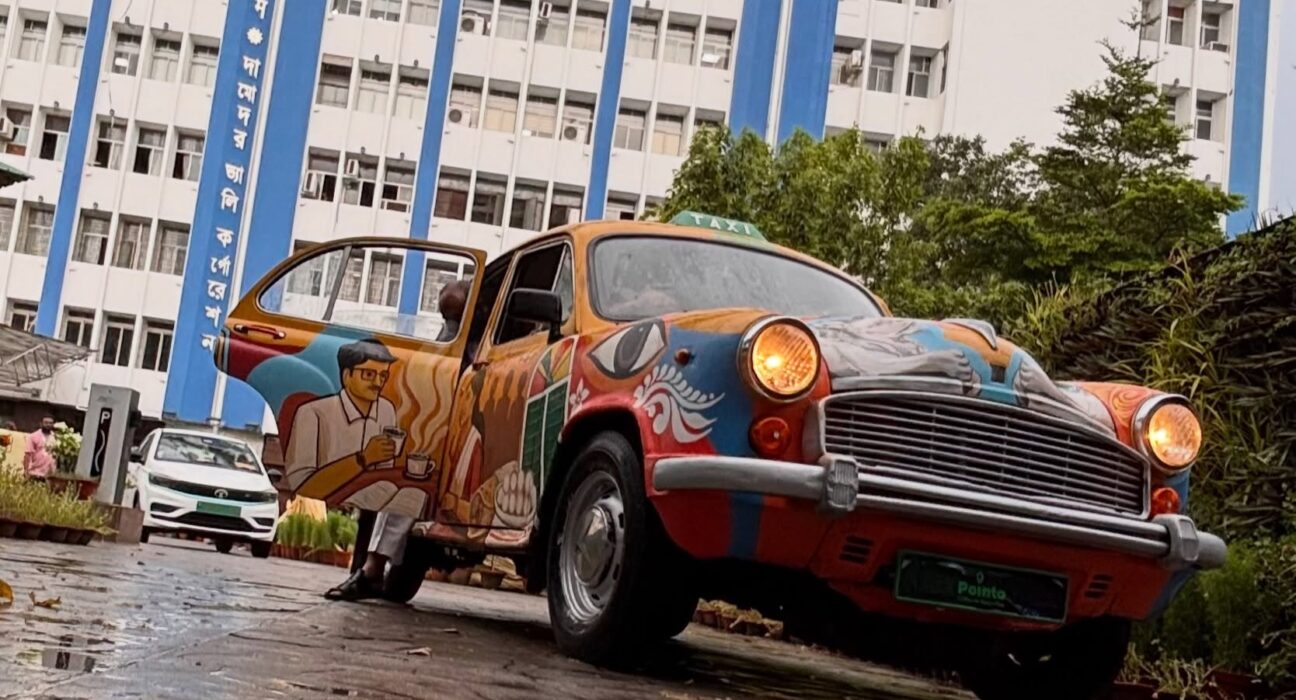
A model of Kolkata’s famous yellow taxi converted into an electric vehicle (EV) was unveiled by Damodar Valley Corporation (DVC) and Jadavpur University. This showcases an eco-friendly method of urban transportation and vehicle electrification.
As part of their “Digital Twin Development to Study the Feasibility of Retrofitted E-Mobility and Technological Requirements for its Sustainability” R&D project, DVC created the prototype.
The initiative’s stated goal is to promote affordable retrofitting solutions that increase the useful life of current vehicles in order to combat the early disposal of internal combustion engine (ICE) vehicles, which is a significant obstacle to India’s EV transition.
At a ceremony held at DVC Headquarters in Kolkata, the Green Yellow Taxi was unveiled by DVC Chairman S. Suresh Kumar. Present were Professor Chiranjib Bhattacharjee, Vice-Chancellor of Jadavpur University, senior DVC officials, academic researchers, and representatives from the industry.
Funded by DVC’s sustainability-focused research and development program, the project showcases the feasibility of converting classic vintage yellow cabs into electric vehicles while mostly retaining their original transmission system.
With the help of a diverse group of academics, Professor Amitava Gupta of the Department of Power Engineering at Jadavpur University is spearheading the investigation.
An electric motor-drive system, intelligent control interfaces, and advanced sensor technologies were integrated into the electric vehicle prototype, which was built on a 1.5DZ Yellow Taxi platform.
Project authorities have stated that early testing has yielded promising results, including as a long range for city driving, quicker acceleration, the capacity to air-condition, and monitoring systems provided by the Internet of Things.
To better meet the needs of urban mobility in India and fleet operations, the concept also includes a variant with swappable batteries.
According to DVC, the effort showcases their ongoing commitment to innovation and collaboration between industry and academics, which is backed by their robust research and development department.
After its debut, the prototype will be put through its paces in terms of testing, validation of performance, and regulatory certification in preparation for possible commercial deployment.
Opportunities for widespread use of modified electric vehicle solutions in India are being considered by the project team, who hope to commercialise their work in the future through collaborations with relevant industries.
An example of how India might convert its current vehicle fleet into more environmentally friendly transportation assets, the electric Yellow Taxi prototype combines tradition with clean technology and sustainability.
Disclaimer: All news articles are sourced through valid sources, and Business Unlimited (BU) doesn’t have any exclusive rights on these pieces. If BU features any exclusive story or article, it will be marked as Exclusive Story.