

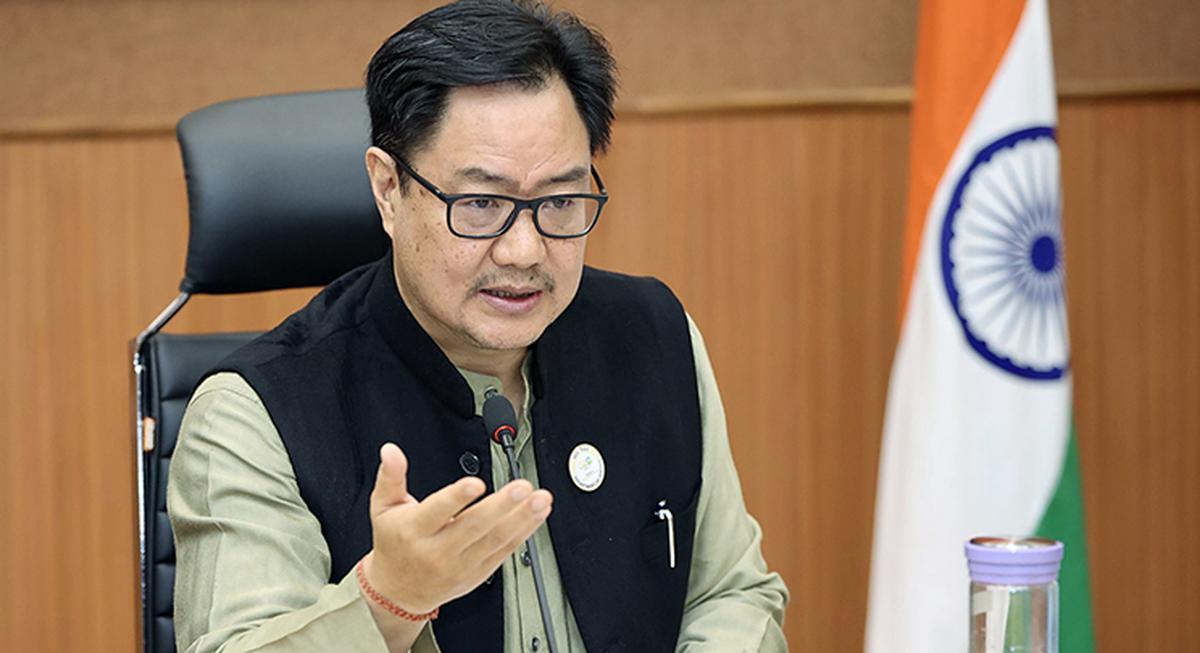
On Saturday, Kiren Rijiju, India’s Union Minister, made the announcement that the country’s solar energy capacity has grown 55 times in the past 12 years, thanks to Prime Minister Narendra Modi.
The minister stated in an X post that the exponential growth of India’s installed solar capacity—from 2.8 GW in 2014 to 155 GW in 2026—is indicative of the country’s forward momentum in the clean energy sector.
The growth, according to Rijiju, is a result of India’s efforts to increase renewable energy use and ensure a steady supply of electricity, both of which have been boosted by Prime Minister Modi’s leadership.
The minister boasted that solar energy projects have successfully connected over 40 lakh houses nationwide. In addition to their long-established function as food suppliers, he emphasised the expanding significance of farmers within the renewable energy ecosystem.
Rijiju stated that the growth of solar power plants is a major step towards a safer and more sustainable future and that it bolsters India’s larger goals in the clean energy sector.
As part of its initiatives to increase energy accessibility, decrease reliance on fossil fuels, and speed up the shift towards cleaner power sources, India has considerably increased its capacity for renewable energy in recent years.
These comments are made at a time when India’s climate-tech ecosystem is gaining steam, thanks to initiatives in this area, investments, and government backing for energy security.
Under the ‘PM Surya Ghar Muft Bijli Yojana,’ the country has connected 40 lakh houses to rooftop solar panels, marking a historic milestone, according to Union Petroleum and Gas Minister Hardeep Singh Puri, who made the announcement earlier in May.
This program, which is being spearheaded by Prime Minister Narendra Modi, is rescuing the environment while also relieving the common people of India of their electricity bills, or “Atmanirbhar,” as the minister put it.
Image: The Hindu