

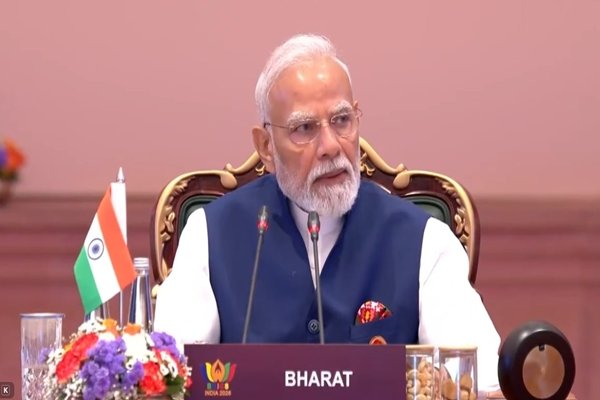
PM Modi Bilateral Meetings with 15 world leaders marked a key part of India’s diplomatic engagement during the three-day 18th BRICS Summit in New Delhi. Prime Minister Narendra Modi held discussions with leaders from BRICS member states, partner countries and Outreach Invitees.
The meetings covered strategic partnerships, trade, regional developments and global issues. The engagements also strengthened India’s diplomatic outreach across Asia, Africa, Europe and the Middle East.
Key Highlights
- Prime Minister Narendra Modi held 15 bilateral meetings during the three-day BRICS Summit.
- The meetings included leaders from Russia, China, Iran, Egypt and South Africa.
- Modi also met leaders from BRICS Partner Countries and Outreach Invitees.
- Discussions focused on bilateral ties, trade, strategic cooperation and global developments.
- Several pull-aside meetings added to India’s diplomatic engagement during the summit.
PM Modi Bilateral Meetings Strengthen Diplomatic Outreach
Prime Minister Narendra Modi held 15 bilateral meetings over three days as India hosted the 18th BRICS Summit at Bharat Mandapam in New Delhi.
The Prime Minister combined the main summit programme with an intensive schedule of bilateral engagements. He met heads of state and government from BRICS member countries, partner nations and Outreach Invitees.
The diplomatic engagements began on Friday with a meeting with Russian President Vladimir Putin. Modi also met Iranian President Masoud Pezeshkian and UN Secretary-General Antonio Guterres.
The discussions provided an opportunity to review bilateral ties. The leaders also exchanged views on key regional and international developments.
Meetings with BRICS Members and Partner Countries
On Saturday, Modi held meetings with Ethiopian Prime Minister Abiy Ahmed Ali, Malaysian Prime Minister Anwar Ibrahim, Abu Dhabi Crown Prince Sheikh Khaled bin Mohamed bin Zayed Al Nahyan and Vietnamese Prime Minister Le Minh Hung.
He also held a significant bilateral meeting with Chinese President Xi Jinping after participating in the main BRICS programme.
The summit programme included a closed session on inclusive global governance and strengthening multilateralism. Modi addressed participating leaders during the session.
The Prime Minister also visited the Bharat Innovates exhibition with BRICS leaders. He joined the customary family photograph and participated in a tree plantation activity at Bharat Mandapam.
PM Modi Bilateral Meetings Continue on Summit’s Final Day
On Sunday, Modi met leaders from BRICS Partner Countries and Outreach Invitees. He also addressed the summit session titled “Resilience, Innovation, Cooperation and Sustainability: Shaping the Future for Inclusive Global Growth”.
The Prime Minister then held a series of bilateral meetings at Bharat Mandapam.
He met Kazakhstan President Kassym-Jomart Tokayev, Philippines President Ferdinand R. Marcos Jr., Egyptian President Abdel Fattah El-Sisi and South African President Cyril Ramaphosa.
Modi also held meetings with Burundi President Evariste Ndayishimiye, Nigeria Vice-President Kashim Shettima and Uganda Vice-President Jessica Alupo.
These engagements expanded the scope of India’s diplomatic outreach beyond the core BRICS membership.
Pull-Aside Meetings Add to India’s Diplomatic Engagement
The 15 sit-down bilateral meetings were supported by several pull-aside interactions with visiting leaders and heads of international institutions.
These interactions provided additional opportunities for India to discuss areas of mutual interest. They also complemented the formal bilateral meetings held during the summit.
The engagements reflected India’s effort to use the BRICS platform for both multilateral and bilateral diplomacy.
India Expands Strategic and Economic Partnerships
The PM Modi Bilateral Meetings highlighted India’s focus on strengthening partnerships with countries across different regions.
The discussions covered trade, strategic cooperation, regional developments and global challenges. They also underlined the growing importance of BRICS and its wider partner network.
India’s intensive diplomatic schedule during the summit highlighted its role in advancing cooperation on global governance and multilateral issues.
The 15 bilateral meetings also reinforced India’s efforts to deepen economic and strategic partnerships while addressing shared regional and global priorities.
Source: Sarkaritel