


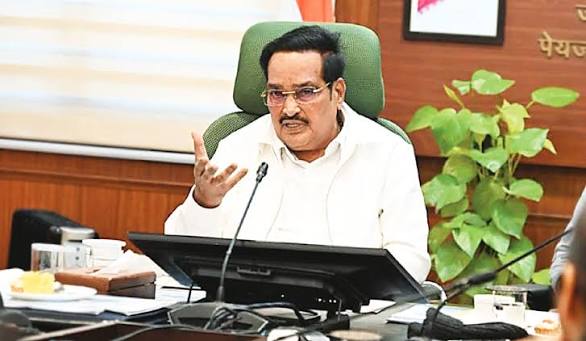
Technology only succeeds when it reaches people and is easy enough for communities to utilise efficiently, according to C.R. Patil, Union Minister for Jal Shakti. The Minister made a plea for sustainable, scalable, and inexpensive technologies to improve water treatment in rural areas and reduce plastic waste at the DDWS Innovation Challenge Grand Finale in New Delhi.
Senior officials, experts from IIT Madras, innovators, and startup founders were in attendance at the event, as were V. Somanna, Union Minister of State for Jal Shakti and Railways, Ashok K.K. Meena, Secretary of the Department of Drinking Water and Sanitation, Kamal Kishore Soan, Additional Secretary and Mission Director of the National Jal Jeevan Mission, Aishvarya Singh, Joint Secretary and Mission Director of the Swachh Bharat Mission (Grameen), and other high-ranking officials. C.R. Patil praised Prime Minister Narendra Modi’s Jal Jeevan Mission, saying that it had connected millions of rural Indian homes to piped water, completely changing the face of rural India.
Every home should have access to water, and more specifically, water that has been tested for potability, as he emphasised that this should be the primary goal of the next stage of the mission. The use of these technologies, he said, should enable local youth, Gram Panchayats, and Village Water and Sanitation Committees (VWSCs) to effectively monitor the quality of drinking water.
In response to yet another pressing issue, Patil brought attention to the increasing amount of plastic trash in rural India. This trash is mostly composed of multi-layer plastic (MLP), which comes from items like chip packs, biscuit wrappers, and pouches.
He made the astute observation that it is frequently both costly and inconvenient to carry such trash to faraway recycling centers.
In order to promote the Circular Economy, the Minister pushed for plastic processing technologies that might be implemented at the village and block levels. These technologies may turn waste into resources.
He went on to say that creative waste management solutions could help achieve Aatmanirbhar Bharat and Viksit Bharat’s goals while also providing jobs for entrepreneurs in rural areas.
Image: Daily Pioneer
Disclaimer: All news articles are sourced through valid sources, and Business Unlimited (BU) doesn’t have any exclusive rights on these pieces. If BU features any exclusive story or article, it will be marked as Exclusive Story.