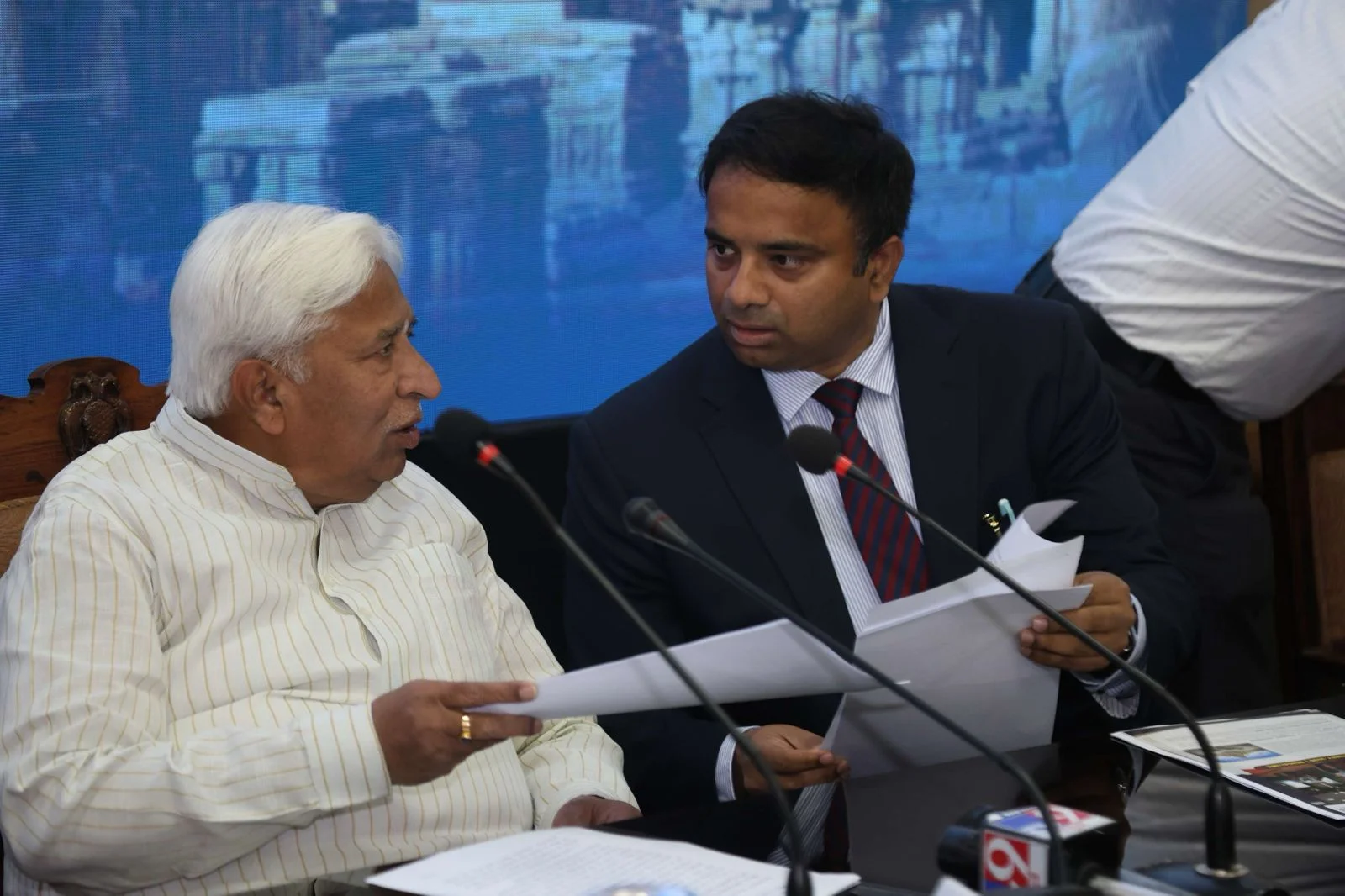


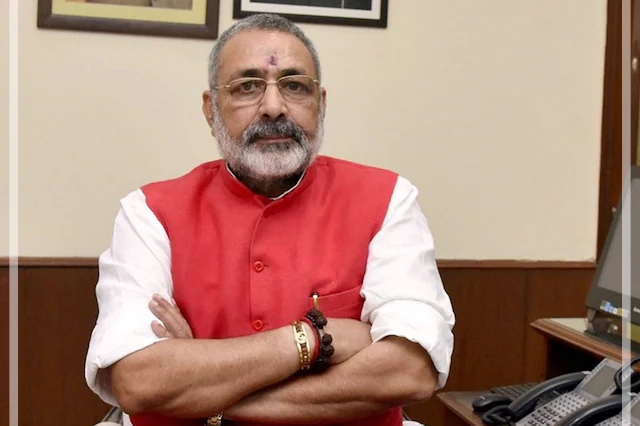
According to Union Textiles Minister Giriraj Singh, India’s textile and apparel business has grown into a highly competitive, innovative, and job-creating industry in the past 12 years under the leadership of Prime Minister Narendra Modi.
The growth of the textile sector has been guided by the Prime Minister’s 5F Vision, which stands for Farm to Fibre, Fibre to Factory, Factory to Fashion, and Fashion to Foreign. This integrated value chain connects farmers, weavers, artisans, manufacturers, and exporters across the country, according to Singh, who was highlighting the accomplishments of the Ministry of Textiles.
The minister claims that by 2025–26, India’s textile sector had grown to around USD 190 billion, and by 2030, it is expected to reach a target of USD 350 billion. As a result of the textile sector’s substantial contribution to India’s economic growth, the domestic market has expanded substantially, rising from around ₹6 lakh crore in 2014–15 to more than ₹16 lakh crore.
More than 5.3% of the world’s workforce is directly employed in the textile and apparel industry, and that number is projected to rise by about 2% in the next three years. The government has launched a number of groundbreaking programs to improve the industry’s sustainability and competitiveness. These include PM MITRA Parks, the Production Linked Incentive (PLI) Scheme, the National Technical Textiles Mission (NTTM), the Textiles Export Promotion Mission (TEEM), the National Fibre Mission, and the Raw Material Support Scheme (RMSS).
The government eliminated cotton import duties and established the Cotton Productivity Mission to aid cotton growers and guarantee a sufficient supply of raw materials. With the expansion of India’s Free Trade Agreement network from 10 FTAs encompassing 19 countries in 2014 to 18 FTAs covering 56 countries, export competitiveness has been increased through the RoSCTL and RoDTEP schemes.
In spite of the unpredictability of global trade, India has increased its exports to 135 different countries and broadened its export destinations. Under the National Technical Textiles Mission, the industry grew from about $6 billion to $25 billion, which the minister also emphasised.
Integrated textile parks and seven PM MITRA Parks have greatly enhanced infrastructure development. These parks are anticipated to attract investments totalling ₹70,000 crore and create around 21 lakh job openings.
The National Handloom Development Programme has received investments of approximately ₹2,000 crore, according to Minister of State for Textiles Pabitra Margherita. As a result, thousands of weavers have benefited from these investments in infrastructure, skill development, and access to markets. Additional initiatives that have bolstered the handloom ecosystem include the Weavers’ MUDRA Scheme, India Handmade portal, GI labelling, Mega Handloom Clusters, and the Government e-Marketplace (GeM).
Secretary of Textiles Neelam Shami Rao highlighted the increasing participation of women in the textile industry, both as employees and business owners. She was certain that India can become a leading global textile powerhouse and make a big contribution to Viksit Bharat with sustained policy support, technological innovation, talent enhancement, and infrastructure development.
Thanks to reforms in legislation, improvements in infrastructure, more exports, and initiatives centred on innovation, India’s textile sector has become a major engine of economic growth. The industry has lofty goals for investment, exports, and employment, putting it in a prime position to help India achieve its vision of a prosperous India by 2047 and increase its global manufacturing presence.
Image: News on Air
Disclaimer: All news articles are sourced through valid sources, and Business Unlimited (BU) doesn’t have any exclusive rights on these pieces. If BU features any exclusive story or article, it will be marked as Exclusive Story.