


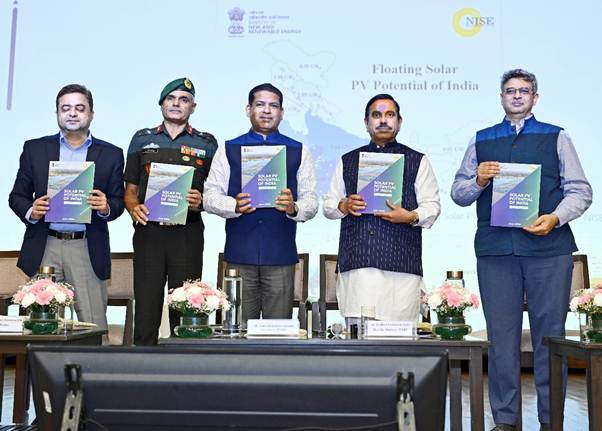
With the evaluation of over 102 GWp of floating solar photovoltaic (PV) capacity, India has reached a major milestone in its renewable energy path, bringing the country’s overall estimated solar power potential to 3,445 GWp.
Pralhad Joshi, India’s Union Minister for New and Renewable Energy, made the announcement and stated that the government is now working on a specific plan to speed up the nationwide deployment of floating solar installations.
Reservoirs, lakes, and other bodies of water are rapidly rising in value as assets for renewable energy production, as the minister pointed out. In addition to maximising the use of existing water resources, floating solar projects aid in the generation of renewable energy without necessitating expansive plots of land.
These measures show that the government is committed to using resources sustainably and are helping India achieve its ambitious renewable energy transition goals, says Joshi.
The minister also unveiled the Small Hydro Power Development Scheme’s website, calling it a significant policy move in the industry since 2017. Small hydro projects around the country can benefit from the portal’s anticipated increased openness, efficiency, and ease of implementation.
Joshi highlighted that flagship programs like PM-KUSUM and PM Surya Ghar: Muft Bijli Yojana are facilitating a faster shift towards cleaner electricity sources in India and boosting public engagement in their adoption.
Over the last twelve years, he said, India has become a world leader in sustainable energy thanks to Prime Minister Narendra Modi’s leadership.
While installed solar capacity increased substantially from 2.8 GW to 155 GW between 2014 and 2018, the minister pointed out that India’s non-fossil fuel power capacity increased from 81 GW to 288 GW.
A robust ecosystem for the production of renewable energy in India has also emerged. Reflecting the country’s increasing reliance on clean energy technology, domestic solar module manufacturing capacity has reached 192 GW and solar cell manufacturing capacity has risen to 30 GW.
As an example of India’s rising international profile, Joshi said that the country has gone from having a power deficit to a surplus and has received praise for its efforts to achieve lofty renewable energy and climate goals.
There was a signing of an MoU to increase the use of solar power at defence facilities between the Military Engineering Services (MES) and the National Institute of Solar Energy (NISE). Renewable energy project development, execution, and monitoring will receive technical support from NISE as per the agreement.
The minister also presented Dr. Mohammad Rihan’s book “Green Energy and Sustainable Development” and lauded NISE for its work in promoting renewable energy in India through research, innovation, and technical assistance.
Joshi stated his firm belief that the new efforts would play a major role in constructing an independent and prosperous India that runs on renewable energy.
Image:PIB
Disclaimer: All news articles are sourced through valid sources, and Business Unlimited (BU) doesn’t have any exclusive rights on these pieces. If BU features any exclusive story or article, it will be marked as Exclusive Story.