

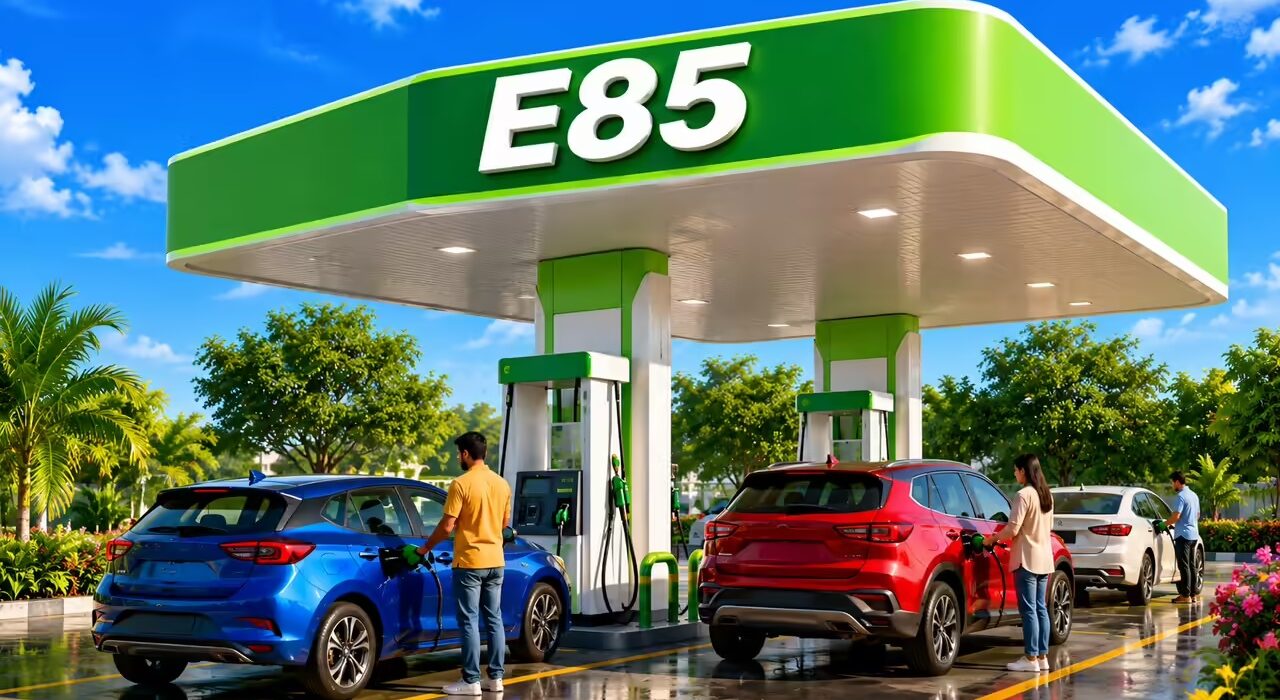
On Wednesday, Hardeep Singh Puri, the Union Minister for Petroleum and Natural Gas, announced that the government has begun selling E85 fuel to flex-fuel vehicles that are compatible with it. He also added that the government is consulting with the car industry extensively about the potential growth of ethanol-based fuels.
During an exclusive interview with IANS, Puri brought attention to India’s impressive ethanol blending progress, saying that the government has achieved its goals significantly sooner than anticipated.
The minister claims that the percentage of ethanol in petrol has risen from 1.5% in 2014 to 10% in November 2022, and that the government’s lofty goal of 20% ethanol by 2030 was met in 2024.
It was in November 2022 that we reached our goal of increasing the ethanol blend from 1.5% in 2014 to 10%. “We achieved 20% blending in 2024 itself, even though our target was 2030,” Puri announced.
In addition, the minister shared that the government is now holding extensive consultations with various stakeholders, such as SIALM and other industry groups, to determine the best course of action for increasing the use of ethanol in transportation.
Many groups in the industry, including SIAM, are part of our extensive conversations. At the same time, E85 fuel has been introduced. But E85 can only be used in flex-fuel vehicles that are compatible with it, he said.
The introduction of E85 fuel—a mixture of petrol and up to 85 percent ethanol—is seen as a significant step toward cleaner transportation options and less reliance on imported fossil fuels.
Puri highlighted that India is making steady progress toward energy self-reliance by increasing domestic exploration of oil and gas, higher adoption of biofuels, and expansion of renewable energy capacity, as part of the country’s broader energy strategy.
The minister also brought attention to the Samudra Manthan plan, which Prime Minister Narendra Modi had announced. This initiative has allocated Rs 90,000 crore to dig new wells and enhance the country’s capacity to produce energy.
In response to questions about the cost of petrol, Puri said that, notwithstanding changes in the global crude oil market, petrol prices in Delhi are still lower than they were four years ago.
He said that this was because the federal government had slashed petrol and diesel excise charges many times, most recently in November 2021 and May 2022. To further alleviate consumer pressure, the BJP government of several states has lowered the value-added tax on petrol.
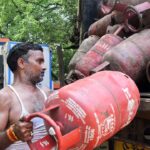
In response to questions about the Pradhan Mantri Ujjwala Yojana’s decision to reduce the number of subsidised LPG cylinders, the minister stated that the change was made to prevent the abuse of government subsidies.
Puri states that allegations were received by authorities suggesting that some recipients were using their subsidised LPG cylinders for commercial purposes or reselling them even though they did not need the entire allocation.
He restated the government’s goal of increasing efficiency and openness in subsidy distribution while making sure social funds reach real recipients.
Achieving the 20% ethanol blending goal ahead of schedule and introducing E85 fuel are major steps in India’s clean energy revolution. India is making strides toward energy independence and security through sustained partnerships between the government and the automotive sector, investments in renewable energy and domestic energy generation, and other measures.
Image: TOI
Disclaimer: All news articles are sourced through valid sources, and Business Unlimited (BU) doesn’t have any exclusive rights on these pieces. If BU features any exclusive story or article, it will be marked as Exclusive Story.