

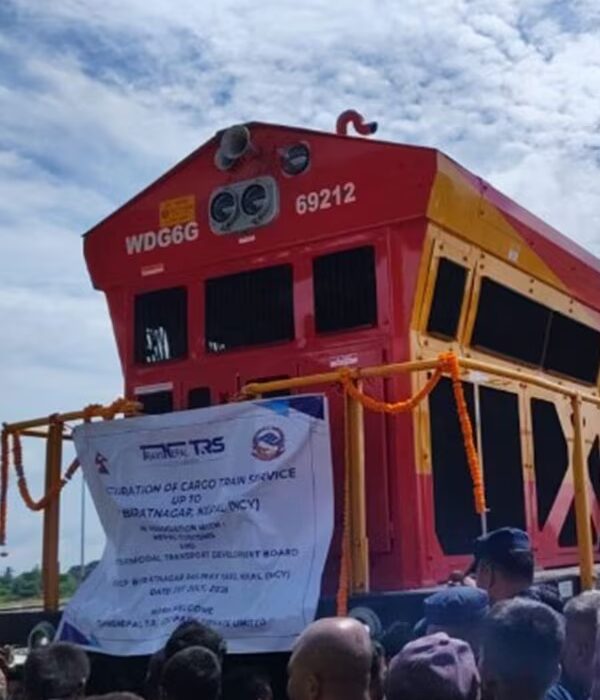
As a major step forward in cross-border rail connectivity between Nepal and India, Indian Railways has operated the first-ever direct commercial container goods train from Kolkata Port to Biratnagar Customs Yard in Nepal. The 40-wagon goods train, which was transporting canola, crossed the border without a hitch thanks to the updated India-Nepal Rail Transit Protocol, which allows containerised goods to travel freely between the two countries. This new discovery is anticipated to revolutionise bilateral freight transit by enhancing the speed, efficiency, and cost-effectiveness of cargo moving.
The new direct rail freight service cuts out the middleman, saving time and money on logistics, by allowing containers to go straight from Kolkata Port to Biratnagar Customs Yard. The initiative’s goal is to increase supply chain efficiency, decrease transportation costs, and improve freight movement reliability by decreasing cargo movements at the border. The service is anticipated to be advantageous for businesses involved in commerce between India and Nepal, including exporters, importers, logistics organisations, and others, as it offers a more efficient and cost-effective means of transportation.
The broad-gauge rail link between Jogbani (India) and Biratnagar (Nepal), inaugurated in June 2023 by the then-prime ministers of Nepal and India, respectively, is the foundation upon which this landmark rests. After the amended Letter of Exchange (LoE) was signed in November 2025, direct commercial freight services could be operationalised. This paved the door for seamless rail-based cargo transportation under the updated India-Nepal Rail Transit Protocol. There will likely be more commerce and closer economic ties between the two adjacent nations as a result of the improved framework.
Launching the direct container freight service is a testament to Indian Railways’ unwavering commitment to enhancing freight operations, boosting international rail connections, and aligning with the government’s goal of making doing business easier. By moving freight from roads to rails, we can increase cargo reliability, cut logistical costs, and encourage more ecologically friendly transportation. In addition to helping India achieve its larger goal of creating a state-of-the-art, efficient, and internationally linked goods transportation network, the project is anticipated to enhance economic integration within the area.
It is a significant achievement in regional connectivity that India’s first direct commercial container goods train to Nepal has successfully operated. The program aims to alleviate logistical costs, facilitate smooth rail-based cargo movement between Biratnagar and Kolkata Port, and strengthen India’s position in enhancing cross-border transport infrastructure. These goals will enhance bilateral trade.
Image: Mint