

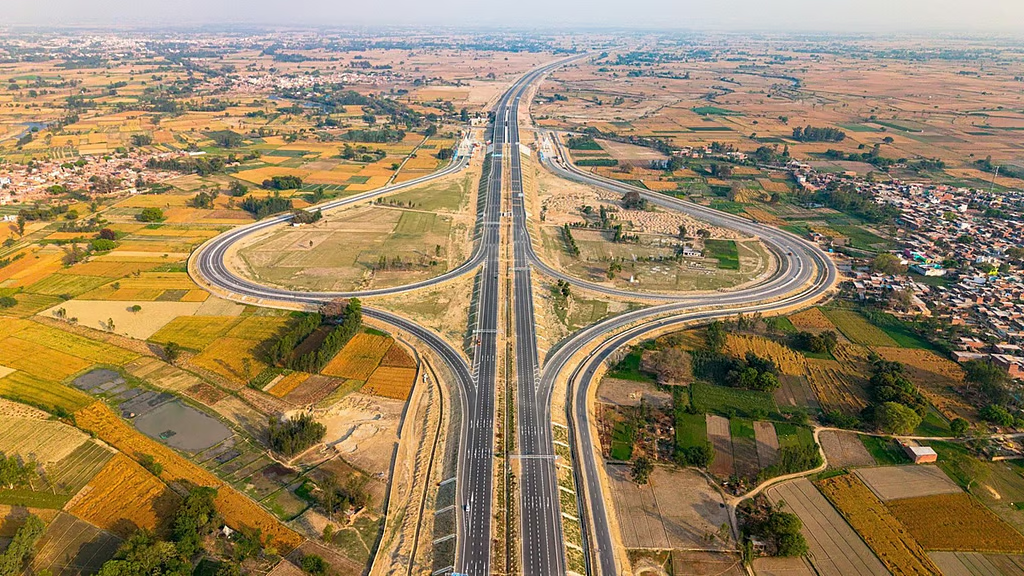
The Greater Noida Ganga Expressway connectivity plan aims to cut travel time between Greater Noida and the Ganga Expressway to around 30–45 minutes. The Greater Noida Industrial Development Authority (GNIDA) has proposed a 105-metre-wide road to the Hapur bypass as part of the plan.
The proposal was discussed at a meeting chaired by Uttar Pradesh Industrial Development Minister Nand Gopal Gupta in Lucknow on Monday. Additional Chief Secretary, Industrial Development, Alok Kumar, also attended the meeting, according to a statement from the minister’s office.
Greater Noida Ganga Expressway Connectivity Plan
GNIDA officials said the proposed road would improve connectivity between Noida-Greater Noida and the Ganga Expressway. The authority has proposed extending the connectivity by around 15 km to establish a direct link with the expressway.
The 105-metre-wide road is also part of a broader plan to separate freight and passenger movement in Greater Noida. This approach is expected to improve traffic management and support the region’s growing industrial and logistics activity.
Six-Lane Elevated Road to Jewar Airport
GNIDA has also proposed a six-lane elevated road connecting the Multi Modal Logistics Hub (MMLH) with the Noida International Airport in Jewar.
The elevated road is proposed to run parallel to the Western Dedicated Freight Corridor. It will be designed mainly for freight movement and will provide a direct connection between the logistics hub and the airport’s air cargo terminal.
The proposed connectivity could allow goods from the MMLH to move directly to the air cargo terminal, supporting faster freight transportation and logistics operations.
Greater Noida Master Plan 2041
The MMLH and Multi Modal Transport Hub (MMTH) are among the key upcoming projects in Greater Noida. They are expected to strengthen freight movement and improve traffic flow between the logistics hub and the airport.
The connectivity proposals form part of the proposed amendments to the Greater Noida Master Plan 2041, with a focus on separating freight and passenger movement and improving regional infrastructure.
Source: PSU Watch