


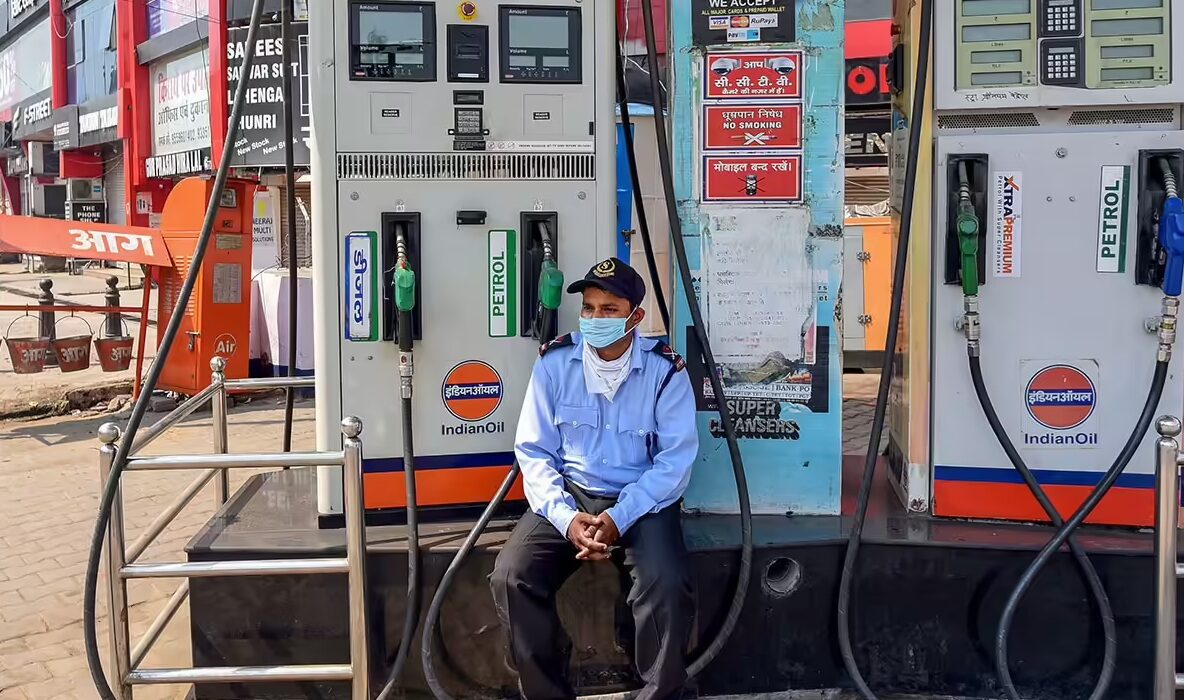
The Indian government has tightened regulations on fuel distribution and temporarily restricted the sale of petrol and diesel in bulk at retail fuel stations in response to increasing volatility in the global energy market and constraints on the supply chain.
The limitations, as stated in the official notice, will be in place for the first 90 days, and thereafter will be subject to further modifications or removal by government order.
Retail fuel outlets are restricted in their ability to sell high-speed diesel (HSD) due to a specific guideline.
More than 200 litres of diesel cannot be sold to a single customer or vehicle in a single day by retail fuel dealers per the new regulations.
To further increase control over fuel distribution and decrease the likelihood of diversion into illegal commercial channels, the government has also outlawed the resale of diesel purchased at retail fuel stations.
Fuel provided at retail stores mostly serves individual consumers, while approved commercial mechanisms provide supply to large-scale users, according to the policy.
Instead of using public retail stations, institutional and business users are now required to get their fuel needs through designated consumer pumps, captive facilities, or other authorised procurement channels.
Industries that have relied on retail fuel sales for operational needs, including transportation, logistics, construction, and industrial activities, are likely to be impacted by the change.
According to industry watchers, big oil marketing corporations may start keeping a closer eye on retail fuel sales if the new regulations force them to change their fuel procurement habits.
There may be more checks and balances put in place to ensure that state-owned oil marketing businesses like IOC, BPCL, and HPCL are following the new regulations when it comes to retail fuel distribution.
The decision is made in the midst of increased geopolitical tensions in the Middle East, which have contributed to heightened volatility in global energy markets.
International crude oil prices have risen due to recent interruptions to shipping routes and crude oil supplies travelling through the Strait of Hormuz, a world-renowned energy corridor.
The region is crucial to the world’s energy security since the Strait of Hormuz is where approximately 20% of the world’s oil commerce goes, the research states.
There has been an upward revision in domestic gasoline prices in India due to the rise in international crude prices.
There has been a reported 4.75 rupee increase in the price of petrol and 4.82 rupee increase in the price of diesel in Delhi since May 15.
These price hikes are a direct outcome of supply-side worries brought on by continuing geopolitical events and persistent pressure from worldwide crude oil markets.
According to Indian government officials, the country was one of the few big economies that did not quickly pass on price increases to consumers, and it had maintained steady domestic fuel prices for a long time despite global volatility.
Authorities hope that the new regulations would help them keep a tighter eye on gasoline distribution, put an end to illegal marketing, and guarantee that regular people have enough petrol and diesel when the market is tight.
In light of the worldwide energy crisis, India has decided to limit the sale of bulk diesel and petrol at retail shops, which is a big step toward enhancing the supervision of fuel distribution. During this time of increased geopolitical and market instability, the government is trying to protect consumer interests by guiding business users onto dedicated procurement channels, limiting large-volume purchases, and preventing diversion.
Image: TOI
Disclaimer: All news articles are sourced through valid sources, and Business Unlimited (BU) doesn’t have any exclusive rights on these pieces. If BU features any exclusive story or article, it will be marked as Exclusive Story.