


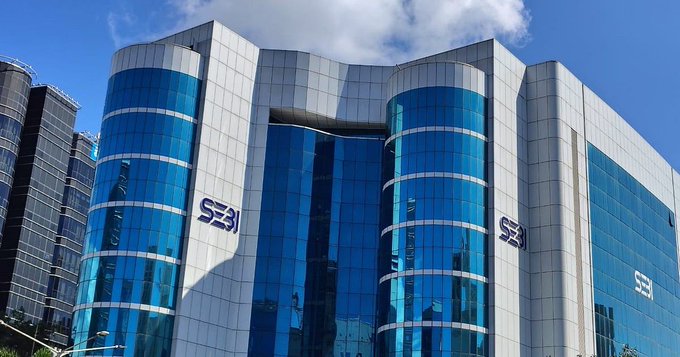
Securitised debt instruments (SDIs) and municipal debt securities (MDS) have had changes to their regulatory framework approved by the Securities and Exchange Board of India (SEBI) on Friday.
Both changes sought to bring securitisation rules into line with those of the Reserve Bank of India, streamline operations, and encourage the growth of listed securitisation and municipal bond markets in the nation. The new framework removes the current obligor concentration limit for single-asset securitisation transactions, which applies to non-bank financial companies (NBFCs) and banks supervised by the Reserve Bank of India (RBI).
To make investors aware of the risks involved, issuers must prominently disclose concentration risks in offer materials that arise from such transactions.
Changes to reporting and disclosure requirements pertaining to securitised assets were also suggested by SEBI. From now on, the burden of collecting and reporting periodic disclosures, such as performance statistics and monthly reports, will fall on the servicer rather than the originator alone.
When it came to SPDEs involving originators regulated by RBI, the regulator went the extra mile to ensure that their governance standards were in sync. In accordance with RBI’s securitisation structure, such firms will be limited to having no more than one person from the originator on the SPDE board.
In order to remove any room for confusion about the interpretation of current laws, SEBI further made it clear that an SPDE cannot acquire receivables or debt from an originator if the originator is either part of the same group as the trustee or is under the same control as the trustee.
If an existing trustee’s registration is suspended or terminated, SEBI will be able to appoint a new one thanks to the modifications.
In order to foster the growth of India’s municipal bond market, SEBI separately authorised revisions to the rules governing municipal debt securities. Local governments will be able to restructure their debt by refinancing current projects with the help of the updated framework.
In order for investors to evaluate the financial stability and liquidity risks associated with a municipality, offer documents or placement memorandums must provide information on current lenders and refinanced loans.
The authority also clarified the rules around the use of pooled finance vehicles for fundraising by multiple towns. In the offer documents, the issuer will include the necessary disclosures, as well as the operational details, including the agreements between municipalities and pooled finance special purpose entities (SPVs), and the systems for escrow accounts to facilitate repayment plans.
In order to promote retail investment in municipal debt securities, issuers can provide incentives like discounted issue prices or additional interest to specific groups of people, such as women, senior citizens, active and retired military personnel, widows and widowers of military personnel, retail individual investors, and other groups defined by SEBI.
For private placement municipal debt securities, the regulating body will additionally set the face value and trading lots. Both one lakh and ten thousand rupees are possible face values for such instruments. No structured obligations would be permitted in securities with a face value of Rs 10,000 and they will have a set maturity.
Public issuance of municipal debt instruments can now use electronic means of advertisement, according to SEBI.
IMage: News on Air
Disclaimer: All news articles are sourced through valid sources, and Business Unlimited (BU) doesn’t have any exclusive rights on these pieces. If BU features any exclusive story or article, it will be marked as Exclusive Story.