

Despite economic uncertainty caused by the Middle East crisis, India’s growth will outpace that of most other major economies, according to the World Bank, which has raised its growth forecast for India but lowered its forecasts for other of the world’s economies.
The World Bank revised its GDP growth prediction for India for 2026 from 6.5% to 6.6% in its most recent Global Economic Prospects Report. The previous estimate was 6.5%. Additionally, the institution’s prognosis for 2027 has been raised from 6.6% to 7.2%, a considerable rise.
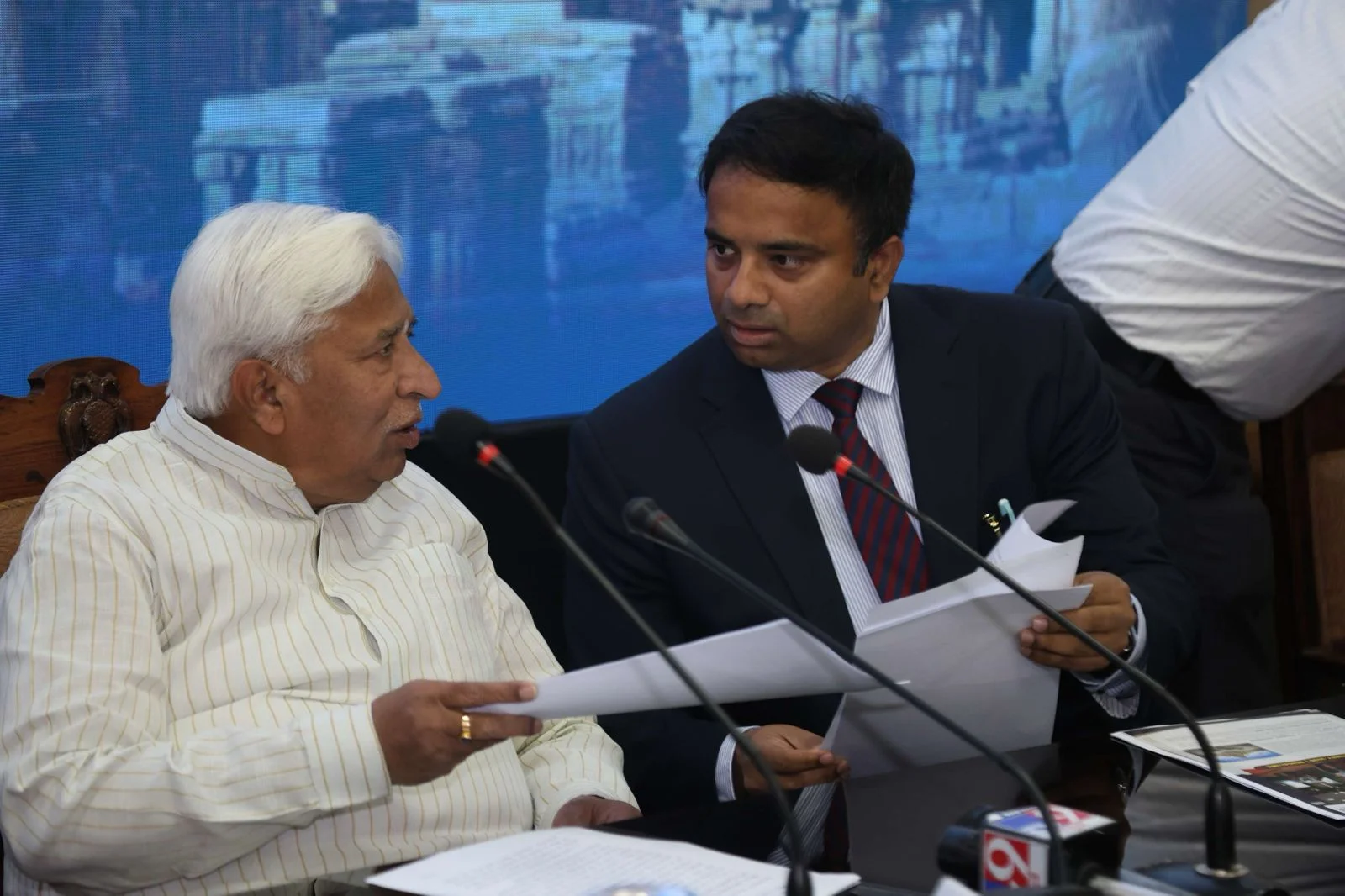
Deputy Chief Economist Ayhan Kose of the World Bank praised India’s robust economy and its ability to weather global storms during a news conference.
In response to the report’s conclusions, Kose stated, “India remains the fastest growing large economy in the world.”
In response to a query on how the Gulf War affected India’s economy, Kose said that the updated prediction was based on stronger-than-expected domestic demand, which has mitigated the negative consequences of Middle Eastern geopolitical tensions.
World Bank data shows that despite pressure from rising oil prices and worldwide uncertainties, India’s economy is stable due to strong fundamentals.
“Looking at the bigger picture for India, there is still incredible dynamism,” Kose said, noting that the government has taken the required legislative steps to maintain growth.
While the survey predicts that South Asia will continue to be the fastest-growing region internationally in 2026, it does predict that regional growth would drop to 6.3% from 7.0% in 2025 as a result of increased energy prices and wider spillover effects from the conflict in the Middle East.
One of the few big countries to see growth predictions revised upward, India’s prospects have been brightened by a revival in both domestic consumption and exports, according to the World Bank.
At the same time, the organization issued a warning that the ongoing crisis in the Middle East might cause global growth to decelerate to 2.5% in 2026, from 2.9% in 2025—the worst expansion rate seen since the COVID-19 pandemic. Global economic activity is anticipated to be dampened by increasing oil prices, inflationary pressures, and tighter financial conditions.
In spite of all these problems happening throughout the world, India’s economy is still growing. In 2028, the country is expected to grow by 7 percent, further solidifying its role as a major force in the global economy, according to the World Bank.
Growth in developing economies will hit a post-pandemic low of 3.6% in 2026, according to the analysis. The Gulf War has increased the price of oil and fertiliser, which can be a problem for many developing markets, especially countries that import a lot of energy.
Maintaining investor confidence and promoting long-term economic progress, India stands out from many global counterparts because to its combination of solid domestic demand, export recovery, and sound policy initiatives.
Rising geopolitical tensions and a cooling global economy have not dampened India’s economic resilience, as the World Bank has revised its growth projection upwards. In the years to come, India is likely to continue to be the world’s fastest-growing major economy thanks to robust internal demand, improved exports, and enabling policy initiatives.
Image: The CSR Journal
Disclaimer: All news articles are sourced through valid sources, and Business Unlimited (BU) doesn’t have any exclusive rights on these pieces. If BU features any exclusive story or article, it will be marked as Exclusive Story.