

The National Innovation Challenge for Drone Application and Research (NIDAR 2.0) for 2026–27 is another big step towards India becoming a world leader in drone technology. The program, which is part of the SwaYaan initiative and was launched by the Ministry of Electronics and Information Technology (MeitY) and the Drone Federation India (DFI), is designed to speed up the development of indigenous drone technology and autonomous systems.
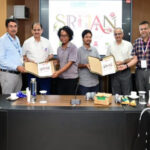
Secretary S. Krishnan of MeitY unveiled the official problem statements, competition poster, and rules at Electronics Niketan in New Delhi, launching the challenge. As he put it, NIDAR 2.0 is laying the groundwork for India’s autonomous drone ecosystem, marking a big change from controlling drones to building their intelligence.
Included in this version is the VEGA processor, which was created as part of the Digital India RISC-V (DIR-V) initiative; it is a major highlight. Supporting India’s larger goal of increasing domestic innovation and decreasing reliance on imported semiconductor technologies, the effort encourages students to develop drone intelligence using an indigenous processor architecture.
Representatives from the Ministries of Civil Aviation, Defence, Home Affairs, DGCA, academia, and industry were among those in attendance at the launch event, which also included senior executives from MeitY, the India Semiconductor Mission, and the Drone Federation India. The government’s increasing focus on creating a cooperative and future-proof drone ecosystem was evident in their attendance.
The debut edition’s success has set a solid groundwork for the expanded program. Students from 109 cities and 22 states (including 4 union territories) flocked to NIDAR 2025 to create drone solutions for disaster management and precision agriculture. There were 93 teams who made it to the finals, and 24 teams won rewards totalling Rs 40 lakh.
Two new competition tracks at NIDAR 2.0 build on this success by showcasing autonomous systems and indigenous avionics as well as the fundamental drone components. The program aims to foster innovation in the youth of India and forward the goals of Make in India, Digital India, and the nation’s desire to become a leading center for semiconductor and drone technology on a worldwide scale.
In order to achieve its long-term objectives in autonomous aviation, semiconductor design, and advanced manufacturing, India is enabling its students to build state-of-the-art indigenous drone technology with NIDAR 2.0.
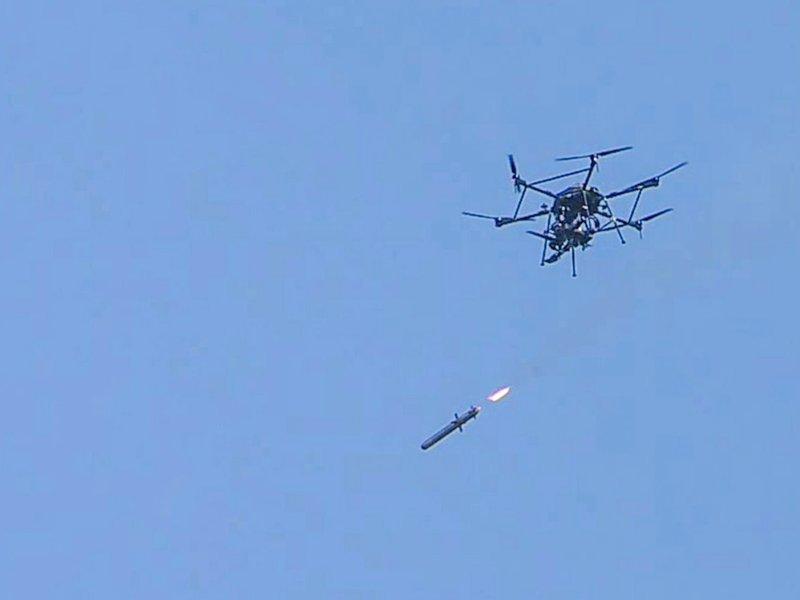
Image: The Hawk
Disclaimer: All news articles are sourced through valid sources, and Business Unlimited (BU) doesn’t have any exclusive rights on these pieces. If BU features any exclusive story or article, it will be marked as Exclusive Story.