


On Wednesday, the government of India released facts with the Lok Sabha regarding the total primary energy supply (TPES), which increased from 37,936 Petajoules in 2023-24 to a projected 39,055 Petajoules in 2024-25.
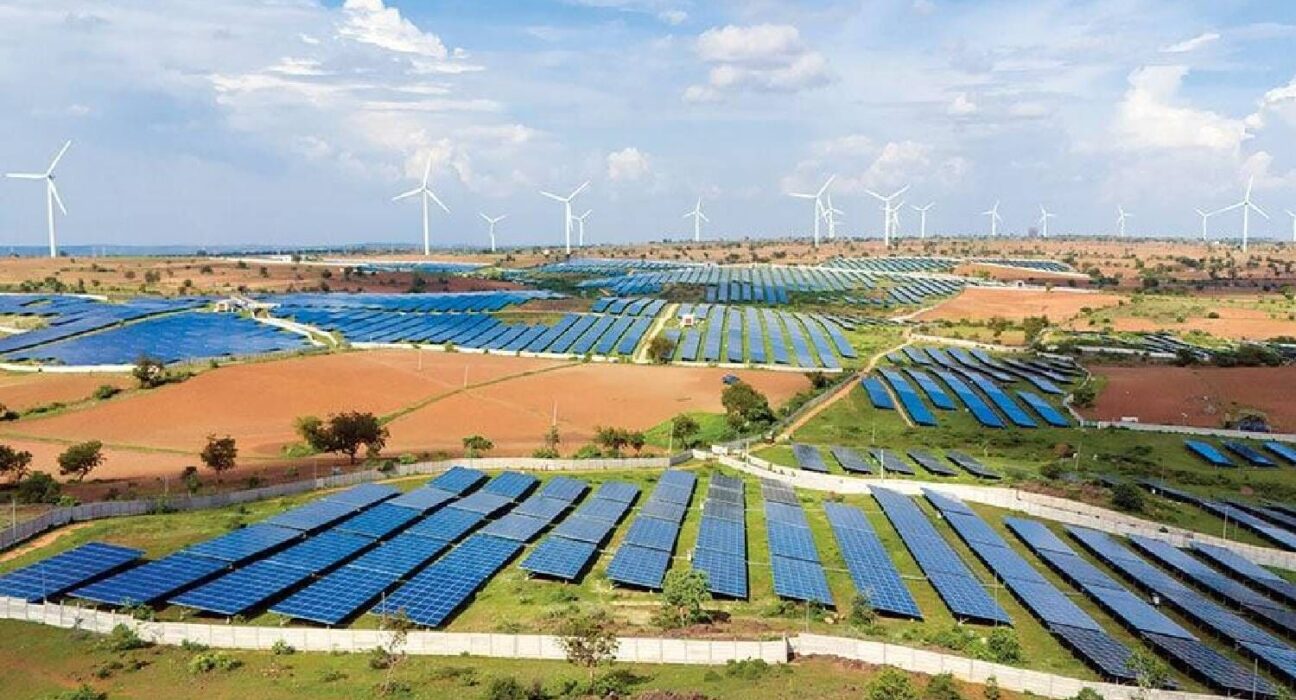
Rao Inderjit Singh, the Minister of State (Independent Charge) for Statistics and Programme Implementation, announced in a written response that the nation’s potential for renewable energy has more than doubled from 2,109,655 MW as of March 31, 2024, to 4,704,043 MW as of March 20,25.
The minister elaborated that the standard unit for measuring large-scale national energy supply is the Petajoule (PJ), which is equal to 10¹⁵ joules, or about 278 gigawatt-hours (GWh) of energy.
The Ministry of Statistics and Programme Implementation (MoSPI) has enhanced data collection through digital platforms, such as the e-SIGMA system and Computer Assisted Personal Interview (CAPI), according to Singh, who was highlighting advancements in official statistical systems. Official statistics are now more accurate and reliable thanks to these platforms’ real-time validation checks, AI-enabled chatbots, multilingual interfaces, and continuous data monitoring.
The minister stated that the time it takes to release survey findings has been drastically cut due to the usage of digital technologies. Much faster data releases are now occurring, compared to 8-9 months in the past. Results from annual surveys are often released between 90 and 120 days after completion, whereas quarterly surveys typically take 45 to 60 days, and monthly surveys typically take 15 to 30 days.
Researchers, legislators, and other interested parties now have access to anonymised unit-level survey data thanks to MoSPI’s redesigned Microdata Portal, which aims to encourage openness and evidence-based policymaking.
To better reflect India’s changing economic structure and conform to international statistical standards, the government has revised the base years of important macroeconomic indicators, as Singh informed Parliament. The 2012=100 base year for the Consumer Price Index (CPI) has been altered to 2024=100, the basis year for the Index of Industrial Production (IIP) has been updated to 2022-23 as well, and the base year for Gross Domestic Product (GDP) has been revised from 2011-12 to 2022-23.
New official statistics show that renewable energy potential in India is rapidly expanding, and that the country’s energy demand is also on the rise. Policy planning, transparency, and support for India’s long-term energy transformation and economic objectives are anticipated to be enhanced by these initiatives, in addition to the modernisation of statistical systems and updates to important economic indicators.
Image: BizzBuzz News