


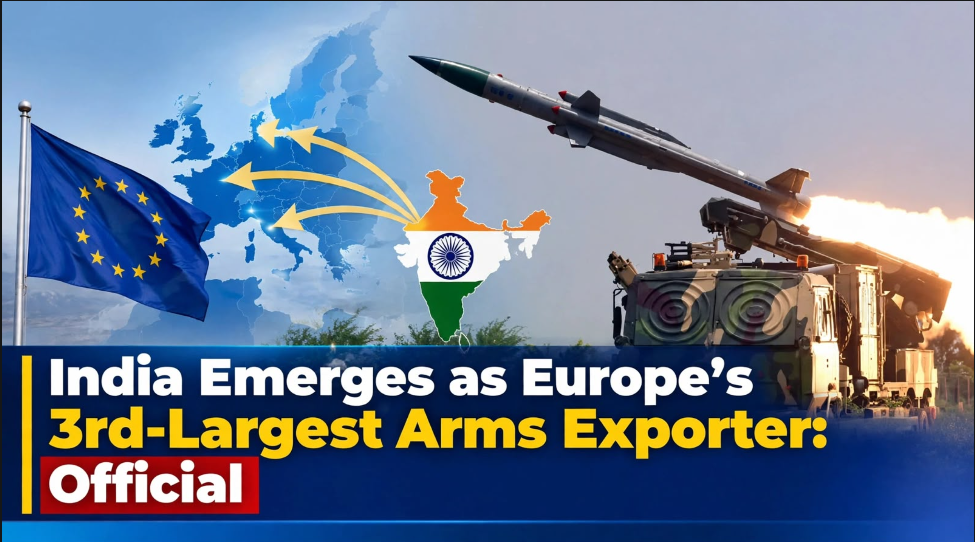
India’s defence exports rose 62.66% from ₹23,622 crore in FY 2024–25 to ₹38,424 crore in FY 2025–26, according to figures released by the Ministry of Defence. The total is equivalent to approximately €3.6 billion.
Singh attributed the growth in exports to increased demand for standard ammunition, artillery shells and large- and small-calibre ammunition in European markets. The demand also aligns with Europe’s “ReArm Europe” initiative, which seeks to strengthen the region’s defence capabilities.
India’s defence manufacturing ecosystem includes 16 major public sector companies, around 840 large and medium-sized private firms, and approximately 17,000 small enterprises, including startups.
India Expands Defence Exports to Global Markets
India now exports defence products to more than 80 countries. Its portfolio includes artillery systems, ammunition, small arms, helmets, bulletproof jackets and other tactical equipment.
The government aims to allocate 75% of annual defence capital expenditure to domestic procurement. It also prioritises Indian-designed, developed and manufactured (IDDM) products to strengthen domestic capabilities and reduce dependence on imports.
Singh highlighted growing international interest in Indian defence components, small arms and artillery systems. Buyers in Southeast Asia have also shown interest in these products, creating additional opportunities for Indian manufacturers to expand their overseas presence.
India and Europe Explore Defence Partnerships
India plans to deepen defence cooperation with European countries through joint ventures and integrated supply chains. Indian manufacturers could establish ventures in Europe to participate in government procurement programmes. European companies, meanwhile, could develop manufacturing partnerships in India under the Make in India framework.
According to Singh, closer collaboration could strengthen supply chain integration between Indian and European defence manufacturers. Such partnerships could also expand market access and create opportunities for industrial cooperation.
India has also diversified its defence import sources over the years. France and Israel are among its significant suppliers, alongside its longstanding defence relationship with Russia.
India’s record defence exports and expanding international reach reflect the growth of its domestic manufacturing sector. Greater cooperation with European partners could open further opportunities through joint ventures, manufacturing partnerships and integrated supply chains. The reported third-place ranking in Europe, however, relates to the period and export categories covered by the Bloomberg report cited by Singh.