


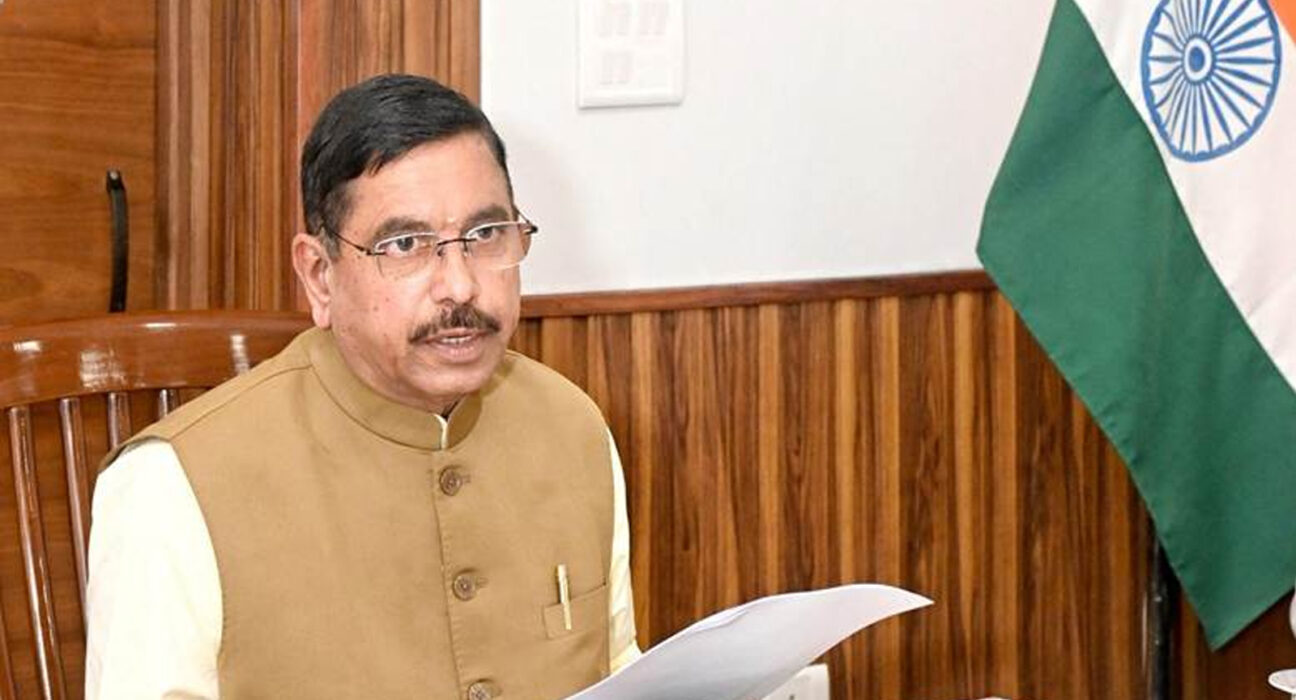
Union Minister for New and Renewable Energy Pralhad Joshi highlighted India’s fast progress in clean energy expansion on Tuesday, saying that the country is on track to reach its ambitious target of 500 GW of non-fossil fuel generating capacity by 2030.
The minister made the statement at the CII Annual Business Summit 2026, noting that India’s transition to renewable energy is increasing the country’s energy capacity and establishing a framework for an independent and competitive energy market.
The capacity of India’s non-fossil fuel energy sources has increased dramatically, going from 81 GW in 2014 to 288 GW at present, an increase of almost 256%. Energy generated by wind has increased from 21 GW to 56.4 GW, and solar power has skyrocketed from 2.8 GW to 155 GW.
According to Joshi, more grid resilience and more integration of generation, storage, and transmission technologies are necessary for the next stage of expansion. To keep the momentum going, he stressed, the government and industry must work together consistently.
International trust in India’s clean energy trajectory is growing, as the country continues to garner robust capital inflows despite a 7% fall in worldwide renewable investments.
A growing number of industries, including the steel, aluminium, automotive, and textile sectors, are recognising the importance of renewable energy to their competitiveness, as highlighted by the minister. The next stage of growth is anticipated to be driven by emerging markets such as renewable energy solutions that run 24/7, offshore wind, battery storage, green hydrogen, and similar products.
He expressed his belief that India will become a world leader in sustainable industrial transformation and extended an invitation to all those involved in the renewable energy sector to attend the Renewable Energy Global Investors Meet.
According to Joshi, renewable energy adoption is crucial for sustainable economic growth and export competitiveness, and this is in reference to recent public pleas by Narendra Modi on sustainable living and self-reliance. Joshi further argued that energy policy is now tightly linked with industrial and trade strategy.
Image Credit: DD News
Disclaimer: All news articles are sourced through valid sources, and Business Unlimited (BU) doesn’t have any exclusive rights on these pieces. If BU features any exclusive story or article, it will be marked as Exclusive Story.