

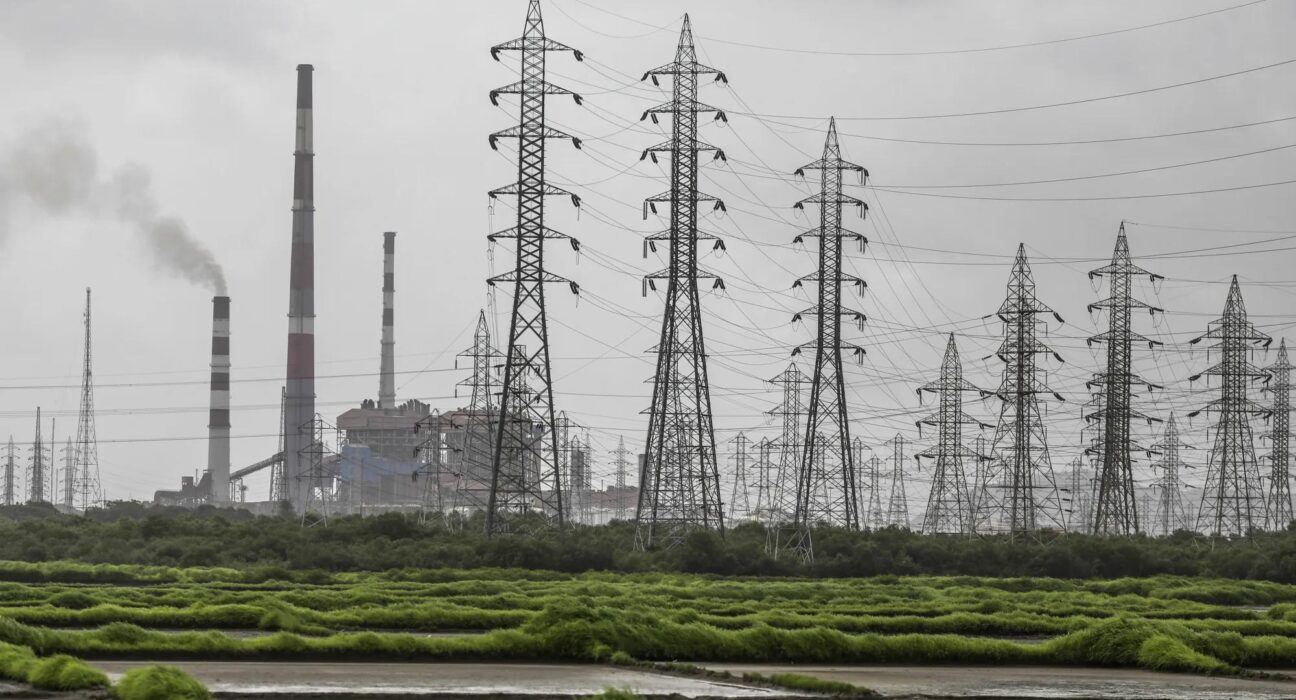
The government has outlined a broad framework of power sector reforms to balance the financial sustainability of the electricity sector with affordable and reliable power for consumers. The framework operates under the Electricity Act, 2003 and includes the National Electricity Policy, Tariff Policy and regulations issued by the Centre, Central Electricity Authority and electricity regulators.
The government is also working to reduce power generation, procurement and distribution costs. Measures include competitive power procurement, access to power exchanges, cheaper domestic coal for eligible plants and priority dispatch for lower-cost interstate generating stations. The Revamped Distribution Sector Scheme (RDSS) also encourages distribution companies to cut technical and commercial losses.
Draft power policy focuses on cost recovery
The Draft National Electricity Policy, 2026 proposes changes to improve the financial position of distribution companies while aligning tariffs more closely with supply costs.
Under the draft, distribution companies would prepare Resource Adequacy Plans for least-cost power procurement. Tariffs would also gradually recover fixed costs through demand or fixed charges.
The policy proposes automatic monthly Fuel and Power Purchase Cost Adjustment (FPPCA) mechanisms to account for changes in fuel and power purchase costs. It also proposes a stabilisation fund to reduce the impact of sharp cost fluctuations on consumers. Regulators would need to ensure timely tariff revisions and tariffs that reflect prudent supply costs.
Consumer protection remains a key focus
The Electricity (Rights of Consumers) Rules, 2020 cover new connections, metering, billing, supply quality, reliability, grievance redressal and compensation for specified service deficiencies.
The Draft National Electricity Policy, 2026 also calls for reliable, affordable and quality 24×7 electricity supply. It proposes stronger online complaint systems, better complaint tracking and virtual hearings before Consumer Grievance Redressal Forums and Ombudsmen.
Government pushes distribution sector reforms
The Centre has supported distribution reforms through schemes including DDUGJY, IPDS, SAUBHAGYA and RDSS.
Launched in July 2021, the RDSS has an outlay of ₹3.03 lakh crore, including estimated Central Government support of ₹97,631 crore. The government has sanctioned projects worth ₹1.53 lakh crore for loss reduction infrastructure and ₹1.31 lakh crore for smart metering.
The Centre has also linked additional borrowing permission for states to power sector reforms. States can receive additional borrowing consent of 0.5% of GSDP after undertaking specified power sector reforms. Additional prudential norms also apply to loans for state-owned power utilities based on distribution company performance.
Power supply improves across rural and urban areas
Government data shows a rise in average electricity supply hours. Rural supply increased from 12.5 hours in FY14 to 22.6 hours in FY26. Urban supply rose from 22.1 hours to 23.4 hours over the same period.
The government is now planning additional capacity to keep generation ahead of future demand.
India plans major generation capacity expansion
The National Electricity Plan (Generation) projects installed generation capacity of 874 GW by 2031-32. States have prepared 10-year Resource Adequacy Plans covering generation and power procurement.
Thermal power capacity
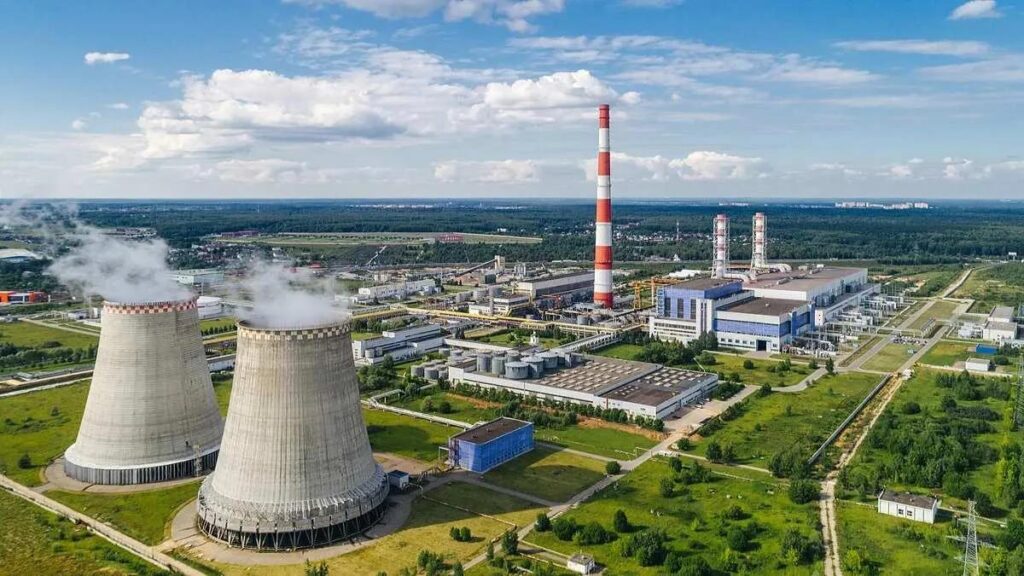
India could need around 315,000 MW of coal and lignite-based thermal capacity by 2035-36. The Ministry of Power plans at least 105,000 MW of additional thermal capacity.
Around 21,080 MW has been commissioned since April 2023 until June 30, 2026. Another 47,545 MW is under construction, including 4,845 MW of stressed projects. Contracts for another 16,000 MW have been awarded.
Hydro and nuclear capacity
The CEA projects around 16,448 MW of hydro capacity additions between 2026-27 and 2031-32. Around 400 MW has been commissioned as of June 30, 2026, while 12,973 MW is under construction.
The nuclear sector has 8,000 MW under construction, with completion targeted by 2031-32. Another 5,600 MW is at planning and approval stages.
Renewable energy expansion
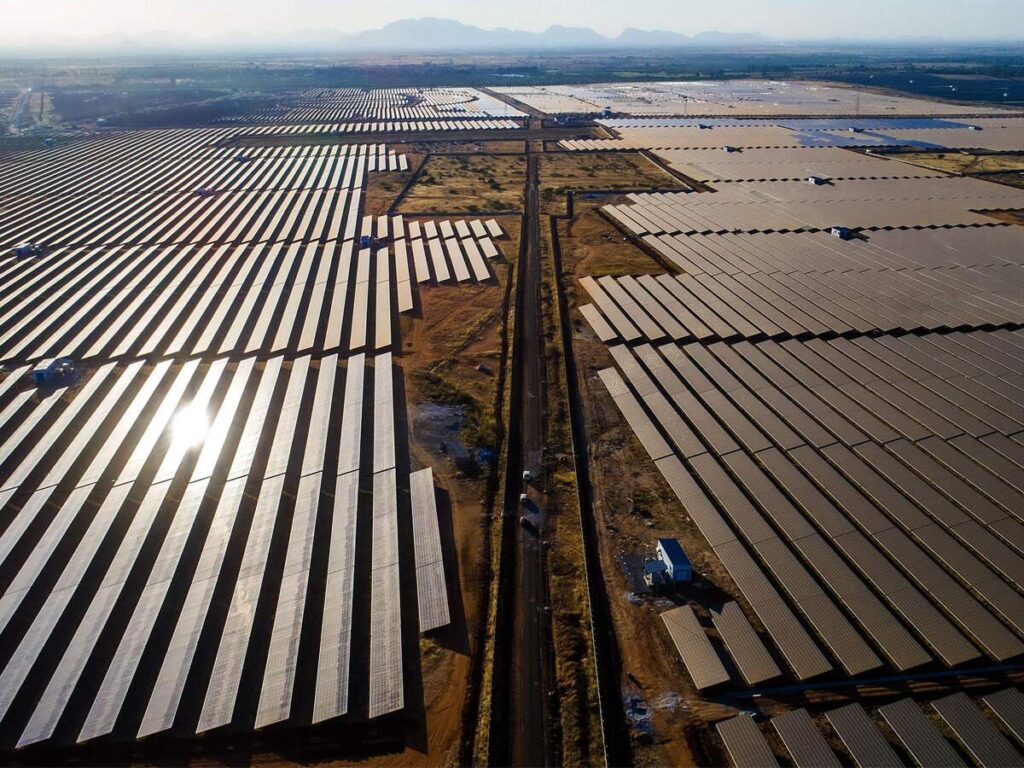
Around 1,47,720 MW of renewable capacity is under construction. This includes 1,19,580 MW of solar and 27,720 MW of wind, including hybrid projects.
Another 47,830 MW of renewable capacity is at planning stages, including 44,440 MW of solar.
Energy storage gets a larger role
The government is expanding energy storage alongside renewable capacity. As of June 30, 2026, 15,870 MW/95,220 MWh of pumped storage projects were under construction. Another 6,580 MW/39,480 MWh had received concurrence.
Around 15,754 MW/42,530 MWh of BESS capacity is under construction. Another 11,747 MW/38,425 MWh has been awarded, while 19,192 MW/67,574 MWh is at the tendering stage.
The government has considered around 47 GW of BESS integration by 2031-32 and prepared a roadmap for 100 GW of pumped storage plants between 2025-26 and 2035-36.
Renewable integration and grid upgrades
The government is strengthening transmission infrastructure to support renewable power. Coordinated planning aims to reduce congestion and curtailment while optimising network expansion.
It is developing renewable energy zones and pooling stations and has established Regional Energy Management Centres to improve renewable forecasting and grid management. The Green Energy Corridor programme also supports intra-state transmission projects.
The government is strengthening real-time dispatch, forecasting, scheduling and ancillary services. Technologies such as STATCOMs and SVCs are also being deployed to improve grid voltage stability.
Battery storage receives policy support
The National Programme on Advanced Chemistry Cell Battery Storage has an outlay of ₹18,100 crore and aims to establish 50 GWh of domestic manufacturing capacity. Of this, 10 GWh is earmarked for grid-scale stationary storage.
The government has also issued guidelines for BESS procurement and approved viability gap funding schemes. A 13.22 GWh BESS capacity is under implementation under the first VGF scheme, backed by ₹3,760 crore.
In June 2025, the Ministry of Power approved another VGF scheme for 30 GWh of BESS capacity, with ₹5,400 crore in financial support from the Power System Development Fund. Transmission charge waivers are also available for eligible BESS and pumped storage projects.
Long-term focus on a stronger power sector
The Draft National Electricity Policy, 2026 targets single-digit AT&C losses through smart metering, energy audits, GIS-based asset mapping and consumer indexing.
The draft also proposes stronger corporate governance for distribution companies, shared distribution networks and Distribution System Operators. These measures would support distributed renewable energy, storage and Vehicle-to-Grid technologies.
For transmission, the policy proposes Flexible AC Transmission Systems, Dynamic Line Rating and underground cabling where appropriate. It also proposes using older thermal plants as synchronous condensers and accelerating energy storage deployment.
The government said these power sector reforms aim to meet rising electricity demand while improving financial sustainability, grid reliability and affordability for consumers.