


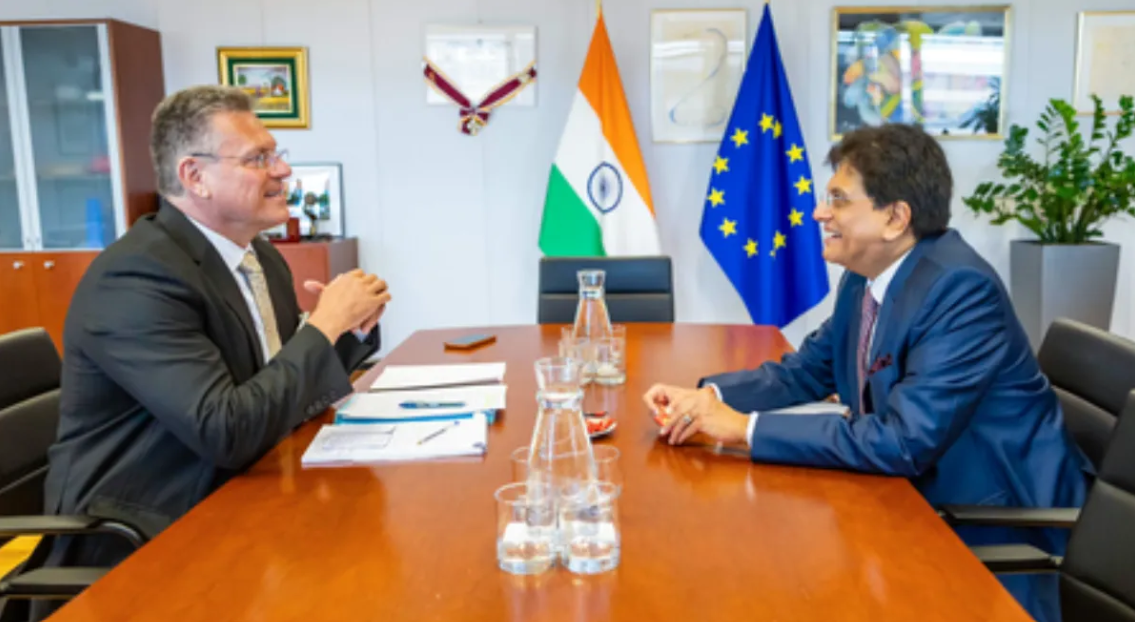
The India-EU Trade Pact marks a significant step in economic relations between India and the European Union. The agreement is expected to support higher bilateral trade and strengthen economic cooperation. However, it stops short of full liberalisation in several sensitive sectors.
Agriculture and other politically sensitive areas continue to face restrictions. The pact also excludes government procurement and leaves several non-tariff barriers in place.
Trade Growth With Selective Liberalisation
According to a new report, the agreement takes a cautious approach in sectors where both sides face domestic sensitivities. In automobiles, for instance, tariff reductions will take place in phases over a period of up to 10 years.
This approach allows India and the EU to expand market access while giving sensitive industries more time to adjust. As a result, the pact combines greater trade opportunities with safeguards in key sectors.
Researcher Tobias Scholz argues that the difference between the agreement’s political ambition and its level of liberalisation should not necessarily be seen as a weakness. Instead, he views it in the context of the evolving India-EU strategic partnership.
India-EU Trade Pact Reflects Wider Geopolitical Shift
The agreement comes as global trade and geopolitical relations continue to change. The Russia-Ukraine war, shifts in US policy under Donald Trump and China’s growing influence in the Indo-Pacific have encouraged European economies to diversify their economic relationships.
India, meanwhile, is seeking to strengthen its position in global manufacturing and supply chains. Its border tensions with China and its ambition to become a China+1 partner are creating further opportunities for cooperation with European economies.
These developments have brought the strategic interests of India and the EU closer. Both sides have a growing interest in building more diversified and resilient trade relationships.
A Broader Economic and Strategic Partnership
The India-EU Trade Pact therefore goes beyond tariff reductions. It reflects a wider effort to strengthen economic ties while managing geopolitical and sector-specific risks.
For Europe, India offers an increasingly important partner as businesses look to diversify supply chains and reduce excessive dependence on individual markets. For India, stronger access to the European market can support its broader ambitions in manufacturing, trade and global supply-chain integration.
The pact may not deliver complete liberalisation across sectors. However, it establishes a stronger framework for India-EU economic engagement at a time when both sides are reassessing their global trade and strategic priorities.