


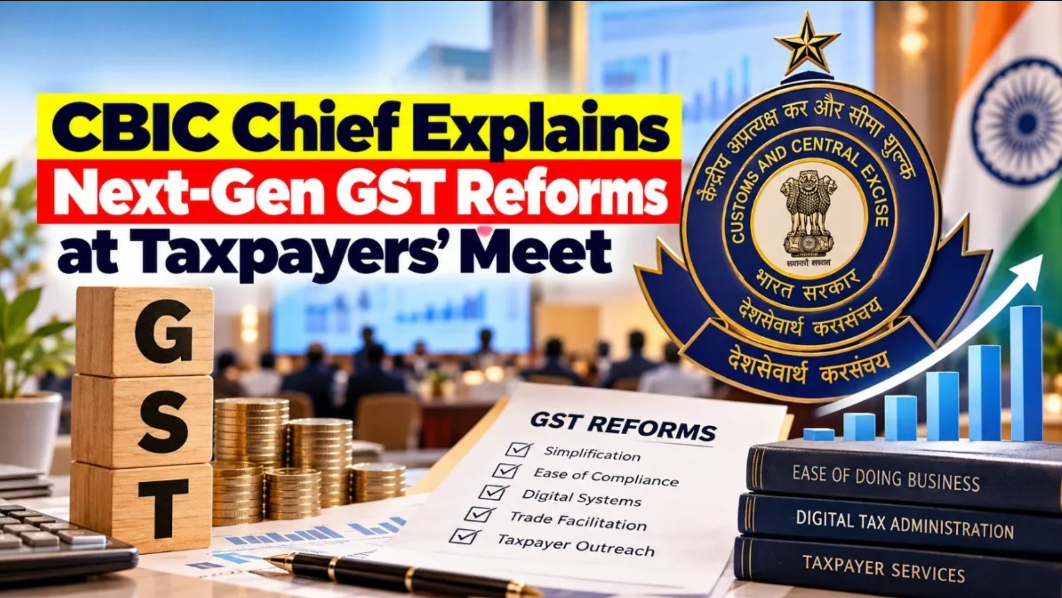
The Central Board of Indirect Taxes and Customs (CBIC) is engaging with businesses to explain the proposed GST Reforms recommended at the 57th GST Council meeting. CBIC Chairman Vivek Chaturvedi and Member (GST) Sanjay Mangal met around 250 trade and industry representatives to discuss measures aimed at simplifying compliance, reducing procedural burdens and improving taxpayer services.
The meeting brought together representatives from micro, small and medium enterprises (MSMEs), large manufacturers, service providers, traders, exporters, startups, e-commerce operators and industry associations. The discussion focused on building a more predictable, transparent and trust-based tax administration.
GST Reforms Focus on Automated Refunds and Easier Compliance
The officials addressed questions and invited suggestions on recommendations made at the 57th GST Council meeting on October 8, 2026. Key proposals include greater automation in refund processing, reduced manual intervention, common standards for notices and proceedings, and intelligence-based inspections of vehicles transporting goods.
The discussions also covered the proposed centralised administration of GST for taxpayers under Central Government jurisdiction. Industry representatives welcomed the recommendations, citing their potential to improve cash flows, reduce uncertainty and make business operations easier.
GST Reforms Propose Changes to Arrest and Prosecution Rules
The GST Council has recommended changes to arrest and prosecution provisions under the Central GST framework. These include removing arrest powers under the framework and increasing the prosecution threshold from ₹1 crore to ₹5 crore.
The Council has also recommended changes to punishment provisions, including giving courts discretion over whether to impose a fine, imprisonment or both. The proposed changes aim to reduce the risk of criminal proceedings for routine compliance failures while retaining enforcement measures against serious offences.
These recommendations will require the relevant legislative amendments and formal measures before they can take effect.
GST Reforms Seek to Reduce Low-Value Tax Disputes
The Council has proposed a ₹10,000 minimum threshold for issuing GST show-cause notices, alongside measures intended to address pending notices and appeals below the threshold.
Other recommendations aim to accelerate refunds, improve the quality of notices, make adjudication more predictable and ensure timely proceedings. Together, these measures seek to reduce avoidable disputes and ease compliance for businesses.
During a separate interaction with CBIC officers, Chaturvedi and Mangal also emphasised the importance of transparent, friction-free and predictable tax administration.
CBIC Seeks Industry Feedback on GST Reforms
The outreach forms part of CBIC’s efforts to explain the GST Council’s latest process-reform recommendations and gather feedback from businesses. The interaction gave stakeholders an opportunity to raise concerns and discuss the potential impact of the proposals on their operations.
If implemented through the required legal and administrative measures, the recommendations could reduce procedural friction, improve refund timelines and establish more consistent standards for tax notices and enforcement. Their practical impact will depend on the final notifications, legislative amendments and implementation arrangements.