


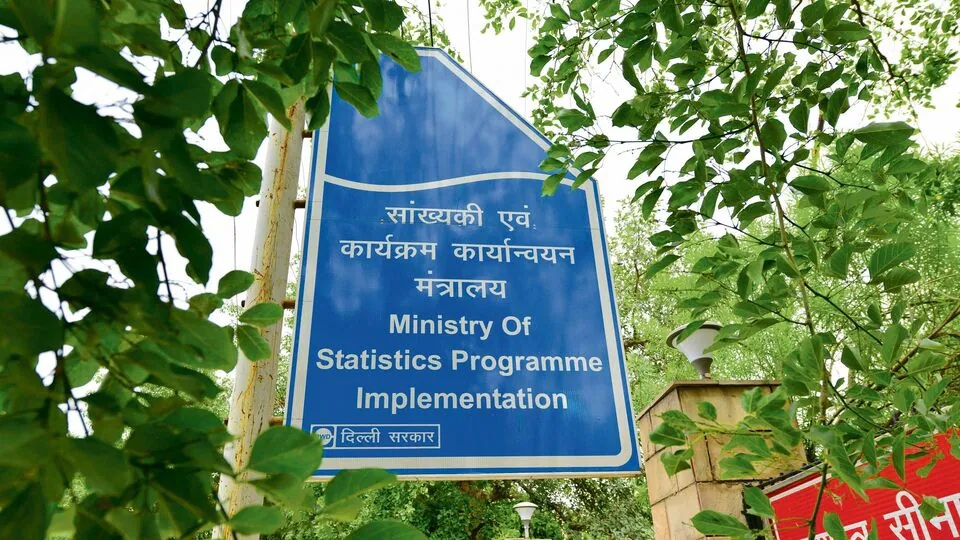
The Index of Services Production (ISP) will be launched in July 2026 by the Ministry of Statistics and Programme Implementation (MoSPI), marking a significant milestone in the development of India’s economic data ecosystem. The new index will give policymakers and businesses a better tool to track economic activity; it will quantify short-term fluctuations in the output of India’s formal services sector and will deliver that information monthly.
Along with the new statistical indicator, the Ministry has put out a comprehensive Frequently Asked Questions (FAQ) booklet that explains the Index of Services Production’s idea, methodology, objectives, and importance in great detail.
An economic indicator for the short term, the ISP tracks variations in the amount of output from service-sector industries compared to a predetermined base period. It gives a full picture of the formal services economy’s performance every month and records changes in the actual production of service-producing industries throughout time.
With the services sector now contributing more than half of India’s Gross Value Added (GVA) since 2013–14, the ISP’s launch couldn’t come at a more crucial time for the country’s economy. Financial services, IT, transportation, communication, trade, hospitality, and professional services are all part of the sector, which is why it is so important for economic growth and job creation.
Currently, the Index of Industrial Production (IIP) tracks monthly performance in the manufacturing, mining, and energy sectors; the Ministry claims that the ISP will serve as the services-sector counterpart of the IIP. The IIP has been a useful indication of industrial activity for a long time, but despite the services sector’s increasing importance to the economy, no high-frequency measure has been developed to track it.
As India’s economic structure develops further, the necessity of a specialised services production index is growing. As part of its dedication to better economic assessment and statistical openness, the government has stated that the launch of the ISP is in line with international best practices.
The ISP aims, among other things, to help policymakers comprehend short-term economic patterns and make quick policy decisions by providing high-frequency data on the performance of service industries. Analytical and policy planning procedures in India will be aided by the index, which will also bolster the country’s current data framework.
The Ministry emphasised that the ISP will provide a more complete view of economic activity as a whole, complementing current economic indicators. When combined with the IIP, it will allow for a more thorough evaluation of patterns of growth in the service and industrial sectors.
By giving accurate and up-to-date data on the performance of the service sector, the new index should also help with evidence-based policies. Businesses, economists, government organisations, and financial institutions can all utilise the data to evaluate current market conditions, spot new trends, and develop effective plans.
The ISP will also be useful for analysing business cycles and economic forecasts. Monthly time-series data on services sector output will be useful for analysts to better understand cyclical changes, gauge economic momentum, and enhance growth estimates.
According to experts, the Index of Services Production is a huge step forward for India’s statistics infrastructure, and it will help the country better track and manage its economic growth in the services sector.
Timely insights into one of India’s most dynamic and quickly growing sectors are anticipated to be greatly contributed by the ISP as the country continues its path toward becoming a developed economy.
Disclaimer: All news articles are sourced through valid sources, and Business Unlimited (BU) doesn’t have any exclusive rights on these pieces. If BU features any exclusive story or article, it will be marked as Exclusive Story.