

According to the Ministry of Petroleum and Natural Gas (MoPNG), the Ethanol Blending Programme (EBP) for petrol in India has been scientifically validated and is put into place through a strong framework that includes technical reviews, stakeholder engagements, and thorough testing. Misleading and unfounded assertions about ethanol-blended petrol have been circulating on social media, prompting the correction.
The Ministry has taken notice of some videos and postings on social media that may have intentionally misled users regarding E20 gasoline. These videos and posts purport to show engine damage, vehicle breakdowns, bug attraction, and the direct mixing of sugarcane juice with petrol, among other things. The government has made it clear that these claims lack scientific backing, are deceptive, and have no basis.
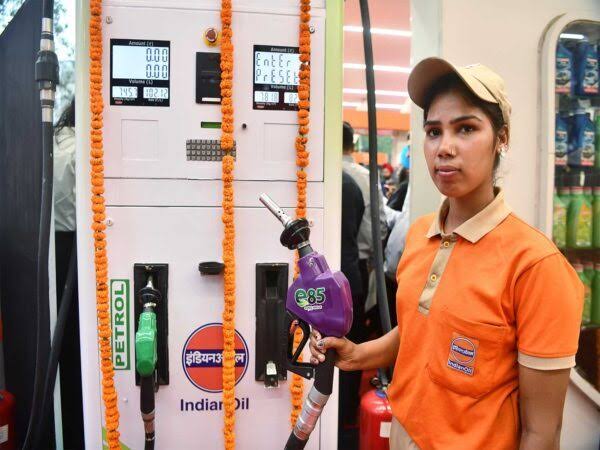
Since its inception in 2003, India’s Ethanol Blending Programme has worked toward the goals of increasing energy security, decreasing reliance on foreign crude oil, bolstering environmental sustainability, and increasing the usage of renewable fuels. The nationwide rollout of 20% ethanol blending (E20) began in 2023 and was the last step of the program’s gradual implementation.
The Ministry underlined that stakeholders such as oil marketing companies (OMCs), car manufacturers, gasoline testing organisations, and others are involved in the ongoing monitoring of the program’s implementation. It was pointed out that there have been no major reports of engine failures or vehicle breakdowns caused by ethanol blending since the introduction of E20 petrol.
A notion that has been circulating online is that ethanol may absorb atmospheric moisture because of its hygroscopic nature. Water pollution is never desired in a fuel system, according to the Ministry, and that is true regardless of whether the gasoline contains ethanol or not. In order to keep water out of the fuel tanks and fuel systems, modern automobiles are built with special engineering features and precautions.
Other movies that incorrectly advise mixing sugarcane juice with petrol were also disallowed by the ministry. The article detailed the strictly controlled industrial methods that are employed to generate fuel-grade ethanol, which include fermentation, distillation, and purification. The agricultural feedstocks used to make ethanol—which might include things like sugarcane juice, molasses, maize, and broken rice—no longer resemble the finished product since it has been refined to meet stringent fuel quality criteria.
Claims about ant colonies around petrol stations have recently gone viral, however the Ministry has provided more clarification on the matter. The fuel-grade ethanol does not have any residual sugars since these are removed during the distillation and fermentation processes, according to Bharat Petroleum Corporation Limited (BPCL), which responded to these reports. Also, the denaturants found in fuel ethanol are known to keep bugs at bay. So, the idea that E20 fuel can entice insects or ants is unsupported by science.
Also disproven were fears that switching to E20 fuel would render auto insurance useless. There is no evidence to substantiate such assertions, according to relevant parties.
Ethanol blending is a well-established technique in many nations, including Japan, Brazil, and the US, according to the Ministry. E27, a petrol blend with 27% ethanol, is the norm in Brazil and other countries that have embraced greater blending ratios.
Significant economic gains have been generated by the Ethanol Blending Programme, in addition to energy security. Reducing crude oil imports has helped India save about ₹1.4 lakh crore in foreign currencies, according to the government. Farmers’ incomes have been bolstered and the rural economy has been boosted by the program’s continued demand for agricultural feedstocks utilised in ethanol production.
Further benefits include reduced carbon emissions, backing of India’s climate pledges, and acceleration of the country’s shift towards greener and more environmentally friendly transportation options.
Ensuring compatibility, safety, and operational reliability, the Ministry emphasised that the implementation of greater ethanol blending levels was performed only after thorough technical studies and talks with automotive manufacturers and industry stakeholders.
Image: Lokmarg
Disclaimer: All news articles are sourced through valid sources, and Business Unlimited (BU) doesn’t have any exclusive rights on these pieces. If BU features any exclusive story or article, it will be marked as Exclusive Story.