


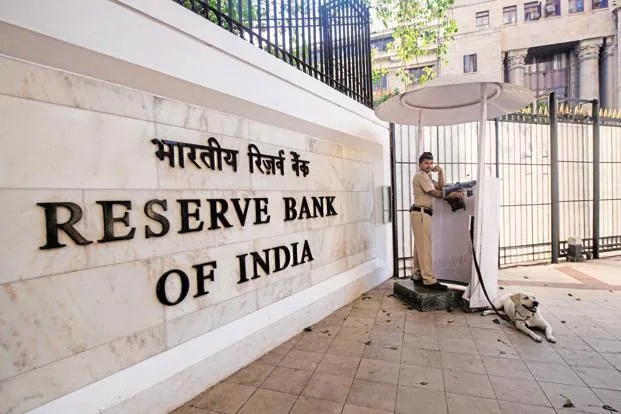
According to the minutes of the MPC meeting that were released on Friday, all six members of the RBI’s Monetary Policy Committee opted for a wait-and-watch strategy when they voted to maintain benchmark interest rates earlier this month. They cited the high level of uncertainty surrounding the future of inflation and growth as reasons for their decision.
June 3-5 was the date of the MPC meeting.
With a vote of five to zero, the committee chaired by Governor Sanjay Malhotra decided to maintain the benchmark interest rates at 5.25 percent. During the meeting, Malhotra expressed his belief that, due to factors like the length of the West Asia conflict and its effects on supply chains, as well as the intensity and distribution of the monsoon rains and how they affect the prices of energy, food, and other commodities, there was a great deal of uncertainty in the assumptions used to project inflation and growth.He expressed his preference for taking a wait-and-watch attitude.
According to the minutes, RBI Deputy Governor Poonam Gupta shared the view that the decision to reverse the policy cycle should not be made until the next few months, when both global and weather-related risks have had a chance to play out.There are two bases for this. First, I do not think there is a need to tighten policy right now to control inflation or inflationary expectations because growth is expected to slow and inflation has not yet been entrenched. The economic impact of the continuing supply shock could be exacerbated, she said.
The second point is that, according to Gupta, the inflation-growth dynamics will need to be reevaluated after the West Asia conflict is over and the global and Indian outlooks improve.”Thus, it would be wise to exercise patience and observe developments instead of abruptly changing policies,” she emphasised.
The MPC maintained the key policy rate unaltered in April as well.
There are a lot of unknowns when it comes to inflation forecasts right now, according to RBI Executive Director Indranil Bhattacharyya, who made the statement at the June meeting. He noted that although wholesale price index (WPI) inflation has risen, it is important to wait for it to trickle down to consumer price index (CPI) inflation. He also mentioned that the timing and location of the monsoon, which is crucial for crop forecasting, are still unknown.
In addition, Bhattacharyya stated that policymakers should exercise more prudence, or gradualism, when dealing with cost-push inflation caused by supply shocks, as opposed to demand-pull inflation, which may necessitate proactive measures to stabilise inflation expectations.Given these considerations, I think it would be wise to hold off on making any policy decisions until more information becomes available from the data. So, he cast his vote for a neutral posture and a hold on the policy rate.
The Reserve Bank of India (RBI) appoints three members to the MPC, while the government selects three others. Nagesh Kumar, chief executive and director of the Institute for Studies in Industrial Development, economist Saugata Bhattacharya, and Ram Singh, director of the Delhi School of Economics, make up the three external members.
The minutes show that Kumar believed that the economic forecast has been negatively impacted, even if there are reasons that make the Indian economy more resilient to the present shock than earlier ones.
He acknowledged that many unknowns, such as how long the West Asia conflict will last, affect growth and inflation forecasts.
Given the present economic climate’s high degree of uncertainty, he advised waiting for more information on the effects before responding with monetary policy.As he voted to keep the repo rate unchanged and backed retaining the neutral position, Kumar said that the Indian government should monitor the changing geopolitical scenario in West Asia and how it affects the country’s macroeconomic prospects, particularly the growth-inflation dynamics.
Saugata Bhattacharya stated, “I believe that risk management is now the most sensible approach to monetary policy responses; this has now been articulated by multiple central banks and academic research” in light of the numerous interconnected geoeconomic shocks casting a shadow over the future.
He stated that the two-way risks on the inflation-growth outlook increase the likelihood of a policy blunder.It is imperative that we keep a careful eye on the second-order input cost transmission that is being incorporated into retail inflation, considering the MPC’s predictions for growth and inflation, as well as the elevated and rising expectations for inflation. The duration and intensity of the energy shock will determine this, the external member added.
As long as the conflict in West Asia continues and the effects of El Niño cannot be determined, it is prudent for the monetary policy to maintain the necessary flexibility to adapt to changing inflation and growth patterns, according to Ram Singh.Being ‘neutral’ allows the MPC to have complete operational freedom, free from any obligations it may have previously had. The neutral position gives us the flexibility to maintain macroeconomic stability by adjusting policies in the event that external shocks intensify or the second-round price impacts propagate widely,” he stated.
Image:Mint
Disclaimer: All news articles are sourced through valid sources, and Business Unlimited (BU) doesn’t have any exclusive rights on these pieces. If BU features any exclusive story or article, it will be marked as Exclusive Story.