


A regulatory filing from Tuesday stated that the government’s Offer for Sale (OFS) in National Hydroelectric Power Corporation (NHPC) Ltd, which is under the Ministry of Power, was 3.47 times oversubscribed on the initial day of bidding for non-retail investors. Additionally, the authorities fully utilised the 3% greenshoe option, increasing the total offer stake to 6% from the initial 3%.
The document said that shares will be distributed on a price-priority basis in the offer, which began with a floor price of Rs 71 per share. Participation in the OFS is slated on June 3 for retail investors and qualifying employees.
The document also out that 6,02,70,210 equity shares, or 10% of the offer, would be set aside for retail investors, contingent upon receiving valid bids. Under the Employee Offer, employees may be offered a total of 90,40,530 equity shares, with an additional 45,20,265 shares being made available. Up to Rs 5 lakh in shares can be applied for by eligible employees.
The OFS is being carried out through the stock exchanges in accordance with the disinvestment goals set by the Centre for the fiscal year 2026–27.
The National Stock Exchange saw NHPC shares settle 6.9 percent lower at Rs 71.93 on Tuesday, reflecting market conditions and volatility around the offer.
NHPC, a prominent hydropower and renewable energy company in India, has been involved in numerous large-scale projects in Jammu and Kashmir. It is a Navratna public sector organization that falls under the purview of the Ministry of Power. Key building activities for the 240 MW Uri‑I Stage‑II Hydro Electric Project were formally started earlier this week when the first blast was completed by the business. Chenab Valley Power Projects Limited (CVPPL) and Ratle Hydroelectric Power Corporation Limited (RHPCL) are two of the joint ventures that NHPC is using to carry out various large-scale projects in the area.
The decision to execute the full greenshoe and successful oversubscription for non-retail investors show that there is strong demand from institutional and non-retail market participants, while retail and employee allocations try to increase the number of shares held by smaller investors and employees.
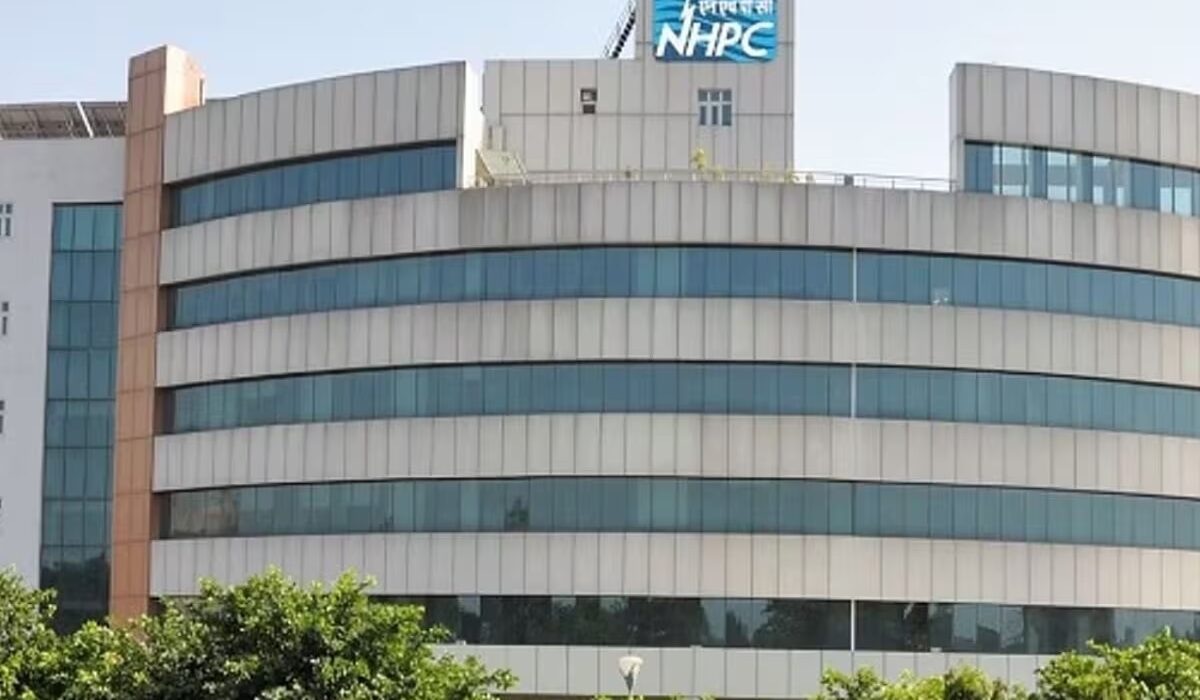
IMage: Mint
Disclaimer: All news articles are sourced through valid sources, and Business Unlimited (BU) doesn’t have any exclusive rights on these pieces. If BU features any exclusive story or article, it will be marked as Exclusive Story.