

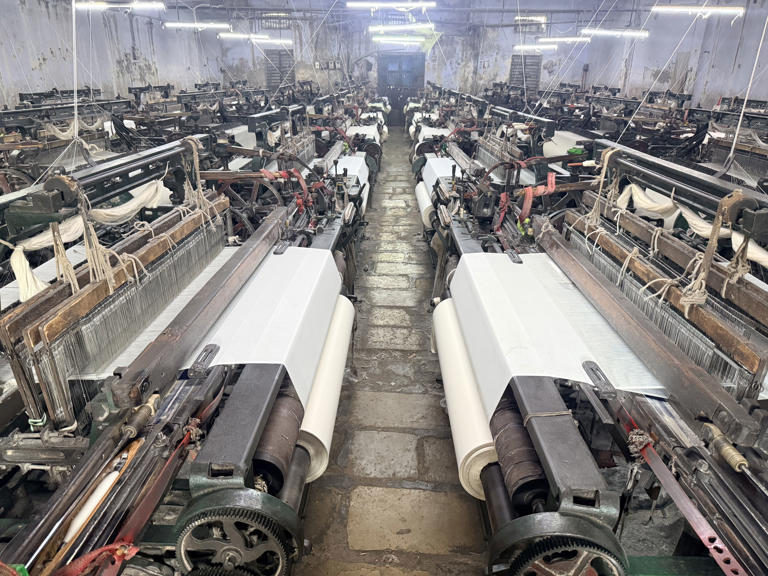
The government has prioritised the textiles and handicrafts sector because of the high employment intensity in the industry. Despite import problems associated to the Strait of Hormuz closure, the sector’s natural gas supply has been maintained at 80% of its recent average usage.
In order to maintain continuity for domestic demand and bridge supply gaps, the Ministry of Textiles reported that public sector giant GAIL is sporadically sourcing petrol from the spot market.
A total of 29 essential textile inputs have had their customs duties postponed, and other ideas are being considered for the MMF value chain and cotton, all in an effort to bolster the industry in the face of global supply chain turbulence. Concerned about the impact on downstream MSMEs and job security, the government has suggested postponing or eliminating anti-dumping duties on inputs like elastomeric filament yarn (EFY) and viscose rayon filament yarn (VFY).
Regular engagement with industry stakeholders, such as export promotion councils and regional associations, and constant monitoring of supply circumstances throughout significant clusters are ongoing government initiatives. To lessen the blow to exports and supply chains caused by geopolitical disturbances, logistical tactics and advisory measures, such as alternate shipping routes and ports, are spreading.
Image Credit: MSN.com
Disclaimer: All news articles are sourced through valid sources, and Business Unlimited (BU) doesn’t have any exclusive rights on these pieces. If BU features any exclusive story or article, it will be marked as Exclusive Story.