

There’s a quiet transformation unfolding across India—and it’s changing not just how the country powers its homes, but how it positions itself in an increasingly uncertain world.
Consider this: over 51.93% of India’s installed power capacity now comes from non-fossil fuels. That’s not just a statistic—it’s proof that the country has surpassed its 50% target ahead of schedule, marking a decisive shift away from dependence on coal and imported oil.
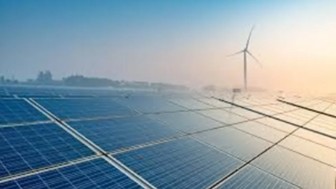
A decade ago, India’s renewable capacity stood at 76 GW. Today, it’s crossed 254 GW. In just the first nine months of this financial year, the country added nearly 39 GW, with solar leading the charge at over 30 GW. This momentum is no accident. Flagship programmes like PM Surya Ghar, PM-KUSUM, and production-linked incentives are putting clean energy within reach of households, farmers, and industries alike.
The vision ahead is ambitious: 500 GW of renewable capacity by 2030, a 400% jump in solar generation by 2035, and nearly $2.2 trillion in investments over the next two decades. India now ranks fourth globally in renewable energy capacity—trailing only China, the United States, and Brazil.
But this isn’t just about numbers. It’s about security. When geopolitical tensions flare—like the recent disruptions in the Strait of Hormuz that sent oil prices soaring—India’s growing renewable base acts as a shield, insulating the economy from global price shocks and supply chain vulnerabilities.
Beyond solar and wind, India is diversifying. The National Green Hydrogen Mission targets 5 million tonnes of annual production by 2030. Nuclear capacity is set to scale to 100 GW by 2047. And schemes like the Small Hydro Power Development Programme are unlocking energy potential in regions like Jammu and Kashmir and Ladakh.
To ensure this clean energy reaches every home reliably, the government is investing heavily in battery storage and pumped storage projects—modernizing the grid to handle peak loads efficiently.
India’s energy transition is about more than climate goals. It’s about economic strength, strategic autonomy, and building a model of sustainable growth that the world can look to. And with every rooftop solar panel installed, every green hydrogen plant commissioned, and every rural community powered by clean energy, that vision is becoming a reality.