


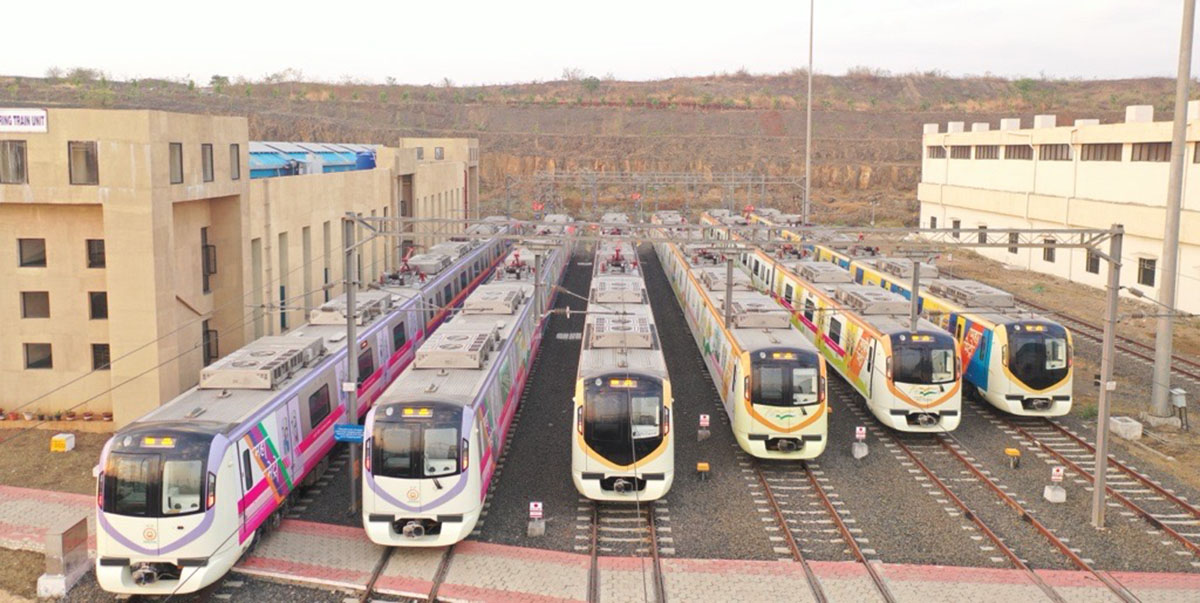
With an expansion from five cities to twenty-six, the length of India’s metro rail network has more than tripled in the last eleven years, making it the third largest in the world.
The yearly budget for the metro rose from 5,798 crore in 2013–14 to 29,550 crore in 2025–26, and 38 projects totalling 3.44 lakh crore have been approved since 2014.
Thanks to the expansion, urban mobility has been enhanced, making travel faster, cleaner, and more dependable while also reducing traffic congestion. Investments in the metro are boosting the economy, creating employment, expanding access to healthcare and education, and lowering transportation expenses for households.
Loan repayment delays have decreased and early mortgage repayments have increased in Delhi, Bengaluru, and Hyderabad, according to a research by the Economic Advisory Council to the Prime Minister, which emphasises concrete financial benefits.
The Delhi-National Capital Region (NCR), Mumbai, Bengaluru, Kolkata, Hyderabad, Chennai, Lucknow, Pune, and Ahmedabad are among the main cities that currently have metro services. In April 2023, the first water metro in India was inaugurated in Kochi, Kerala. It connected ten islands using environmentally friendly electric-hybrid boats.
The Hybrid level-III LTE radio-based signalling system on the Delhi-Meerut Namo Bharat RRTS corridor is one example of how cutting-edge technology is improving urban transit in India by raising the bar for operational safety, efficiency, and sustainability.