

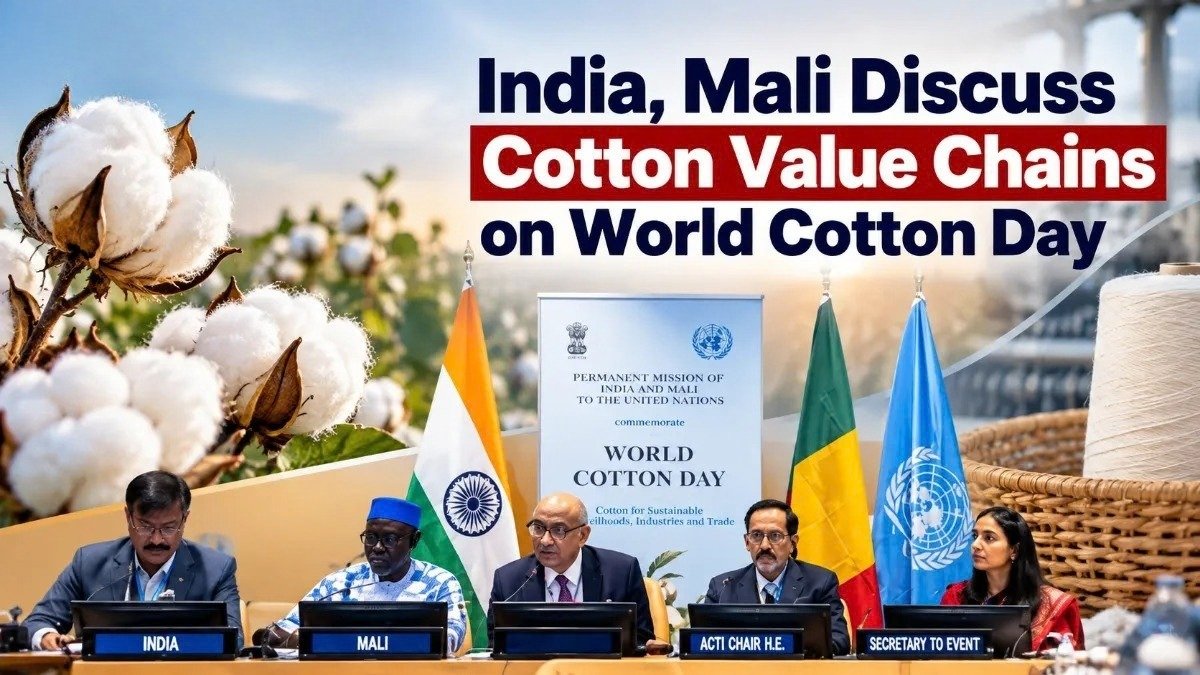
India and Mali have called for stronger cotton value chains to improve farmers’ livelihoods, support artisans, expand domestic processing and increase market access. The two countries highlighted these priorities at a World Cotton Day event at the United Nations Headquarters in New York. Jointly organised by the Permanent Missions of India and Mali to the UN, the event brought together Indian Members of Parliament, representatives of member states and international organisations. Discussions focused on sustainability, technology, international partnerships and cotton’s contribution to the Sustainable Development Goals (SDGs), according to the Ministry of Textiles.
Strengthening Cotton Value Chains Through Cooperation
India’s Permanent Representative to the UN, Ambassador Harish Parvathaneni, recalled Mahatma Gandhi’s association of cotton and the spinning wheel with self-reliance, dignity and India’s freedom struggle. He outlined four priorities for the sector: improving producer livelihoods, increasing value addition and market access, promoting sustainability, and strengthening technology partnerships.
He also stressed the need for affordable inputs and finance to help smaller enterprises grow. In addition, he called for South-South and triangular cooperation to enable cotton-producing countries to retain a greater share of the value generated across the supply chain and advance the SDGs.
Mali Highlights Processing and Market Access
Mali’s Permanent Representative to the UN, Ambassador Issa Konfourou, underlined cotton’s importance to the country’s economy and rural livelihoods. He identified limited processing capacity, high input costs, restricted market access and trade-distorting support as key challenges facing the sector.
Konfourou also highlighted Mali’s efforts to expand domestic processing and create rural employment. He welcomed mutually beneficial partnerships and identified India as a key partner. The discussions emphasised the need to help cotton-producing countries process more of their output domestically and capture a greater share of the value generated across the supply chain.
Indian Textile Craftsmanship Showcases Value Addition
Indian Members of Parliament highlighted the role of traditional craftsmanship and textile manufacturing in strengthening the sector. Asit Kumar Mal cited Kantha embroidery in Bolpur, West Bengal, as an example of cotton-based craftsmanship that supports women’s livelihoods. He also highlighted its role in promoting reuse and improving resource efficiency.
Mal called for fair remuneration, affordable credit, design support and better market access for artisans. These measures, he noted, can help craft-based enterprises improve their livelihoods and reach wider markets.
LK Sudhish highlighted Tamil Nadu’s cotton knitwear and garment manufacturing ecosystem, including the contribution of smaller enterprises and skilled workers. He also referred to the integrated textile park being developed under the PM MITRA initiative. In addition, he highlighted wastewater recovery and reuse in textile processing as part of efforts to improve the industry’s environmental performance.
The event highlighted the need to strengthen cotton value chains through sustainable production, greater processing capacity and improved market access. India and Mali also underscored the importance of technology partnerships and international cooperation to support farmers and artisans, generate rural employment and increase value addition in cotton-producing countries.