

Vizhinjam International Seaport has launched full-fledged Export-Import (EXIM) operations. This marks a major step in India’s maritime trade ambitions. The port already runs as a high-performing transshipment hub. It will now handle both import-export cargo and international transshipment.
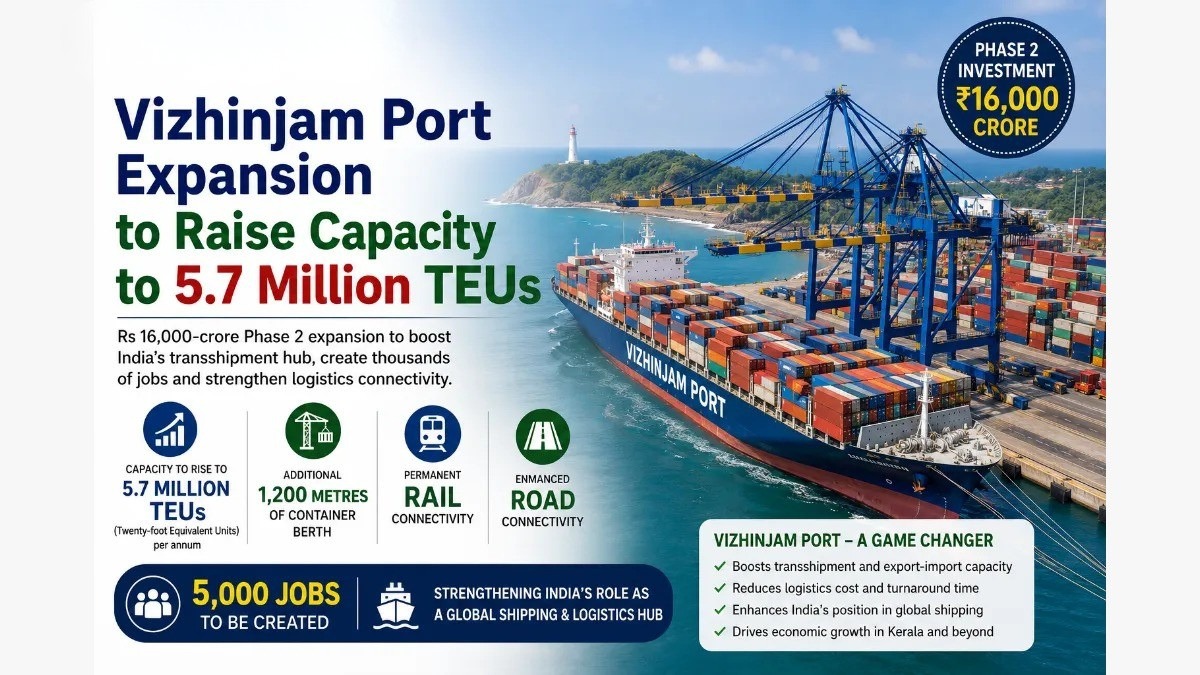
The Vizhinjam Port Expansion carries a price tag of ₹16,000 crore. Phase 2 will lift annual capacity to 5.7 million TEUs. The project adds 1,200 metres of new container berths. It also brings permanent rail connectivity and upgraded road links.
Vizhinjam Port Expansion: Scope and Timeline
The plan covers more than berths and tracks. It includes logistics parks, warehousing, and supporting infrastructure. Developers aim to accelerate the full build-out. They have set a completion target of December 2028. The project is expected to create over 5,000 direct and indirect jobs.
Reducing India’s Reliance on Foreign Transshipment Hubs
India currently routes over 75% of its container transshipment cargo through foreign ports. This raises logistics costs. It also adds transit time. A stronger Vizhinjam changes that equation. More EXIM cargo can move through Indian soil. This keeps value within the country. It also sharpens supply-chain efficiency and global market connectivity.
Investment Scale and Adani Group’s Role
Adani Group is the lead investor behind the port. With Phase 2, its cumulative investment in Vizhinjam will reach ₹30,000 crore. The broader plan goes beyond port infrastructure. It includes road and rail upgrades. It opens doors for private investment across the logistics chain.
A Step Toward Maritime Leadership
The Vizhinjam Port Expansion positions India for larger trade goals. It supports Kerala’s regional economic growth. It strengthens India’s maritime gateway infrastructure. It cuts dependence on overseas hubs. And it builds capacity for future global trade volumes.