


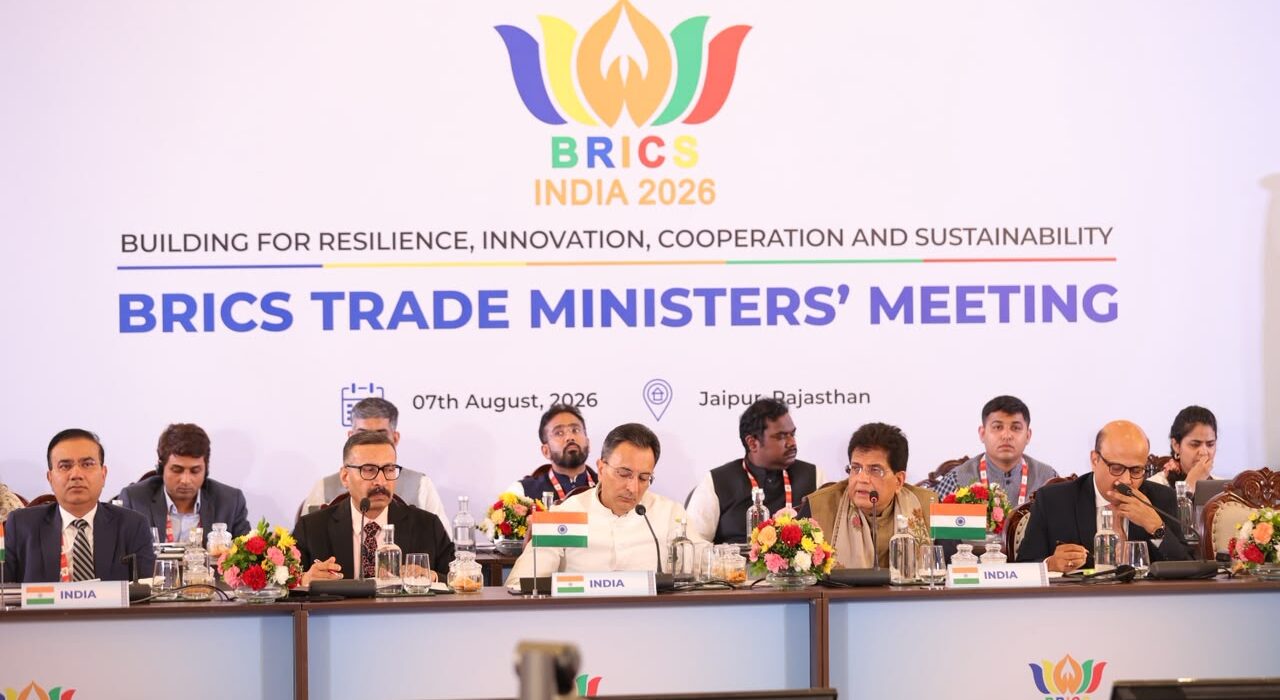
The 16th BRICS Trade Ministers’ Meeting concluded in Jaipur under India’s BRICS Chairship 2026, with member countries agreeing on measures to strengthen trade, improve access to finance for small businesses and build more resilient global value chains.
The meeting was chaired by Union Minister of Commerce and Industry Piyush Goyal and brought together trade ministers, vice ministers, heads of delegation and senior officials from BRICS member countries. It was held under the theme “Building for Resilience, Innovation, Cooperation and Sustainability.”
A key outcome of the meeting was the adoption of the Jaipur Consensus, under which BRICS members will study an Invoice Discounting Mechanism to improve access to working capital for small businesses. Ministers also adopted guiding principles for credit assessment frameworks for export oriented MSMEs, with the aim of enabling lenders to assess businesses based more on cash flows rather than assets and collateral.
The measures are aimed at addressing the global trade finance gap, estimated at around USD 2.5 trillion, which disproportionately affects smaller businesses seeking to enter international markets.
The meeting also adopted a Workplan on the Internationalisation of MSMEs, outlining measures to help small businesses expand their participation in global trade and improve access to international markets and trade finance.
Another major outcome was the adoption of a Workplan on the BRICS Shared Understanding on Global Value Chains. The plan includes a GVC Action Plan for 2026 to 2030, along with initiatives such as a BRICS Technical Council, BRICS Connect and a joint study on global value chains.
BRICS members will also explore the possibility of creating a strategic supply chain and investment promotion platform, including opportunities in sectors such as pharmaceuticals and food security. The initiatives are aimed at strengthening supply chain resilience and promoting greater economic diversification among member countries.
The ministers also adopted BRICS Principles to Facilitate Digitally Delivered Services Across Borders, which seek to encourage cooperation in secure and reliable digital services. The move is expected to support greater cross border trade in digitally delivered services among BRICS economies.
Progress was also reported on the Strategy for BRICS Economic Partnership 2030, which covers areas including trade in services, the digital economy, industry, innovation and technology, trade and investment, financial cooperation and sustainable development. Members agreed to submit the strategy and its priorities to BRICS leaders for endorsement.
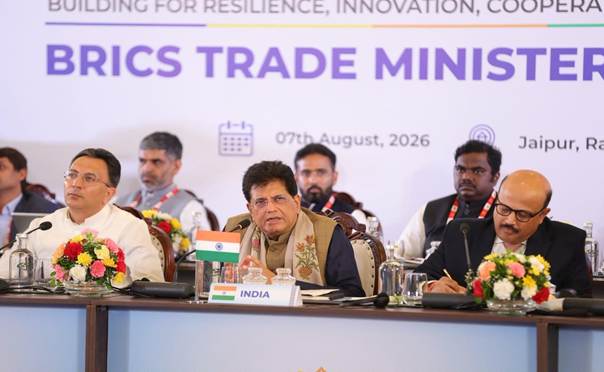
During the meeting, Piyush Goyal highlighted India’s priorities under its BRICS Chairship, including strengthening the multilateral trading system, building diversified global value chains, improving trade finance access for MSMEs and facilitating cross border digital services.
Goyal also stressed the need to safeguard the interests of India’s farmers and protect food and livelihood security. He reiterated India’s support for a rule based multilateral trading system with the World Trade Organization at its core, including the preservation of Special and Differential Treatment for developing countries.
The meeting also emphasised the importance of expanding trade and economic cooperation among BRICS members while strengthening the role of services, MSMEs and global value chains in future growth.
The 16th BRICS Trade Ministers’ Meeting marks a key milestone in India’s 2026 BRICS Chairship, with the outcomes focused on strengthening trade cooperation, supporting small businesses, improving supply chain resilience and promoting a more inclusive global trading system.