


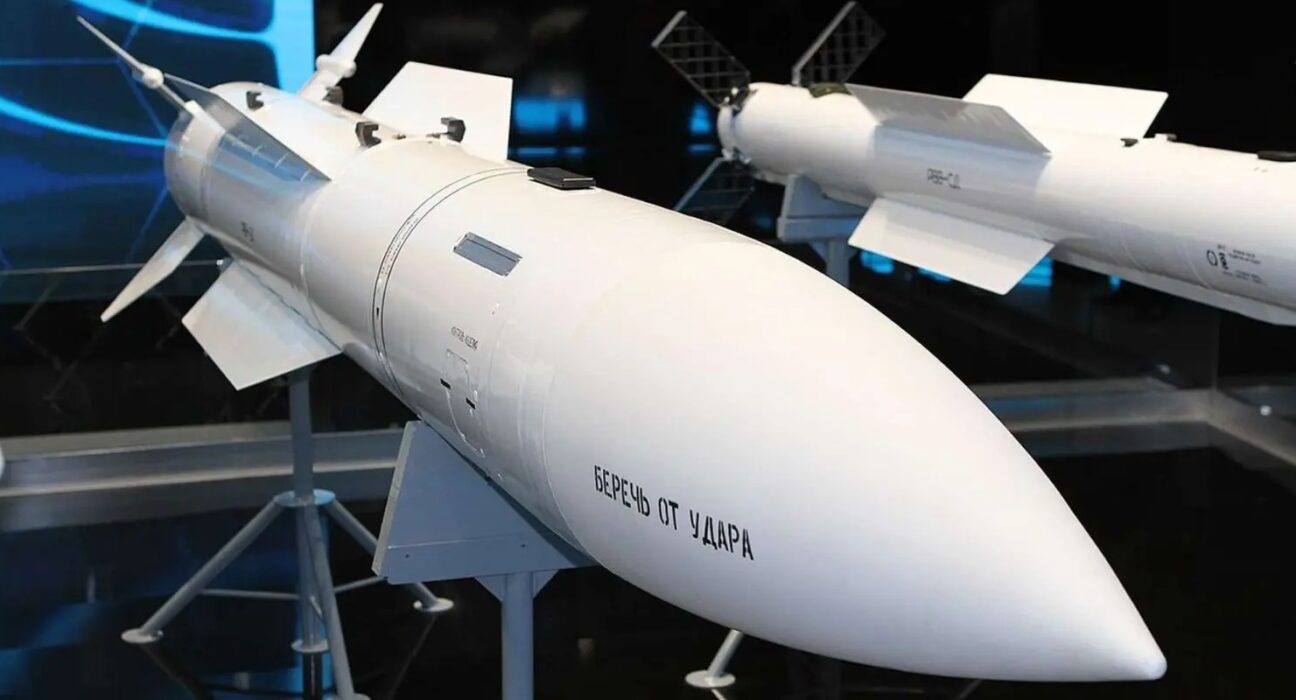
As the newest armament system for the export edition of the Su-57E fifth-generation fighter aircraft, Russia’s state arms exporter Rosoboronexport has begun a worldwide marketing campaign for its new RVV-SDM medium-range air-to-air missile.
A company statement released on July 29th states that Tactical Missiles Corporation created the RVV-SDM missile. It is mainly built for the Su-57E but may be modified to fit other Russian-made and foreign aircraft.
The missile, according to Rosoboronexport, can engage all-weather and electronic countermeasure targets, as well as a variety of aerial vehicles, including fighter jets, helicopters, cruise missiles, and UAVs.
An active-passive radar seeker, an inertial navigation system, and a radio data link are all features that come standard on the missile. It can intercept objects travelling at speeds of up to Mach 3 and at altitudes between 15 meters and 25 km.
When compared to previous systems, the RVV-SDM reportedly has better aerodynamic performance, a longer engagement range, and a better power-to-weight ratio. It has a passive radar homing channel, can shoot and forget, has very accurate navigation, and can withstand jamming.
Rosoboronexport provides a full complement of air-launched weaponry for the Su-57E, including the RVV-SDM, RVV-MD2 short-range, RVV-BD long-range, Kh-38MLE air-to-surface, Kh-69 stealth cruise, Kh-58USHKE anti-radiation, Kh-35UE anti-ship, KAB-250LG-E guided bomb, and UPAB-1500B-E guided glide bomb.
According to the manufacturer, the weapons can be mounted either internally, protecting the stealthiness of the aircraft, or externally, on hardpoints, depending on the situation. It went on to say that no fifth-generation fighter could keep its stealth design while transporting the long-range air-to-surface missile Kh-69, but the Su-57E could.
Russian arms exporter Rosoboronexport has stated its willingness to engage in negotiations with “friendly to Russia” nations regarding the purchase of the Su-57E and its accompanying weapon package, with the caveat that deliveries would still be contingent upon demand from the Russian military and the capabilities of the Russian defence industry.
Image: News Arena