

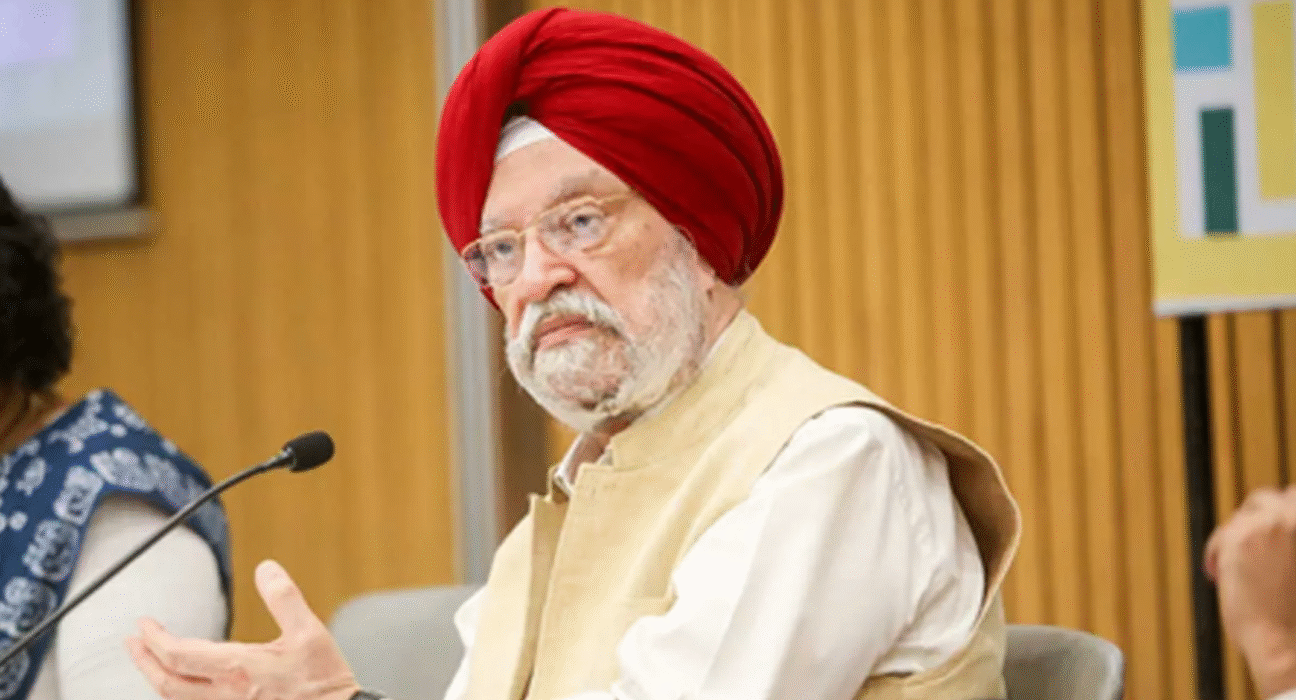
Hardeep Singh Puri, India’s Union Minister for Petroleum and Natural Gas, stated on Sunday that biofuel will continue to play an important part in the country’s energy transition, which aims to lessen reliance on foreign crude oil, improve energy security, and foster long-term economic growth. Under the vision of Aatmanirbhar Bharat, the minister emphasised major programs like Samudra Manthan, the National Green Hydrogen Mission, and the Biofuel Mission, saying that these revolutionary initiatives are establishing the groundwork for energy independence. He went on to say that India will solidify its position as a world leader in energy production in the coming five years as it increases its domestic energy production and uses cutting-edge technology.
Puri remarked that the Ethanol Blending Programme (EBP) has been a huge success, highlighting the positive effects on the economy and the environment. Official statistics show that between 2014–15 and May 2026, the substitution of 310 lakh metric tonnes of imported crude oil with ethanol in petrol resulted in a net savings of around 1.90 lakh crore in foreign dollars. In addition to reducing carbon emissions by more than 930 million metric tonnes, the program has increased farmers’ income by more than ₹1.6 lakh crore. Biofuel, the minister said, does double duty by bolstering India’s energy security and providing long-term financial prospects to farmers who grow rice, sugarcane, and maize.
Diversifying India’s energy sources is a top goal because the country imports nearly all of its crude oil. A dependable option that lessens reliance on unpredictable and supply-side global oil prices, according to the administration, is ethanol made in the United States. Reduce reliance on fossil fuels, boost rural development, and hasten the shift to a cleaner, more robust energy system are all goals of India’s push to increase the usage of renewable biofuels. These initiatives are in line with the government’s larger plan to promote ecologically friendly technology while increasing local fuel output.
The development of renewable energy sources in India is indicative of this shift. The country’s installed renewable energy capacity has nearly quadrupled from 76.38 GW in 2014 to 288.58 GW as of June 30, 2026, according to information tabled in Parliament. The top four renewable energy sources are solar (162.15 GW), wind (57.44 GW), hydro (57.24 GW), and bio (11.75 GW). With a total installed non-fossil fuel electrical capacity of 297.36 GW, including 8.78 GW of nuclear capacity, India is clearly dedicated to attaining a cleaner and more sustainable energy future.
India is improving its long-term sustainability, decreasing its reliance on imports, and speeding up its transition towards energy security, clean mobility, and Aatmanirbhar Bharat with the help of biofuel, renewable energy, and green hydrogen, which are becoming important growth drivers.