


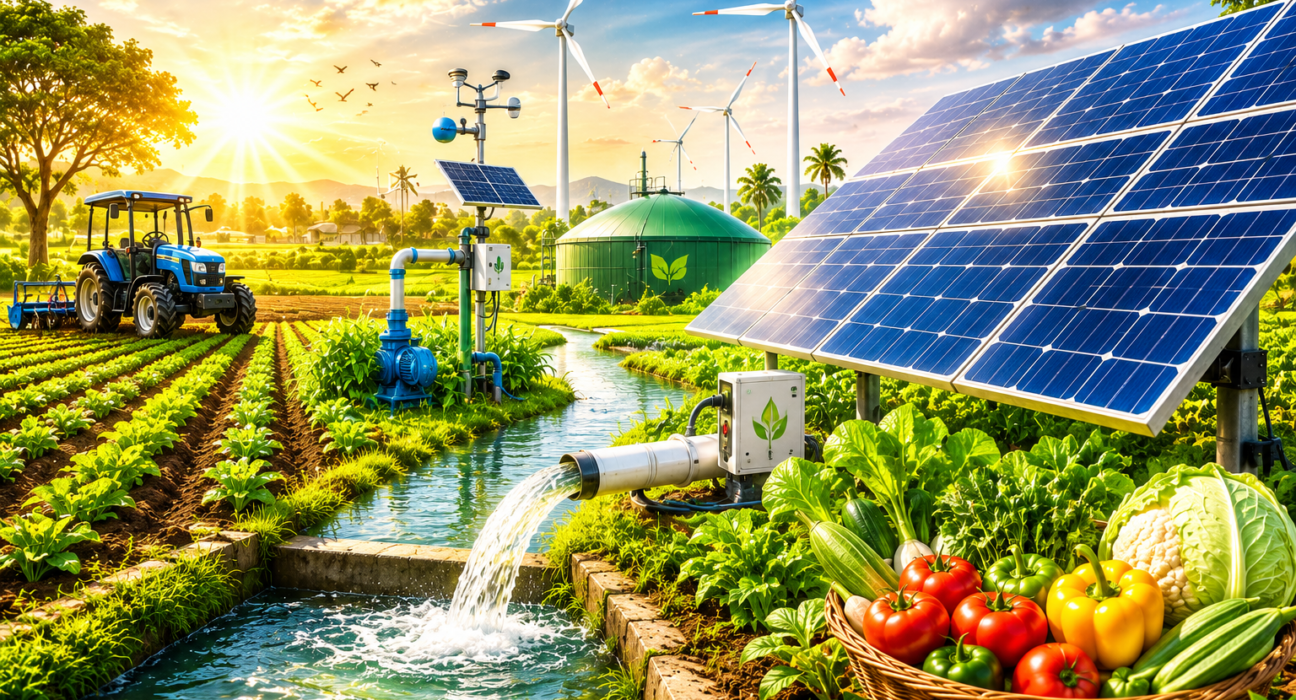
India’s agriculture sector, which supports nearly half of the country’s workforce and contributes significantly to the economy, is undergoing a remarkable transformation. While challenges such as rising input costs, climate change, water scarcity, and fluctuating energy prices continue to impact farmers, renewable energy is emerging as a powerful solution. From solar-powered irrigation systems to bioenergy projects and decentralized clean energy infrastructure, renewable technologies are helping reshape Indian agriculture into a more sustainable, productive, and resilient sector.
As India pursues its ambitious clean energy goals, the integration of renewable energy into agriculture is creating new opportunities for farmers while reducing dependence on conventional fossil fuels.
Solar Energy Revolutionizes Farm Operations
Among all renewable energy sources, solar power has become the most influential force driving change in Indian agriculture. Solar-powered irrigation pumps are increasingly replacing diesel-powered and grid-dependent systems, enabling farmers to access reliable energy while reducing operational costs.
Government initiatives such as the PM-KUSUM (Pradhan Mantri Kisan Urja Suraksha evam Utthaan Mahabhiyan) scheme have accelerated the adoption of solar pumps across rural India. These systems allow farmers to irrigate fields without worrying about fuel expenses or electricity shortages.
The benefits are substantial. Farmers can reduce expenditure on diesel, improve irrigation efficiency, and increase crop productivity. In regions where electricity supply remains inconsistent, solar pumps provide uninterrupted access to water, helping farmers make better use of agricultural land throughout the year.
Moreover, farmers with grid-connected solar installations can sell surplus electricity back to the grid, creating an additional source of income.
Reducing Costs and Enhancing Rural Incomes
Energy costs constitute a major component of agricultural expenditure. Renewable energy offers farmers an opportunity to significantly reduce these expenses while improving profitability.
Solar-powered cold storage facilities are helping reduce post-harvest losses by providing reliable refrigeration in rural areas. This enables farmers to store produce for longer periods and sell when market prices are favourable rather than immediately after harvest.
Similarly, renewable-powered food processing units are emerging in agricultural clusters, enabling value addition closer to production centres. These facilities create local employment opportunities while increasing income potential for farmers.
The economic impact extends beyond farming operations. Renewable energy projects generate jobs in installation, maintenance, manufacturing, and technical support services, contributing to rural economic development.
Bioenergy Creates Circular Agricultural Economy
Agricultural waste has traditionally posed disposal challenges for farmers. Renewable energy technologies are now converting this waste into valuable resources.
Biogas plants utilize crop residues, animal waste, and organic matter to produce clean cooking fuel and electricity. This not only reduces environmental pollution but also provides farmers with an alternative energy source.
Compressed Biogas (CBG) projects are gaining momentum under India’s clean energy initiatives. Agricultural residues that were once burned in fields can now be collected and converted into fuel, helping reduce air pollution while generating additional revenue streams for farmers.
The by-products of biogas production can also be used as organic fertilizers, improving soil health and reducing dependence on chemical inputs.
Strengthening Climate Resilience
Climate change poses significant risks to Indian agriculture, with erratic rainfall patterns, extreme weather events, and rising temperatures affecting crop yields.
Renewable energy solutions can help strengthen climate resilience by supporting efficient water management, precision farming, and sustainable agricultural practices. Solar-powered drip irrigation systems, for example, enable farmers to optimize water use while minimizing wastage.
Renewable-powered weather monitoring stations and digital agriculture technologies provide farmers with real-time information that supports informed decision-making. Access to accurate weather forecasts, soil data, and irrigation recommendations can improve productivity while reducing risks associated with climate variability.
As agriculture becomes increasingly technology-driven, renewable energy serves as the backbone that powers these modern farming solutions.
Government Policies Driving Adoption
India’s policy framework has played a critical role in encouraging renewable energy adoption in agriculture. Programs such as PM-KUSUM, state-level solar initiatives, and subsidies for renewable energy equipment have significantly lowered barriers to adoption.
The government’s broader renewable energy targets have also encouraged private sector participation. Energy companies, financial institutions, and agritech startups are collaborating to develop innovative solutions tailored to the needs of rural communities.
Access to affordable financing is further helping farmers invest in clean energy technologies. As installation costs continue to decline and awareness increases, adoption rates are expected to accelerate across the country.
The Road Ahead
The future of Indian agriculture is increasingly intertwined with renewable energy. Advances in solar technology, battery storage, smart irrigation systems, and decentralized energy solutions are expected to drive the next phase of agricultural modernization.
As India works toward energy security, environmental sustainability, and rural development, renewable energy offers a unique opportunity to address multiple challenges simultaneously. Farmers gain access to affordable and reliable power, rural communities benefit from economic growth, and the country moves closer to its climate commitments.
The transformation is already visible across thousands of villages where clean energy is powering pumps, storage facilities, processing units, and digital farming technologies. What began as an energy transition is rapidly becoming a broader agricultural revolution.
Renewable energy is no longer just an environmental imperative—it has become a strategic tool for enhancing farm productivity, increasing rural incomes, and building a more sustainable future for Indian agriculture. As adoption continues to expand, clean energy is poised to play a defining role in shaping the next chapter of India’s agricultural growth story.