

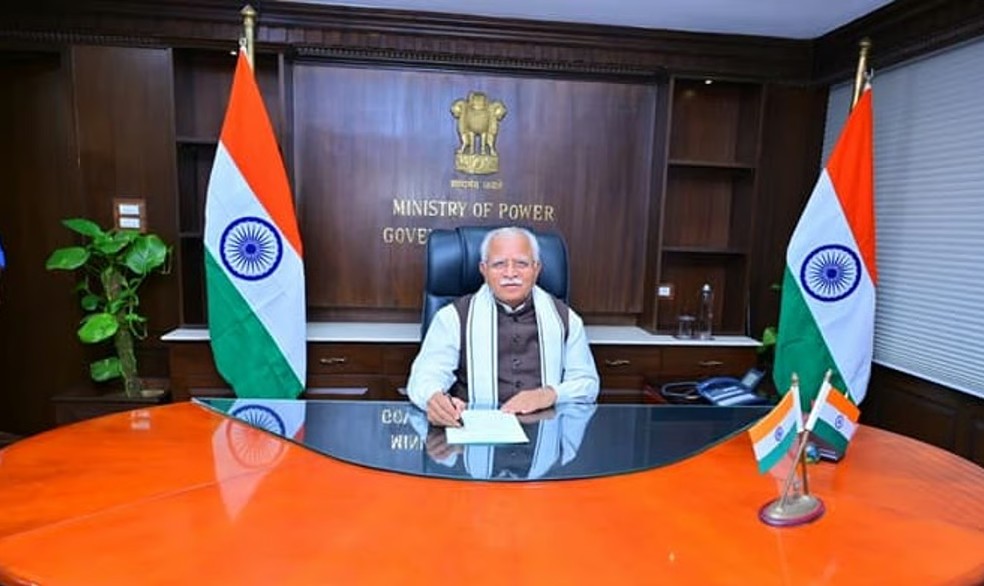
India’s Union Power Minister Manohar Lal Khattar said that the country’s fast transition in the energy domain is being reflected in the power sector, which is going through a structural shift towards innovation, affordability, and global collaboration.
The minister emphasised India’s strong momentum in the clean energy transition while addressing the Bharat electrical Summit 2026, noting that the country has already attained 50% cumulative non-fossil fuel based electrical capacity ahead of schedule.
Key forces propelling renewable energy uptake and sectoral reforms, he said, include landmark projects like the SHANTI Act 2025 and the PM Surya Ghar Muft Bijli Yojana.
According to Khattar, India has gone from having a power deficit to having a surplus, thanks to the substantial increase of renewable capacity. The rapid scaling up of renewable energy deployment is evident in the boom in solar capacity, which has increased from 2.8 GW to over 143 GW.
The nation is getting ready to manage peak demand of 270 GW and more, following the successful management of 250 GW in FY25, as the need for electricity continues to rise.
Growth in transmission infrastructure, energy connection across borders, and new areas like underwater transmission networks are expected to attract investments in the power sector worth over 200 lakh crore in the next twenty years, according to the minister.
In his address, Khattar positioned India as an emerging power exporter, noting that the energy sector aspires to provide large-scale, inexpensive, and sustainable power.
Global policymakers, industry executives, and experts are gathering at Yashobhoomi for a summit to define the future of the energy environment. The minister referred to it as a “Conference of Light” and said that it represents India’s goal of being a developed nation by 2047 and leading the world in the energy transition.
The event was also addressed by Union Minister Pralhad Joshi, who stressed the need of a balanced transition driven by scale, speed, and expertise, and said that renewable energy is the most sustainable long-term option, even though thermal power will still have its place.