

An Indian official has confirmed that the country has denied China’s request to establish a WTO dispute panel over the solar cell, module, and IT industry assistance measures implemented by New Delhi. The move comes in response to a case that Beijing filed against these policies.
The World Trade Organization’s (WTO) dispute settlement body received this request earlier this month from China. The request was made after bilateral negotiations failed to resolve the dispute that China filed in December of last year.
According to the official in Geneva, India has rejected China’s initial offer to form a panel.
According to China, Indian policies that favour native products over imported ones, as well as tariffs and import duties on specific technological items, constitute a kind of discrimination against Chinese goods.
A big exporter of goods in these sectors, Beijing has asserted that these incentives and support measures violate WTO regulations relating to the General Agreement on Tariffs and Trade 1994, the Agreement on Subsidies and Countervailing Measures, and the Agreement on Trade-Related Investment Measures.
India has said that the measures are fully in line with the WTO standards, refuting China’s complaints.
It is ironic, according to India, that a country that controls more than 80% of the world’s solar module value chain feels the need to impede the lawful expansion of the industry in other nations, even though it recognises the significance of a responsible and diverse supply chain.
During the May 22nd meeting of the Dispute Settlement Body (DSB) in Geneva, the proposal was denied.
It is customary for China to be able to resubmit its request at the subsequent DSB meeting. Following the failure of consultations, member countries have the right to request the establishment of a panel to investigate the matter. The first request can be rejected by the respondent in accordance with the rules. A panel is automatically set up upon the second request.
The panel will determine whether import duties applied by India on certain imported high-tech goods, as well as certain incentive measures for solar energy products, are consistent with India’s WTO commitments.
China and India are both listed as WTO members. A member country can use the 166-member international body’s dispute settlement system to lodge a complaint if it thinks that a support measure under another member nation’s policy or program is hurting its exports of particular commodities.
A number of policies have been introduced by the Indian government to encourage local production of solar panels. One of these measures is a requirement that specific government-supported solar projects utilise solar equipment made in the country, while another is a tariff on imported solar cells and modules.
To further promote purchases from local manufacturers, it has also instituted a production-linked incentive program for the industry and the Approved List of Models and Manufacturers (ALMM).
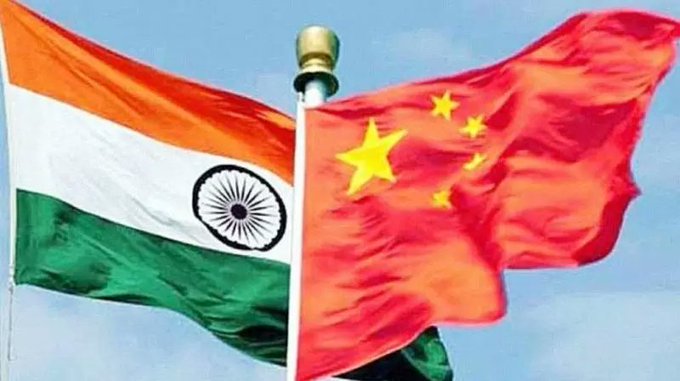
Image Credit: Deccan Chronicle
Disclaimer: All news articles are sourced through valid sources, and Business Unlimited (BU) doesn’t have any exclusive rights on these pieces. If BU features any exclusive story or article, it will be marked as Exclusive Story.