


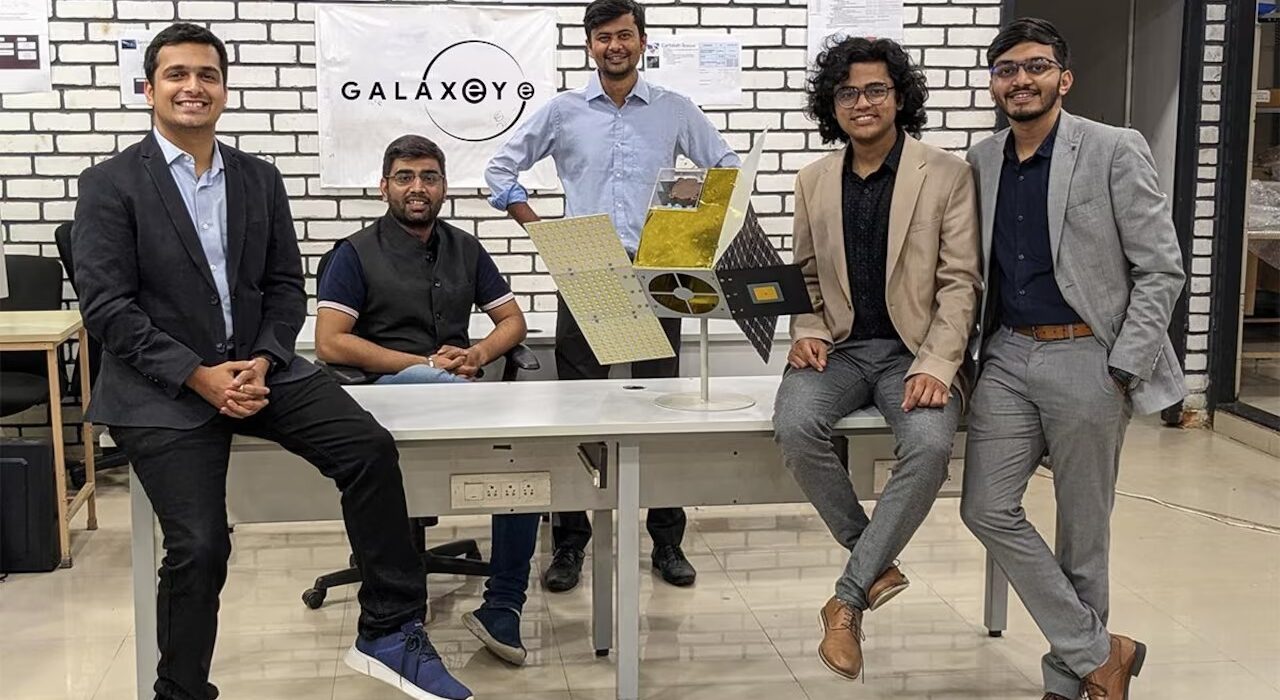
As innovative Indian companies like GalaxEye and Pixxel make waves in the space industry, the country’s space sector is expanding at a dizzying rate. The private space industry in India is rapidly rising to prominence, playing an important role in innovation, national security, and economic growth. This is evident from the recent launches of the world’s first OptoSAR satellite by GalaxEye and hyperspectral imaging successes by Pixxel. By 2033, the Indian government hopes to have increased the country’s $8.4 billion space economic share to $44 billion.
Increasingly, companies in India are driving the space industry’s fast evolution by testing the limits of deep technology and creativity. The Diplomat reports that entrepreneurs are beginning to play a much larger role in creating sophisticated space technology as the country’s space ecosystem shifts from a historically state-dominated structure to a dynamic state-private partnership model.
When GalaxEye sent the first OptoSAR satellite into orbit, it was a significant step forward in this transition. Thanks to the novel technology’s combination of optical imaging and synthetic aperture radar (SAR), high-resolution Earth monitoring is now possible even under cloudy or otherwise difficult weather circumstances.
Countries like India, which frequently experiences tropical weather conditions that impact standard satellite imagery, greatly benefit from this capabilities. More consistent and trustworthy Earth observation data is made available for a variety of civilian and strategic uses by OptoSAR, which integrates optical and radar technology.
The Bengaluru-based business Pixxel is another remarkable success story; it has become one of the top private space companies in India. Agriculture, mining, climate monitoring, environmental management, and defence are some of the sectors that Pixxel’s hyperspectral imaging satellites are built to assist.
Securing a contract affiliated with the US National Reconnaissance Office (NRO) has recently brought the startup international notice, showcasing the increasing legitimacy and global competitiveness of Indian space technology enterprises.
The Indian Space Research Organisation (ISRO) was the driving force behind satellite creation, launch missions, and research for decades in India’s space program. The private sector’s role was strictly limited to that of a service provider and component manufacturer.
A major policy change, however, has been necessitated by the evolving nature of international relations and the increasing significance of space technology. There has been a shift in perspective on space as a strategic asset with implications for national security, digital infrastructure, AI advancement, communications, and economic competitiveness.
The analysis predicts that by the 2040s, the space industry would have grown to over $1 trillion.
The string of reforms implemented since 2020 has been a major factor in this change. New opportunities for startups and private firms have emerged as a result of the deregulation of India’s space sector. These companies can now access markets that were previously controlled by government organisations.
The foundation of the Indian National Space Promotion and Authorisation Centre (IN-SPACe) is one of the most noteworthy institutional developments. By connecting commercial companies with ISRO, this organization facilitates the sharing of resources including testing facilities, technological knowledge, and regulatory backing.
Image: Business Today
Disclaimer: All news articles are sourced through valid sources, and Business Unlimited (BU) doesn’t have any exclusive rights on these pieces. If BU features any exclusive story or article, it will be marked as Exclusive Story.