


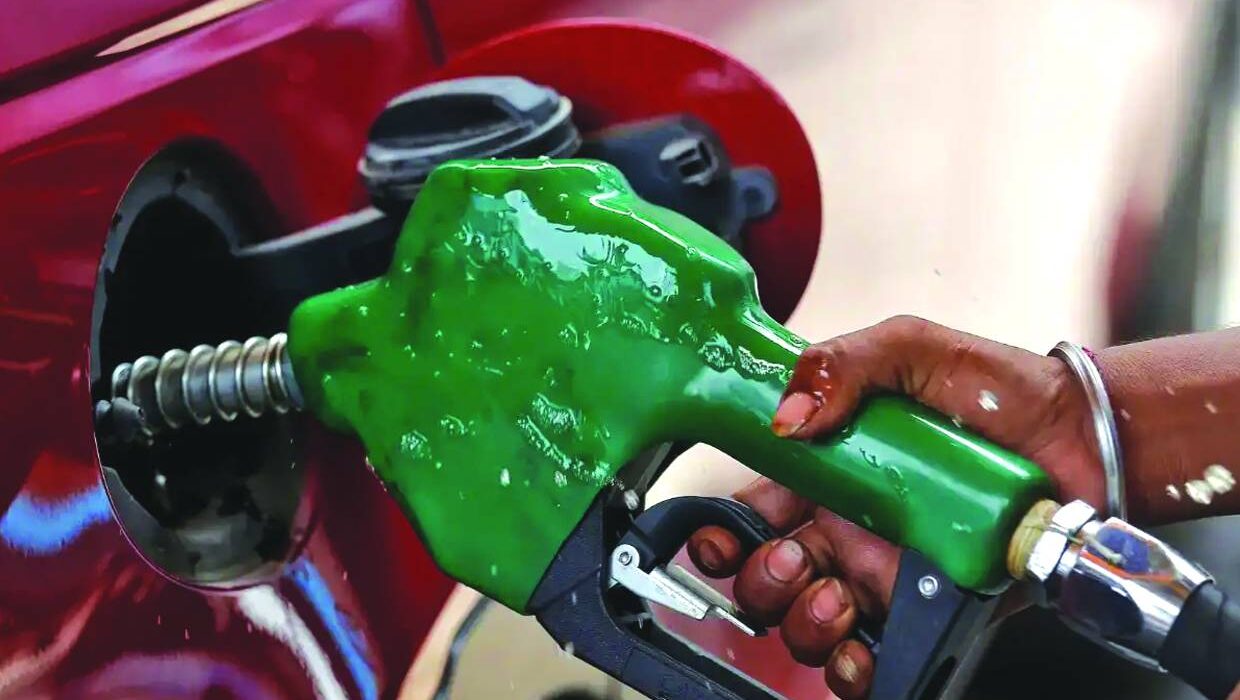
In response to increasing pressure on public sector oil marketing organisations (OMCs), the central government has temporarily restricted diesel sales through retail fuel stores in an effort to avoid stockpiling, limit illicit marketing, and assure uninterrupted fuel availability for ordinary consumers.
The ‘Motor Spirit and High-Speed Diesel (Temporary Regulation of Supply through Retail Outlets) Order, 2026’ was announced by the Ministry of Petroleum and Natural Gas. It will initially remain in place for 90 days.
The move comes as state-owned fuel dealers are allegedly losing almost Rs 500 crore daily on sales of domestic LPG, petrol and diesel as a means of protecting customers from the effects of high global energy prices.
The new rules state that petrol stations can only fill up customers’ tanks or containers recognised by the Petroleum and Explosives Safety Organization (PESO) with diesel.
Additionally, the government has set a daily cap of 200 litres of diesel per consumer or vehicle.
The resale of diesel from retail shops is also strictly prohibited.
Retail fuel stations would no longer sell diesel to industrial, institutional, commercial, and direct consumers, according to the government.
This group of people is instead required to get all of their fuel from authorised bulk supply channels and consumer pumps.
An unprecedented spike in diesel consumption at PSU-operated retail shops necessitated the limitations, according to the administration.
Because retail diesel costs were still far cheaper than bulk fuel pricing, officials saw that some large consumers were shifting their purchases to public sector gasoline stations.
Commercial customers have a strong incentive to purchase fuel from retail shops due to the fact that retail diesel is now roughly 40 rupees per litre cheaper than bulk diesel.
Public sector oil marketing enterprises like IOC, BPCL, and HPCL have been fiscally hit hard as a result of the demand imbalance.
These businesses have kept providing pricing support to customers even though the global crude oil market has been very volatile and there have been supply disruptions due to geopolitical concerns in West Asia.
Diesel sales through public sector retail shops increased significantly, according to government figures for May 2026.
In comparison to the same period last year, 327 districts saw a diesel sales gain of more than 10%, while 80 districts saw a growth of more than 30%, according to the ministry.
Sales of high-speed diesel (HSD) allegedly fell 58% at private oil marketing companies during the same time period as a result of price increases.
Authorities have found cases of buying diesel in jerry cans and then selling it in unauthorised marketplaces, according to the ministry.
The government stepped action quickly in response to these practices because they raised concerns about fuel diversion, black marketing, and the exploitation of retail fuel pricing procedures.
Oil marketing organisations and gasoline station owners are instructed to keep a careful eye on diesel sales and foil any efforts to avoid the limitations in order to guarantee compliance.
There has been a strong need for state and union territory administrations to crack down on stockpiling, illicit fuel trafficking, and the diversion of petroleum products.
During a time of increased global energy uncertainty, the government has emphasised that the interim measures are meant to safeguard legitimate consumers, keep fuel available, and assist in the orderly distribution of petroleum.
Efforts to curb stockpiling and safeguard consumers are evident in the government’s determination to limit diesel sales, even while public sector oil corporations endure significant losses. Authorities are taking measures to stabilise distribution and keep fuel available despite the current volatility in the global energy market. These measures include banning bulk purchases, reducing unauthorised resale, and directing commercial purchasers to specified supply routes.
Image: Daily Pioneer
Disclaimer: All news articles are sourced through valid sources, and Business Unlimited (BU) doesn’t have any exclusive rights on these pieces. If BU features any exclusive story or article, it will be marked as Exclusive Story.