

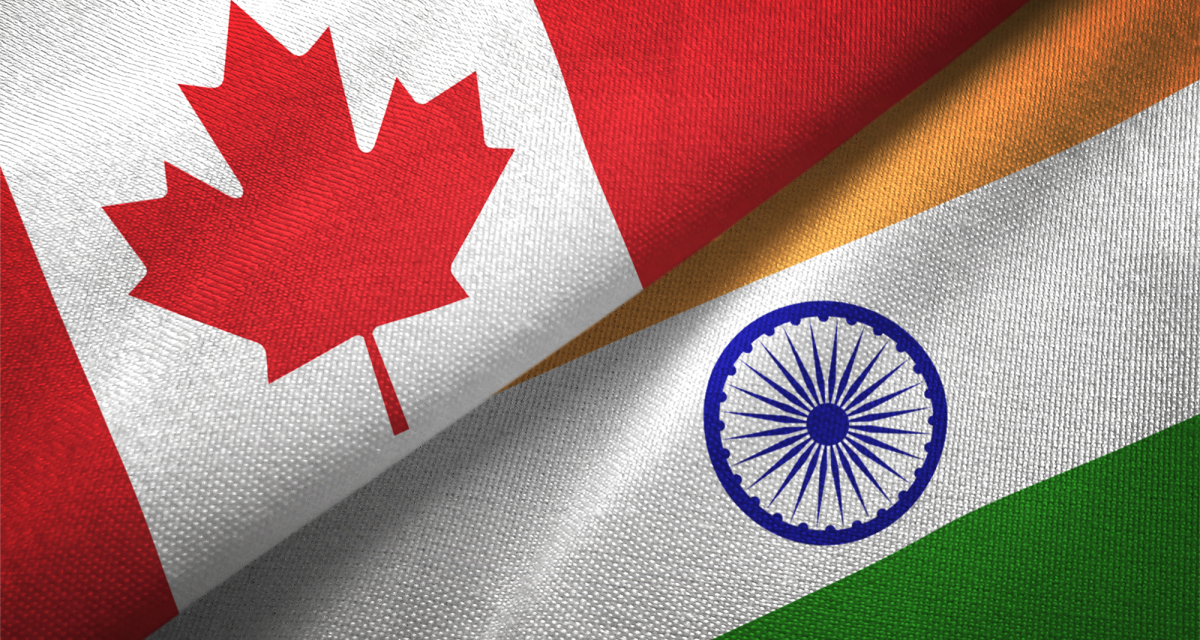
An article published in One World Outlook suggests that a trade deal between India and Canada might have a major impact on Canada’s efforts to diversify its economy and strengthen the North American supply chain. This could be especially true in the areas of vital minerals, renewable energy, and knowledge-based services.
The relationship is being seen as economically and strategically underused, even though the levels of trade between the two countries are still moderate.
In FY24, merchandise trade between India and Canada was approximately $8.4 billion, slightly more than $8.3 billion in FY23, as stated in the article. The expanding role of the service industry is seen in the general increase in trade in goods and services, which went from $18.38 billion in 2023 to over $23 billion in 2024.
This highlights sector-specific dependencies related to food security and industrial inputs, as Canada is India’s primary supplier of pulses, fertilisers, newsprint, wood pulp, and industrial chemicals.
As a result, India is able to maintain its status as a diversified manufacturing and processing powerhouse through the export of gems and jewellery, medicines, clothing, organic chemicals, and engineering items.
Proposed frameworks like the Early Progress Trade Agreement (EPTA) and a more comprehensive Comprehensive Economic Partnership Agreement (CEPA) provide substantial benefits, and the article points out that services trade has become the most important aspect of bilateral cooperation.
The increasing reliance of Canada on Indian information technology (IT), professional (P&G), and back-office services is reflected in the fact that services imported from India have increased to an estimated 3.5 percent, while services exported to India constitute barely approximately 1% of Canada’s overall services exports.
According to the report, Canada can benefit strategically from stronger trade relations by balancing its complicated economic relationship with China and minimising its reliance on the US. Under its Indo-Pacific policy, Ottawa has already designated India as a priority partner, and by 2030, it hopes to have doubled the amount of commerce between the two countries.
In India’s favor, further engagement is supported by the country’s fast economic growth, increasing energy demand, and industrial expansion. Given India’s rapid electrification and renewable energy deployment, the country’s resource sector sees India as a potential long-term buyer of natural gas liquids (LNG), petroleum, and essential minerals.
According to the article, the trade agreement between New Delhi and Ottawa will be implemented in stages, starting with a restricted EPTA and eventually leading to a comprehensive CEPA. The rules of origin, hygienic standards, investments, goods, services, rules of origin, and dispute resolution procedures were all formally relaunched in March 2022.
Image Credit: Asia Pacific Foundation of India
Disclaimer: All news articles are sourced through valid sources, and Business Unlimited (BU) doesn’t have any exclusive rights on these pieces. If BU features any exclusive story or article, it will be marked as Exclusive Story.