

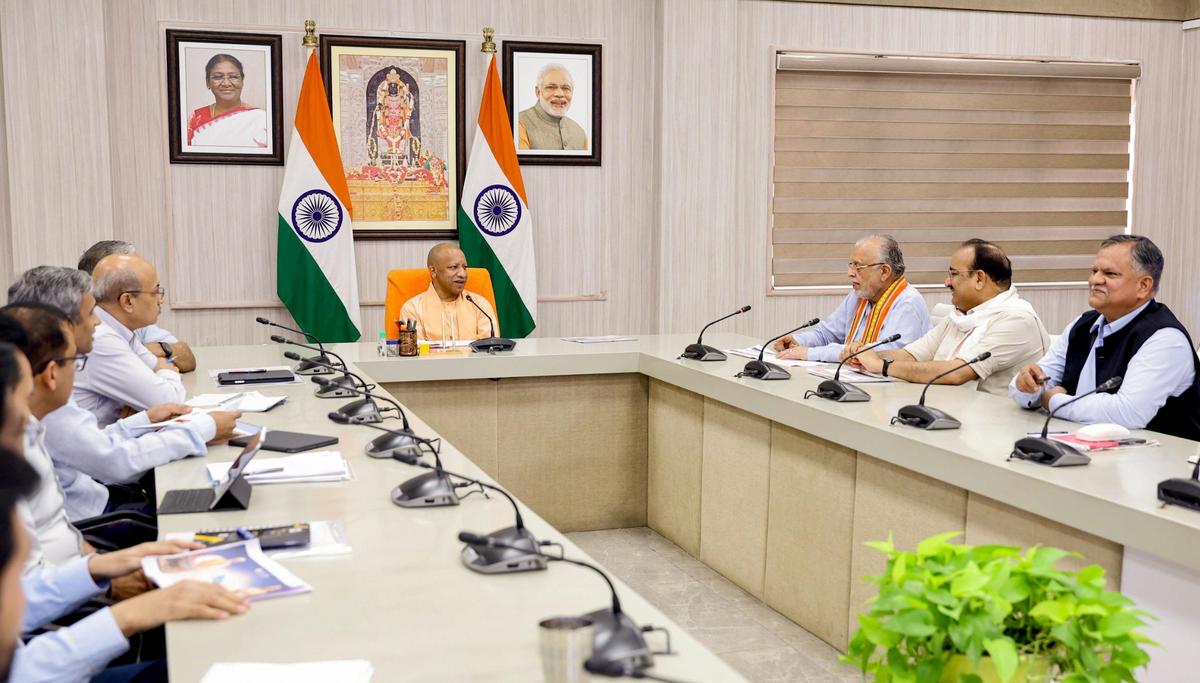
The Uttar Pradesh Data Centre Cluster (UPDCC), Project Ganga, and a planned reform in mandi tax and cess to promote in-house wheat processing were all subject to a high-level evaluation by Chief Minister Yogi Adityanath on Wednesday. The chief minister of Uttar Pradesh stated during the review meeting that the UP Data Centre Cluster will provide the groundwork for the state’s AI mission and that the initiative should extend outside the national capital region.
Large areas of land are available in the Bundelkhand Industrial Development Authority area, according to Adityanath, who suggested that this may be the launch point for the effort.
The development of Lucknow as a “AI City” was also ordered by him, and authorities were directed to cooperate with key tech players like the Tata Group.
At the conference, officials explained that the UP Data Centre Cluster was an integral part of a larger plan to make the state the hub for artificial intelligence computation in southern India and the world.
The goal of the planned cluster is to make the state a leader in cutting-edge digital manufacturing, cloud computing, artificial intelligence, and data centers. State officials have characterised the project as a fifty-year economic plan.
The project’s stated goals include creating 1.5 lakh direct jobs, contributing to a USD 5 trillion economy by 2040, and establishing a 5-gigawatt AI compute corridor in the state, as stated in the presentation given to the chief minister.
The gathering was informed that by 2040, the world’s economy will be driven by industries such space technology, electric vehicles, cloud computing, cybersecurity, semiconductors, and artificial intelligence. The total market value of these sectors is predicted to be between USD 29 trillion and USD 48 trillion.
According to officials, UP has a number of fundamental advantages, such as a strategic position, plenty of arable land, a youthful populace, a thriving economy, and effective government.
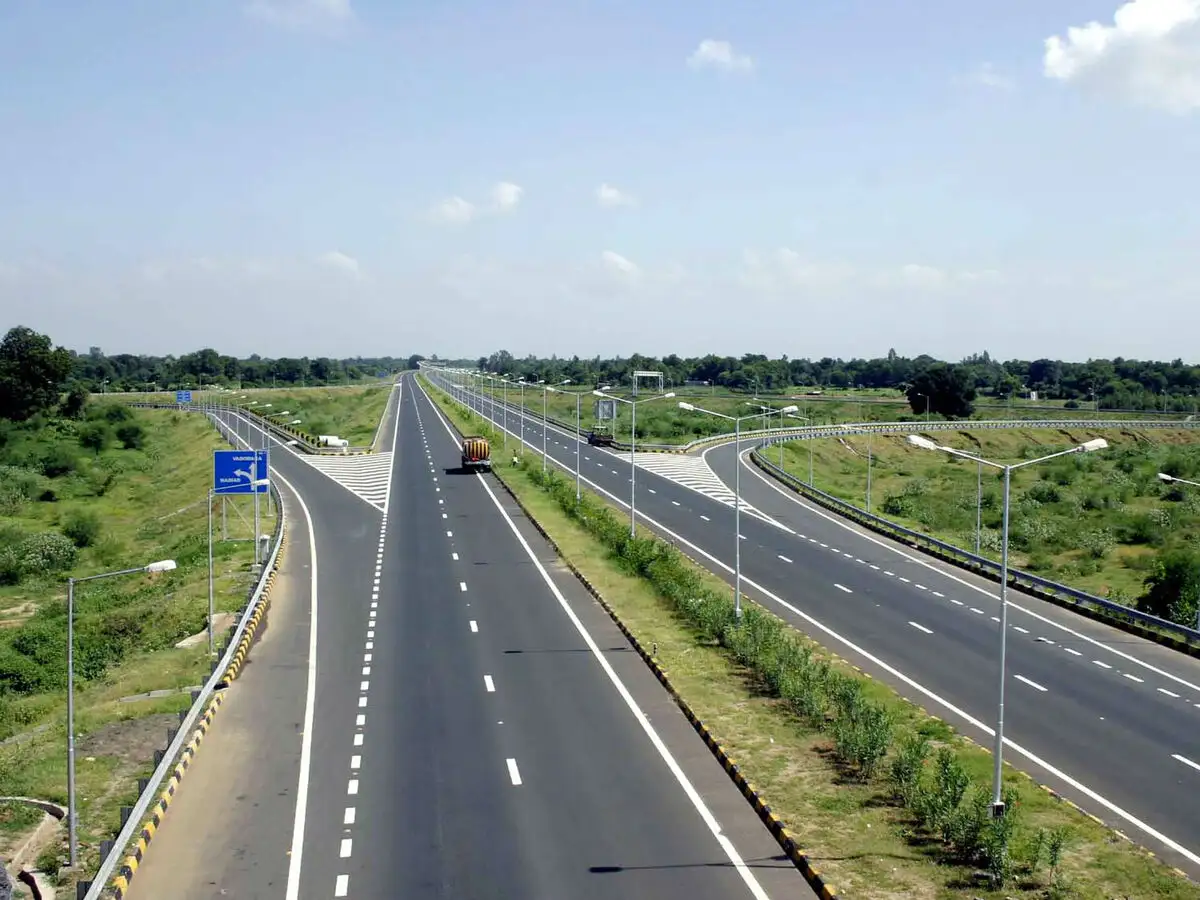
The rapid expansion of motorways, airports, logistics systems, and electrical infrastructure was emphasised, as was the fact that the state’s interior location shields it from coastal dangers and hurricanes.
Also emphasised was the availability of technical expertise from schools like Motilal Nehru National Institute of Technology Allahabad and Indian Institute of Technology Kanpur.
The state of UP is being touted as “Asia’s most secure, scalable and connected inland AI territory” by officials. It’s worth mentioning that almost all of India’s major fibre networks go via UP and are linked to the country’s underwater cable landing places.
The meeting was informed that the state is a desirable location for global technology corporations looking to establish AI infrastructure, thanks to its low network latency (less than five milliseconds internally) and connection (five to twelve milliseconds to digital cities like Mumbai and Chennai).
While reviewing the “Project Ganga” (Government Assisted Network for Growth and Advancement), the chief minister ordered that the youths chosen to be digital entrepreneurs receive exceptional training.
He further argued that businesses engaged in field operations and surveys should have access to these young people’s training. Among Adityanath’s priorities was the prompt extension of the optical fibre network and the openness with which the project was carried out. He also ordered the government to provide sufficient incentives to digital entrepreneurs right from the start.
Project Ganga is to encourage telemedicine, digital education, skill development, e-governance, digital employment, and rural entrepreneurship through the delivery of high-speed broadband connectivity across rural UP, according to officials who told the conference. The project aims to train over 10,000 young people to become digital service providers (DSPs), which will create over 100,000 jobs indirectly and over 50,000 directly.
The project’s goal is to provide high-speed internet services based on fibre to more than 20 lakh households. Between two hundred and three hundred homes in their service area should be connected by DSPs.
The initiative aims to encourage female entrepreneurs to participate at a rate of about 50%, according to officials.
The gathering was informed that, although mobile internet has its limitations, a large-scale digital revolution will necessitate a broadband infrastructure that is fast enough to support AI-powered farming, drone surveillance, smart communities, virtual labs, telemedicine, cloud computing, and other related applications.
Digital service providers (DSPs) will supply rural regions with broadband, IPTV, over-the-top (OTT) access, CCTV solutions, public Wi-Fi, cybersecurity, and business connections as part of the program. A loan of up to five million rupees (Rs.) will be available to each DSP without interest.
According to officials, the project would start in 21 priority areas as a proof-of-concept endeavour and then be expanded statewide.
In addition to reviewing initiatives to promote domestic wheat processing in the state, the Chief Minister stressed the necessity of reforming the mandi tax and mandi fee system, ordered authorities to modernise mandis, keep them clean, and improve their management.
It was Adityanath’s order that the mandi premises be kept clean, painted, and lit up during festivals, as well as that any encroachments be removed.
The chief minister stressed the need of increasing food security readiness and maintaining sufficient foodgrain stockpiles in light of the potential effects of El Nino on agricultural output.
During the conference, officials shared the information that UP is still the leading wheat-producing state in the country. They predicted that wheat output will reach 372 lakh metric tonnes in 2025-26, with a total availability of 407 lakh metric tonnes.
The state’s wheat production is linked to over 2.88 crore farmers. The loss of value addition, GST revenue, and employment prospects is caused by the large-scale transfer of raw wheat to other states due to insufficient processing capacity, according to officials.
The conference was informed that out of 559 roller flour mills in the state, the combined milling capacity is 218.4 lakh metric tonnes, but only about 126.45 lakh metric tonnes is really being used. Additionally, the state is home to over forty thousand flour mills.
Image Credit: The Hindu
Disclaimer: All news articles are sourced through valid sources, and Business Unlimited (BU) doesn’t have any exclusive rights on these pieces. If BU features any exclusive story or article, it will be marked as Exclusive Story.