

From $84 billion in 2003 to $1.17 trillion in 2024, intra-BRICS merchandise trade increased nearly thirteenfold, demonstrating the increasing economic influence and resilience of the BRICS bloc in the face of global uncertainties, according to Rajesh Agrawal.
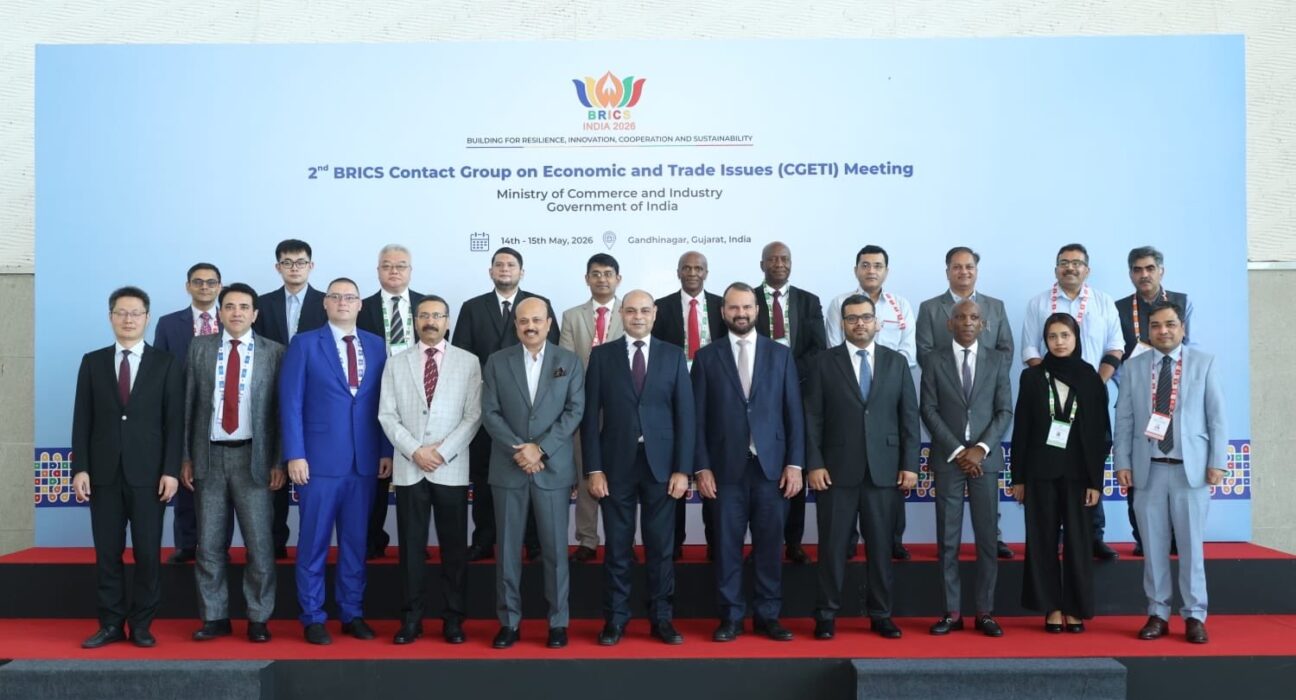
During his speech at the BRICS Contact Group on Trade and Economic Issues (CGETI) meeting, Agrawal asserted that the organization has become a strong voice for developing and emerging markets.
Despite increasing protectionism, geopolitical tensions, supply chain disruptions, inflationary pressures, and overall economic uncertainty, he pointed out that intra-BRICS trade has grown at a faster rate than global trade.
It is worth noting that Agrawal brought attention to the fact that intra-BRICS trade only makes up about 5% of global trade. This suggests that there is a lot of unrealised potential for member countries to further integrate their trade, strengthen their supply chain links, and increase economic cooperation.
Indian goods exports to BRICS nations were around $82 billion in FY26, with services exports estimated at $31.3 billion in 2024, according to the Ministry of Commerce and Industry.
According to officials, these numbers highlight the increasing chances for BRICS countries to work together on expanding connectivity, diversified value chains, and service trade—three areas that are predicted to play a pivotal role in future intra-BRICS economic growth.
Following the first CGETI meeting, which took place virtually in March 2026, this second meeting was organised under the theme of “Building for Resilience, Innovation, Cooperation and Sustainability,” which was chosen by India for its BRICS 2026 Chairship.
After 2012, 2016, and 2021, India is taking over as chair of the BRICS grouping.
The main points of discussion included enhancing the global value chain resilience, bolstering the multilateral trading system, facilitating the internationalisation of micro, small, and medium enterprises (MSMEs), and increasing trade in services among member nations.
In addition, delegates deliberated ways to improve intra-BRICS cooperation in order to foster balanced trade growth and open up new economic opportunities for women entrepreneurs, startups, and companies.
Egypt, Ethiopia, Iran, Saudi Arabia, the UAE, and Indonesia are the newest members of the BRICS grouping, which now also includes India, China, South Africa, Russia, and Brazil.
Image Credit: Department of Commerce
Disclaimer: All news articles are sourced through valid sources, and Business Unlimited (BU) doesn’t have any exclusive rights on these pieces. If BU features any exclusive story or article, it will be marked as Exclusive Story.