

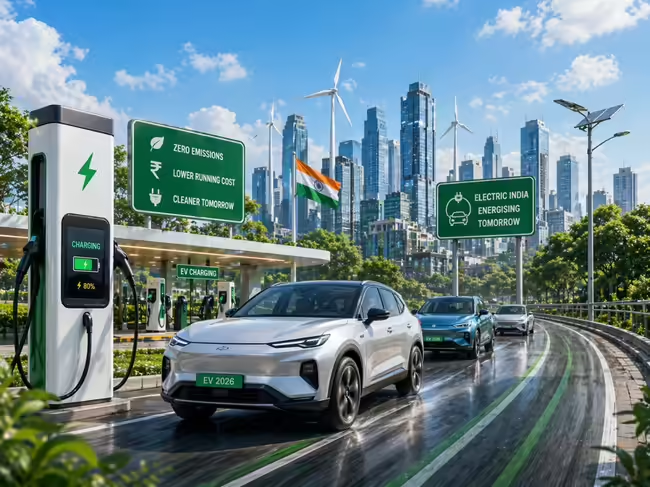
The Indian electric vehicle (EV) sector entered 2026 with unprecedented momentum, fueled by a surge in new model launches and a growing consumer appetite for sustainable mobility. However, as the mid-year mark approaches, the industry is facing a complex landscape where rapid adoption is meeting significant structural challenges. While the “green revolution” on Indian roads is undeniable, a combination of shifting subsidies, pricing pressures, and infrastructure gaps is beginning to moderate the initial breakneck speed of growth.
The Surge: Market Momentum and New Entries
The year began with a “boom” as domestic and international automakers aggressively expanded their EV portfolios. Entry-level electric hatchbacks and mid-range SUVs saw a significant uptick in registrations, driven by improved battery ranges and more competitive features. High-growth urban markets, particularly in Delhi, Mumbai, and Bengaluru, recorded record-breaking sales in the first quarter, suggesting that EVs are no longer a niche luxury but a serious consideration for the Indian middle class.
The Price Barrier: Battery Costs and Affordability
Despite the excitement, price remains the most formidable obstacle. While battery prices globally have stabilized, the localized cost of manufacturing in India remains high due to reliance on imported raw materials like lithium and cobalt. This “price reality” means that even with lower running costs, the upfront sticker price of an EV remains 20% to 30% higher than its internal combustion engine (ICE) counterparts. Without a significant breakthrough in indigenous cell manufacturing, mass-market affordability continues to hit a ceiling.
Policy Shifts: The Subsidy Tightrope
A major cooling factor in the 2026 trajectory has been the evolution of government incentives. As the government pivots from direct purchase subsidies toward supporting localized production through Production Linked Incentive (PLI) schemes, the immediate financial relief for the end consumer has lessened. Industry experts note that the gradual phasing out of early-stage incentives has forced OEMs to choose between absorbing costs or passing them on to buyers, often leading to price hikes that temporarily “hit the brakes” on demand.
Infrastructure Reality: The Charging Gap
While the number of public charging stations has grown, it has not yet kept pace with the sheer volume of vehicles hitting the road. “Range anxiety” has transitioned into “queue anxiety,” as users in high-density areas face long wait times at fast-charging hubs. Furthermore, the reality of the power grid’s capacity to handle simultaneous fast-charging in residential clusters is posing a new set of urban planning challenges. Analysts suggest that until home-charging solutions and highway fast-charging networks are seamless, the transition for long-distance travel will remain slow.
Looking Ahead: A Mature Phase of Growth
Despite these hurdles, the long-term outlook for India’s EV sector remains positive. The current slowdown is viewed by many as a necessary “market correction” where the industry moves from subsidized hype to sustainable, infrastructure-led growth. As local battery gigafactories under the PLI scheme begin operations later this year, the industry expects a second wind that could bring prices back down and restore the “race ahead” momentum.
Image Source: Economic Times
Disclaimer: All news articles are sourced through valid sources, and Business Unlimited (BU) doesn’t have any exclusive rights on these pieces. If BU features any exclusive story or article, it will be marked as Exclusive Story.