


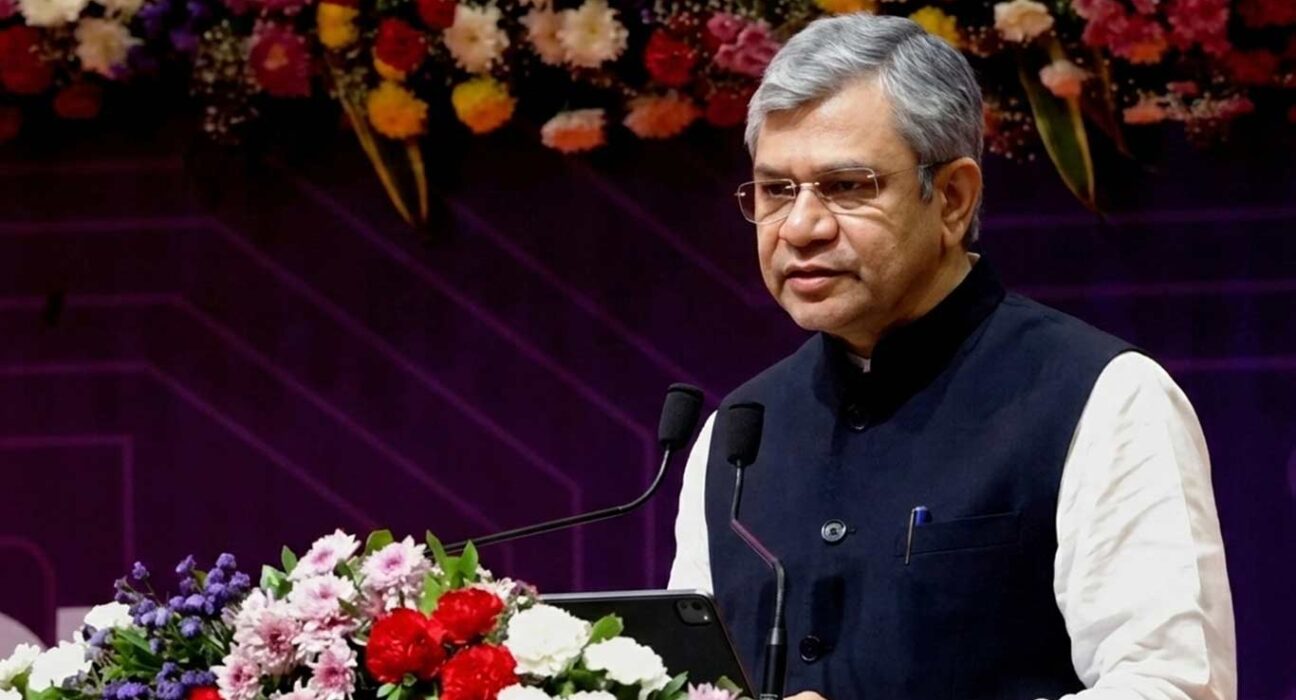
As the government steps up its attempts to establish a strong local chip ecosystem, Ashwini Vaishnaw announced that four semiconductor facilities will be operating in India by 2026.
Launched earlier this year, Micron Technology’s facility was the first of two semiconductor units in fast succession; the announcement followed Narendra Modi’s inauguration of Kaynes Technology’s OSAT (Outsourced Semiconductor Assembly and Test) facility in Sanand.
Two more facilities are anticipated by 2027, according to the minister, while Dholera is scheduled to host India’s first semiconductor fabrication facility by 2028. Achieving commercial readiness within 14 months at the Sanand facility was a hallmark of the swift execution tempo.
In order to lessen its reliance on imports and fortify its supply chains, India is bolstering its semiconductor strategy by developing a wider ecosystem that includes equipment, chemicals, gases, and testing infrastructure.
Vaishnaw made a point of mentioning that there are over 60,000 engineers from more than 300 colleges who have received training in advanced chip design tools like Cadence Design Systems and Synopsys. This training has helped to enhance domestic design skills.
Work on state-of-the-art 2-nanometer technologies is currently happening in India, where advanced chip design operations are being expanded by global technology leaders including Nvidia, AMD, and Intel.
Every step of the semiconductor value chain, from design to manufacturing inputs, is intended to be localised under the government’s proposed “Semicon 2.0” framework. India aims to be one of the top three semiconductor producing nations by 2047 and one of the top six by 2032.
Sanand and Dholera are anticipated to transform into a semiconductor cluster with the help of governmental measures, infrastructural enhancements, and talent development programs, according to Bhupendra Patel, who stated that Gujarat is becoming a crucial node.