

On Saturday, India reaffirmed its urge for a reduction in tensions in the region and assured the public that there is more than enough crude oil, petrol, diesel and liquid petroleum gas (LPG) to satisfy local demand.
While stressing the need of maintaining the unimpeded flow of energy and goods, Randhir Jaiswal, speaking at a briefing, stated that the Ministry of External Affairs has continuously called for discussion and moderation since the conflict started.
Given the potential global ramifications, he noted that India has also encouraged all sides to avoid striking civilian infrastructure, especially energy plants. In order to protect its energy and economic interests, New Delhi has maintained constant contact with important parties, such as the members of the Gulf Cooperation Council, Iran, the US, and Israel.
The administration has stated that there has been continuous diplomatic engagement on many levels. Narendra Modi has met with several international leaders, and S. Jaishankar and the Indian missions in the region are still in frequent contact with their counterparts.
Efforts are being made to aid Indian sailors and guarantee smooth maritime operations in the region, according to the Ministry of Ports, Shipping and Waterways.
The number of evacuated people has reached 253, with 30 Indian seamen being repatriated in the past 24 hours, according to Special Secretary Rajesh Kumar Sinha.
He went on to say that in order to guarantee timely energy supplies, major ports have prioritised the berthing of six LPG tankers coming from different parts of the world.
According to Sinha, who is in charge of marine movements, the LPG carriers Shivalik and Nanda Devi, which are owned by Indian nationals, successfully traversed the Strait of Hormuz on Saturday and are now heading back to India.
The availability of fuel has not changed, according to officials from the Ministry of Petroleum and Natural Gas.
Refineries in India are running at full capacity, and the country’s crude oil supply is sufficient, according to Joint Secretary Sujata Sharma. Additionally, she mentioned that there have been no reports of retail shops running out of fuel and that there is still an adequate supply of petrol and diesel.
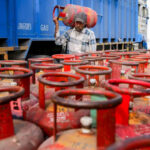
In response to panic demand, Sharma saw a dramatic increase in LPG bookings, with daily bookings jumping from 75–76 lakh to over 88 lakh. Oil marketing businesses are still delivering cylinders to homes, she informed customers, so there’s no need to panic book.
According to her, there are still booking restrictions that mandate a 25-day minimum interval between LPG bookings in urban areas and a 45-day minimum interval in rural areas.