

Prime Minister Narendra Modi has highlighted the growing adoption of solar power across India, stating that more than 44,000 government buildings now use solar energy and generate annual savings of around ₹700 crore. Addressing the Bharat Renewable Energy Summit in New Delhi, he said India had made significant progress in clean energy over the past 12 years through wider adoption across government institutions, agriculture, industries and households.
Solar Power Supports Government Buildings and Public Savings
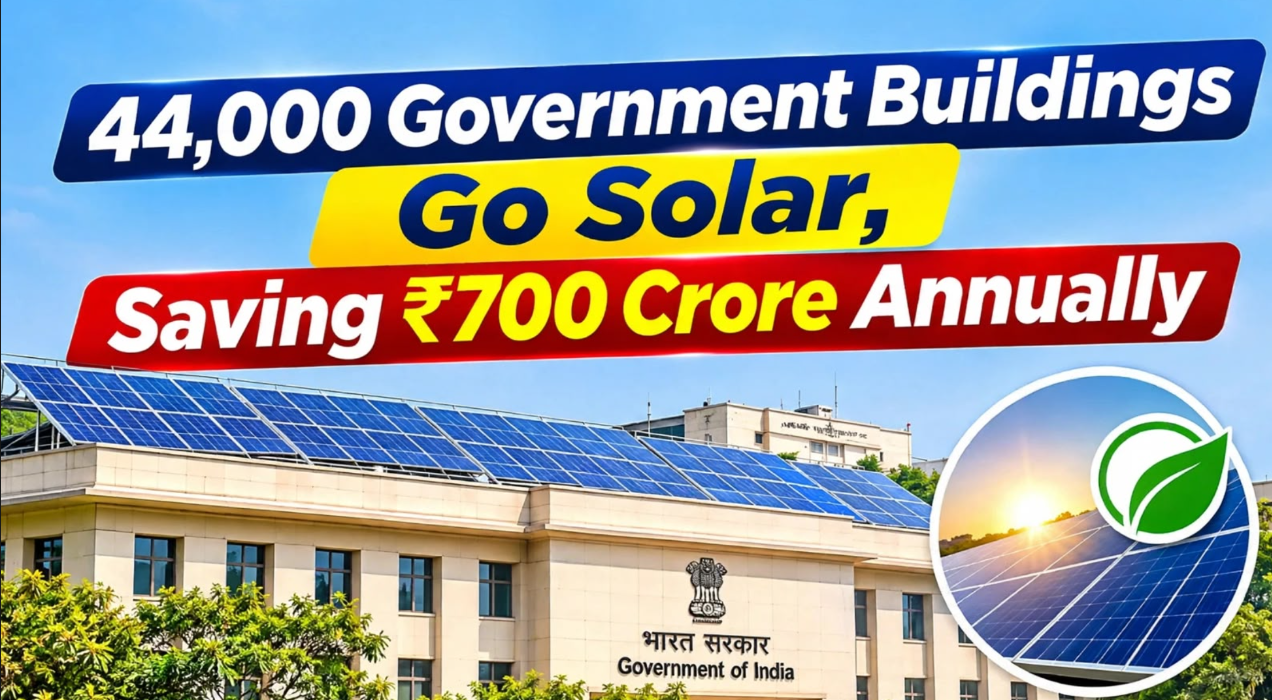
PM Modi said the government aims to bring every government building, school, college, hospital and street-lighting system under solar energy. The adoption of solar power across more than 44,000 government buildings has already generated annual savings of around ₹700 crore.
PM-KUSUM Extends Solar Benefits to Farmers
Highlighting the agriculture sector, the Prime Minister said more than 30 lakh farmers had received solar-powered irrigation facilities under the PM-KUSUM scheme. He noted that each farmer could save around ₹1 lakh annually through the use of solar pumps.
The initiative aims to reduce dependence on conventional electricity and diesel-based irrigation while expanding farmers’ access to solar energy.
PM Surya Ghar Crosses 65 Lakh Household Participation
The Prime Minister also highlighted progress under the PM Surya Ghar Muft Bijli Yojana, launched in February 2024 with a target of installing rooftop solar systems in one crore households.
According to him, more than 65 lakh households have joined the initiative over the past 24–25 months. The participation reflects the growing adoption of rooftop solar systems among households.
India Achieves 50% Non-Fossil Power Capacity Target
PM Modi said India achieved its target of sourcing 50% of installed electricity capacity from non-fossil fuel sources in 2025, five years ahead of the timeline set under the Paris Agreement. More than half of the country’s installed power capacity now comes from non-fossil fuel sources.
The achievement highlights the expansion of renewable energy and other non-fossil electricity sources as India works to strengthen energy security and reduce dependence on conventional fuels.
India’s expanding solar power ecosystem is linking clean energy adoption with public expenditure savings, agricultural support and household participation. Progress under government solar initiatives is strengthening the country’s renewable energy base and supporting its wider clean energy transition.