


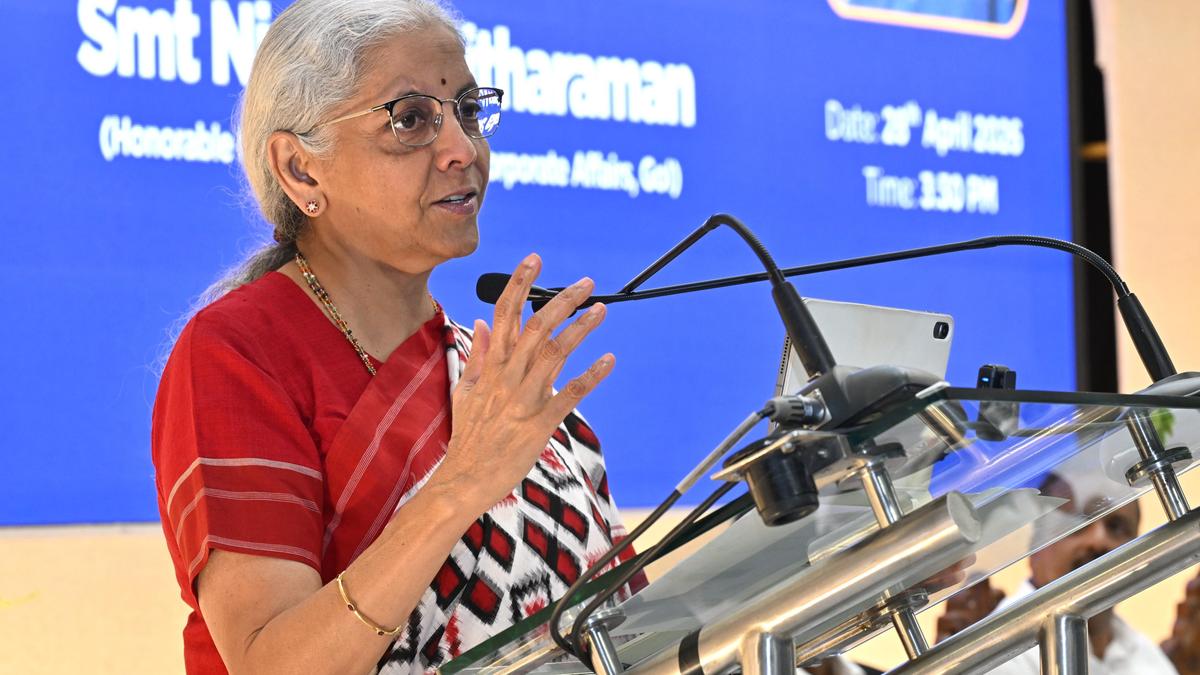
During the C.D. Deshmukh Memorial Lecture at the National Council of Applied Economic Research (NCAER), Finance Minister Nirmala Sitharaman outlined the Government’s vision for Viksit Bharat, describing it as a restoration of India’s historical legacy rather than an unprecedented national ambition. She said the goal is to build a developed nation by 2047 through inclusive growth, quality education, comprehensive healthcare, skilled employment, greater participation of women in the economy and technological leadership.
Sitharaman said India has entered a decisive phase in its development journey, adding that the target of becoming a developed nation by 2047 is no longer a distant aspiration but an immediate national priority. She emphasised that the country’s growth model seeks to create prosperity without excessive consumerism or materialism, while preserving India’s civilisational values and social character.
Reflecting on India’s economic history, the Finance Minister noted that the country accounted for nearly one third of global GDP at the beginning of the Common Era. She argued that widespread poverty was not India’s historical reality but the outcome of centuries of invasions, colonial rule and policy choices that delayed economic progress after Independence.
She also criticised the Licence Quota Permit Raj, saying the system concentrated decision making within the administrative machinery and shifted investment choices away from markets. Quoting former statesman C. Rajagopalachari, she said the regulatory framework ultimately restricted development instead of facilitating it.
Sitharaman observed that India’s early economic policies did not adequately prioritise exports or global trade, unlike several East Asian economies that built export driven growth models. She added that the landmark economic reforms of 1991 were introduced under the pressure of a Balance of Payments crisis rather than as a proactive policy decision.
Discussing India’s more recent economic transformation, the Finance Minister said the country’s focus has gradually shifted towards strengthening physical infrastructure, expanding digital connectivity and accelerating economic development. She noted that India’s conservative banking practices and strong household savings helped the economy navigate the 2008 Global Financial Crisis, although subsequent years presented challenges including fiscal deficits, inflation, widening subsidies and stressed bank balance sheets.
According to Sitharaman, reforms introduced after 2014 have focused on expanding financial inclusion, adopting formal inflation targeting, improving transparency in recognising non performing assets and implementing the Insolvency and Bankruptcy Code to strengthen the financial system. Concluding her address, Sitharaman said Viksit Bharat 2047 should be viewed as part of India’s broader civilisational journey rather than a standalone milestone. She stressed that the country’s future will be determined by the institutions it builds, the choices it makes and its ability to combine modern economic progress with its cultural and civilisational heritage.