

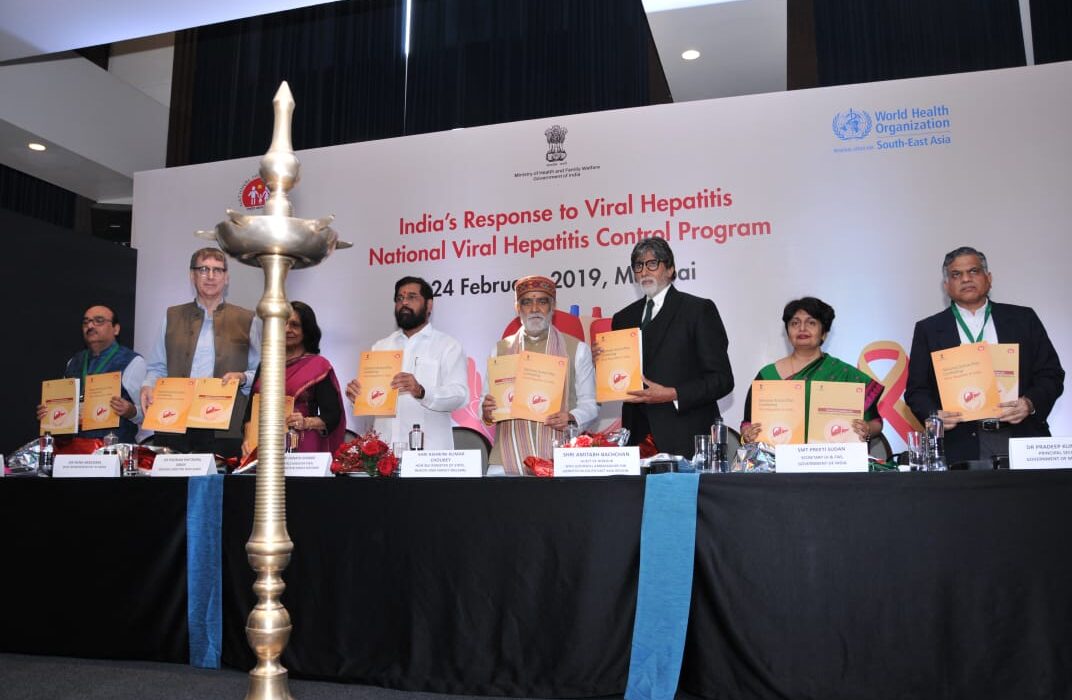
In order to eradicate viral hepatitis as a public health concern, India has stepped up its efforts to fortify the National Viral Hepatitis Control Program (NVHCP) and include it into various national healthcare programs. The government claims that the program is increasing healthcare access and awareness nationwide and providing more free screenings, diagnoses, and treatments. The National Viral Hepatitis Control Program (NVHCP) was established in 2018 with the intention of achieving the national goal of eradicating viral hepatitis by 2030 through extensive preventative, promotive, and curative interventions; it is in line with the United Nations Sustainable Development Goals (SDGs).
Through its paperless NVHCP Management Information System (MIS) portal, the National Viral Hepatitis Control Program (NVHCP) covers hepatitis A, B, C, D, and E, and provides integrated services that enable fast patient registration, monitoring, and treatment. Although the Integrated Disease Surveillance Programme (IDSP) mainly tracks acute infections of hepatitis A and E, patients with hepatitis B and C are eligible for free diagnoses and medication from the government. Every qualified citizen, especially those in disadvantaged or high-risk populations, will have access to high-quality healthcare services through the program’s emphasis on early diagnosis, public awareness, and accessibility.
In an effort to curb the spread of hepatitis, the government has stepped up its efforts to improve maternal and child health. The program’s goals include increasing the number of hepatitis B screenings among pregnant women and increasing the number of newborns vaccinated against hepatitis B within one day of their delivery through the Universal Immunisation Programme (UIP). Babies are also given Hepatitis B Immunoglobulin (HBIG) when their moms test positive for hepatitis B. This helps to lower the risk of transmission from mother to child. Data from the 2021 HIV Sentinel Surveillance showed that approximately 0.85% of people tested positive for hepatitis B and 0.29% for hepatitis C. This confirms that there is still a pressing need for extensive screening and prompt treatment.
A toll-free helpline, 1800-11-6666, has been set up by the government to raise awareness and increase access to healthcare. It is shared with the National Tuberculosis Elimination Programme (NTEP) and provides information on hepatitis, including how to prevent it, how it is transmitted, how to diagnose it, and where to get treatment. India is strengthening its healthcare system to reduce the burden of viral hepatitis and move closer to its elimination target of 2030 by integrating hepatitis services with existing public health programs, expanding free healthcare access, and promoting universal immunisation.
Free healthcare, early diagnosis, universal vaccination, and integrated public health initiatives are all part of India’s larger National Viral Hepatitis Control Program, which aims to eradicate viral hepatitis by 2030.