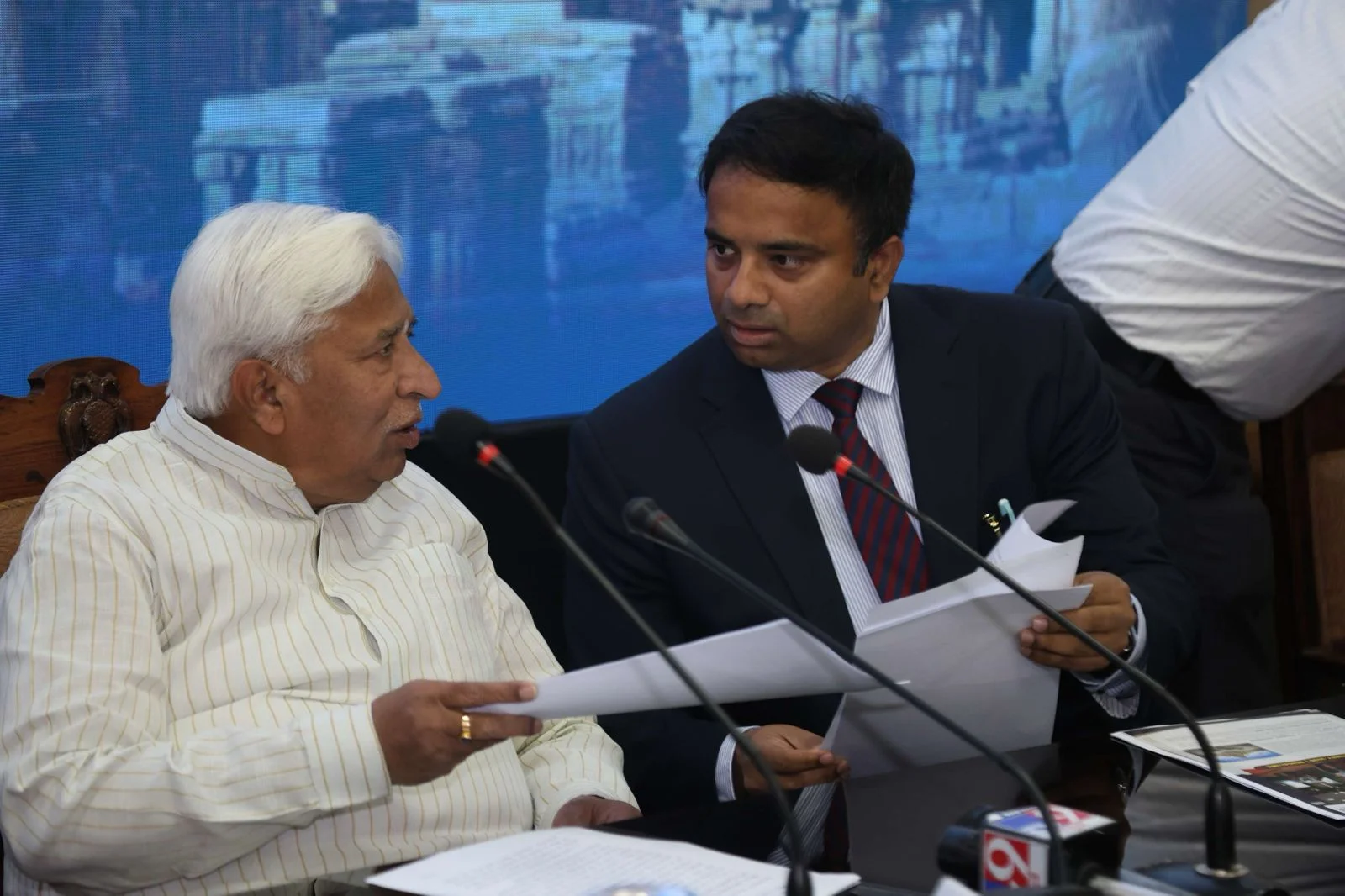



On Tuesday, a high-level assessment conference was held by the Prime Minister’s Office (PMO) to evaluate India’s readiness for the potential effects of El Niño on the current kharif season and other economic areas. The Principal Secretary to the Prime Minister, Dr. P.K. Mishra, has ordered all relevant ministries to work closely with state governments and keep a careful eye on meteorological conditions so that districts that are at risk can get remedial measures done quickly.
Ministers were directed by Dr. Mishra to make sure there is enough water to drink, increase the supply of fodder, and create thorough plans for fodder development, all while stressing the need of proactive planning. In areas where rainfall may be delayed or inadequate, he emphasised the need for effective reservoir water utilisation and encouraged prudent use of existing water supplies.
The committee was informed by officials from the India Meteorological Department (IMD) that, while rains in the first week of July had eased the general situation, the monsoon onset had been delayed by roughly 10 days in areas of Gujarat, Madhya Pradesh, Chhattisgarh, and Maharashtra. The IMD has predicted that July and August would likely see weak to moderate El Niño conditions, and although an El Niño year does not always lead to below-normal seasonal rainfall, the all-India rainfall shortfall shrank to 12%.
Among the steps that the Agriculture Ministry has laid out to protect the kharif season is the expansion of coverage in states that are particularly at risk under the Pradhan Mantri Fasal Bima Yojana (PMFBY) and the Kisan Credit Card (KCC) programs. Additionally, in order to safeguard livestock during bad weather, the government requested that the Department of Animal Husbandry and Dairy frequently evaluate the availability of dry fodder, green fodder, and cattle feed.
Essential supplies, food security, and public health were further topics examined in the evaluation. Notifications on heatwaves, excessive humidity, and dengue outbreaks have been issued by the Health Ministry. Meanwhile, the Department of Consumer Affairs has verified that there are sufficient buffer supplies of rice, wheat, and pulses. Additionally, there is enough fertiliser on hand for the forthcoming Rabi season, according to the Department of Fertilisers. Ministries have been directed to keep a careful eye on national and local supply.
Image: The Hawk
Disclaimer: All news articles are sourced through valid sources, and Business Unlimited (BU) doesn’t have any exclusive rights on these pieces. If BU features any exclusive story or article, it will be marked as Exclusive Story.